Story code: ST-000836
Part 1: The Day Her Trash Became My Job
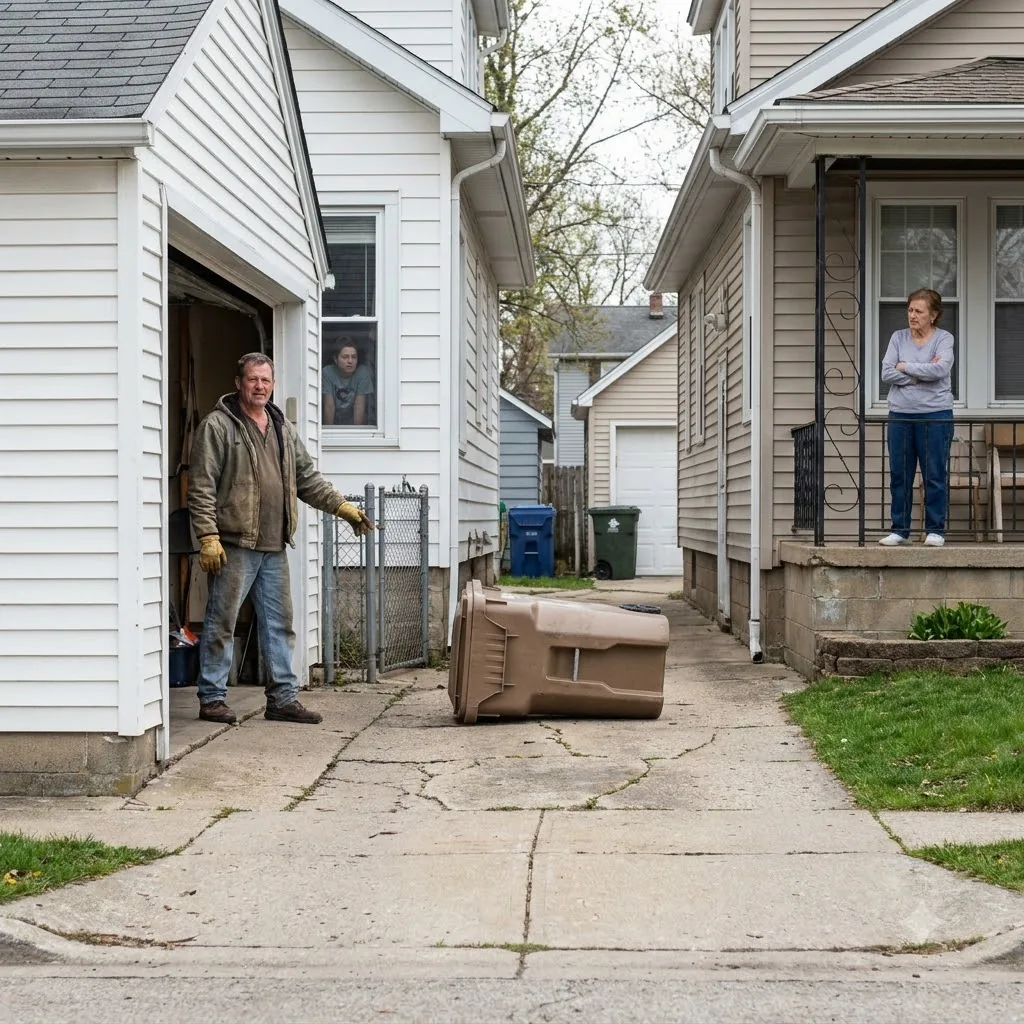
The first time Diane Colter left her trash bin sideways across our shared driveway, the truck passed her house, skipped the pickup, and I got blamed for it while I was standing three steps inside my garage with work gloves on. By noon I was dragging torn bags off the side strip by the garage, rinsing coffee grounds and chicken wrappers toward the gutter, while Diane stood near her porch saying she was still learning how to handle “those giant bins.” The part I couldn’t fit was this: every mistake she made blocked us, dirtied our side, or left me doing the cleanup. Our driveway is narrow enough that two bins placed wrong can turn backing out into a slow little puzzle. We keep both households’ cans along the edge beside the garage, then wheel them to the curb on pickup morning. It is not a complicated system. You pull yours straight out, line the wheels to the seam in the concrete, and keep the lids facing the houses so the truck arm can catch them cleanly. That morning I was sorting cardboard just inside the garage opening. Luis was a few feet away near the shelves, breaking down a box. Caleb had already left for work, but he had stopped long enough to say, “If her bin gets missed again, we’re getting the smell all week,” and then he was gone. A minute later I heard plastic scrape concrete. Diane had her black bin halfway out from the storage edge, but instead of turning it and rolling it to the curb, she had dragged it broadside until it sat crooked across the center line of the driveway. One lid flap hung open. A white kitchen bag had caught under the rim and split. Something wet dripped onto our side and spread into the low strip where the rinse water always collects. I stepped forward and said, “Diane, if you pivot from the wheels first, it’ll go right through.” She let go of the handle and took two quick steps back like the bin had surprised her. “I know, I know. I’m just terrible with these things.” Her tone had that light, breathy apology she used when the mess was already made. Luis looked at the trail on the concrete and said, “It only rolls one way. You just have to line it up.” Diane gave him a tight smile. “Well, some of us aren’t experts in trash engineering.” Then she left it there. Not for ten seconds. Not while she went to move her car. She left it there and went inside. When the truck came through, her bin was still too far sideways for the arm. Ours got emptied. Hers didn’t. By the time I came back out with the broom, two crows had pecked into the torn bag hanging from the lid. A takeout container had landed under Caleb’s side mirror. The smell hit as soon as the sun got on it. Diane came back outside in house shoes and looked from the curb to the split bag and then to me. “Oh no,” she said. “Did they skip me because the bins were crowded together?” I had been holding the hose. I remember that because I turned off the spray so I could hear her clearly. “The truck skipped you because your bin was turned sideways,” I said. She made a small shrug with both hands. “I was trying to move it. I guess I did it wrong. You could’ve fixed it if you saw it.” That was the first clean shove of it. Not just the mess. The handoff. I said, “I was working. It’s your bin.” She glanced at the ripped bag on the ground and said, “Well, now raccoons or birds will get into it if it sits. We should probably clean this up before tonight.” We. She said we and then stood still while Luis looked at me, and I looked at the black streak running toward our side strip. I cleaned it because Caleb would be the one stepping over it that night, and because once trash juice gets into the warm concrete, you smell it again every time you wet the driveway. Diane thanked me twice in that same airy voice, then disappeared before I finished hosing the last of it away. After that, it kept happening in little versions that always bent the same direction. Her lid left open so rain filled the bin and the bag split when she tipped it. Her can set too close to ours so the truck clipped both and left loose paper everywhere. Her bin stored half a foot over the line so Caleb had to squeeze past it carrying our bags. Every single time, she had a reason ready. Too heavy. Wheels stuck. Didn’t know which way the lids went. Thought pickup was later. Thought the truck would grab it anyway. And every single time, the spill landed on our side, the missed pickup stank up our side, or the blocked space slowed our side. I would have kept calling it annoying if not for what happened four Fridays later. I was inside the garage again, one glove on, one glove off, when Diane came out in front of company. A woman in a navy scrub top was walking with her, carrying a casserole dish covered in foil. Diane saw me, saw the bin, and instantly put on that same helpless routine. “Oh, these things are impossible,” she said loudly, gripping the handle and giving the bin a little useless shake. Then the woman at the porch called her name. Diane dropped the act without a pause. She turned, took the handle low with one hand, braced the wheel with her foot, pivoted the whole bin in one smooth motion through the narrow gap by the garage, and rolled it straight to the curb without clipping a single thing. By the time she noticed I had seen it, her hand was already.
The first time Diane Colter left her trash bin sideways across our shared driveway, the truck passed her house, skipped the pickup, and I got blamed for it while I was standing three steps inside my garage with work gloves on. By noon I was dragging torn bags off the side strip by the garage, rinsing coffee grounds and chicken wrappers toward the gutter, while Diane stood near her porch saying she was still learning how to handle “those giant bins.” The part I couldn’t fit was this: every mistake she made blocked us, dirtied our side, or left me doing the cleanup. Our driveway is narrow enough that two bins placed wrong can turn backing out into a slow little puzzle. We keep both households’ cans along the edge beside the garage, then wheel them to the curb on pickup morning. It is not a complicated system. You pull yours straight out, line the wheels to the seam in the concrete, and keep the lids facing the houses so the truck arm can catch them cleanly. That morning I was sorting cardboard just inside the garage opening. Luis was a few feet away near the shelves, breaking down a box. Caleb had already left for work, but he had stopped long enough to say, “If her bin gets missed again, we’re getting the smell all week,” and then he was gone. A minute later I heard plastic scrape concrete. Diane had her black bin halfway out from the storage edge, but instead of turning it and rolling it to the curb, she had dragged it broadside until it sat crooked across the center line of the driveway. One lid flap hung open. A white kitchen bag had caught under the rim and split. Something wet dripped onto our side and spread into the low strip where the rinse water always collects. I stepped forward and said, “Diane, if you pivot from the wheels first, it’ll go right through.” She let go of the handle and took two quick steps back like the bin had surprised her. “I know, I know. I’m just terrible with these things.” Her tone had that light, breathy apology she used when the mess was already made. Luis looked at the trail on the concrete and said, “It only rolls one way. You just have to line it up.” Diane gave him a tight smile. “Well, some of us aren’t experts in trash engineering.” Then she left it there. Not for ten seconds. Not while she went to move her car. She left it there and went inside. When the truck came through, her bin was still too far sideways for the arm. Ours got emptied. Hers didn’t. By the time I came back out with the broom, two crows had pecked into the torn bag hanging from the lid. A takeout container had landed under Caleb’s side mirror. The smell hit as soon as the sun got on it. Diane came back outside in house shoes and looked from the curb to the split bag and then to me. “Oh no,” she said. “Did they skip me because the bins were crowded together?” I had been holding the hose. I remember that because I turned off the spray so I could hear her clearly. “The truck skipped you because your bin was turned sideways,” I said. She made a small shrug with both hands. “I was trying to move it. I guess I did it wrong. You could’ve fixed it if you saw it.” That was the first clean shove of it. Not just the mess. The handoff. I said, “I was working. It’s your bin.” She glanced at the ripped bag on the ground and said, “Well, now raccoons or birds will get into it if it sits. We should probably clean this up before tonight.” We. She said we and then stood still while Luis looked at me, and I looked at the black streak running toward our side strip. I cleaned it because Caleb would be the one stepping over it that night, and because once trash juice gets into the warm concrete, you smell it again every time you wet the driveway. Diane thanked me twice in that same airy voice, then disappeared before I finished hosing the last of it away. After that, it kept happening in little versions that always bent the same direction. Her lid left open so rain filled the bin and the bag split when she tipped it. Her can set too close to ours so the truck clipped both and left loose paper everywhere. Her bin stored half a foot over the line so Caleb had to squeeze past it carrying our bags. Every single time, she had a reason ready. Too heavy. Wheels stuck. Didn’t know which way the lids went. Thought pickup was later. Thought the truck would grab it anyway. And every single time, the spill landed on our side, the missed pickup stank up our side, or the blocked space slowed our side. I would have kept calling it annoying if not for what happened four Fridays later. I was inside the garage again, one glove on, one glove off, when Diane came out in front of company. A woman in a navy scrub top was walking with her, carrying a casserole dish covered in foil. Diane saw me, saw the bin, and instantly put on that same helpless routine. “Oh, these things are impossible,” she said loudly, gripping the handle and giving the bin a little useless shake. Then the woman at the porch called her name. Diane dropped the act without a pause. She turned, took the handle low with one hand, braced the wheel with her foot, pivoted the whole bin in one smooth motion through the narrow gap by the garage, and rolled it straight to the curb without clipping a single thing. By the time she noticed I had seen it, her hand was already.