Story code: ST-000642
Part 1: She Put Her Hand on Someone Else’s Vial
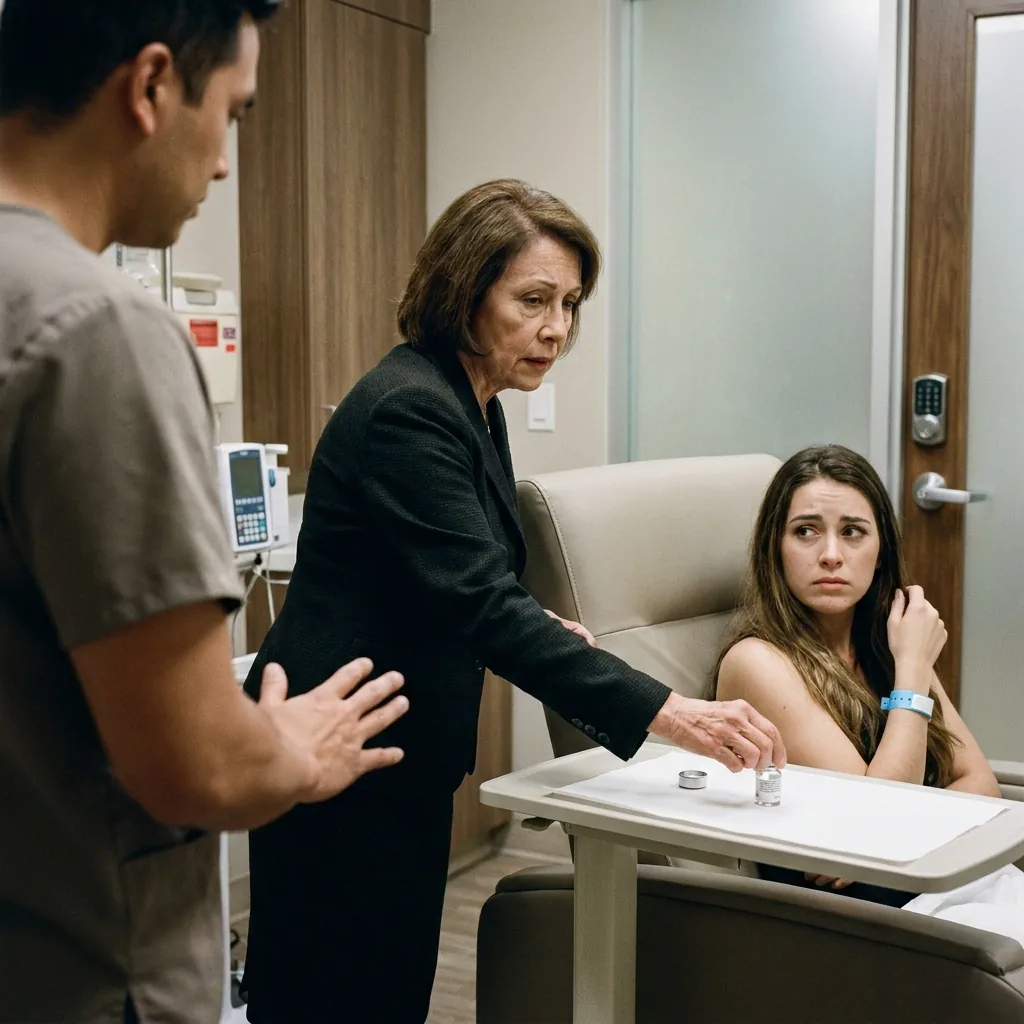
Evelyn Wren stepped through the keypad door of Treatment Room 4 like it belonged to her, reached past me, and put two fingers on Mara Bell’s silver-capped treatment vial while Mara was still wearing her wristband in the chair. I was changing the latex tray liner after a routine prep at Halcyon Renewal Clinic, and for one second all I could see was a donor’s mother inside a room she was not cleared for, touching the one thing in that room that was countable, assigned, and not hers. What made it worse was how easy the door had opened for her.
I said, “Ma’am, you can’t be in here.”
I kept my voice flat because that usually works better in those rooms than sounding alarmed. The room was quiet enough to hear the refrigerator motor kick on behind me. Mara had one arm on the chair rest and the cooling sleeve waiting on the tray beside her. She stopped moving the second Evelyn’s hand landed near the vial.
Evelyn did not step back.
She looked at the tray first, then at Mara, then at me. “I was told Colin was ready,” she said.
Nobody calls Dr. Reeve Colin in treatment spaces unless they expect the room to bend around them.
I moved between her and the tray. “This isn’t your room.”
Mara said, very clearly, “Why is she touching my medication?”
Evelyn pulled her hand away then, but not fast. She took her time, like the speed of it still belonged to her. “I wasn’t touching your medication,” she said, even though I had just watched her fingertip turn the vial a quarter inch on the liner.
The silver cap had been facing left when I set it down. Now it pointed toward the chair.
That small turn made my chest go tight. In our clinic, placement matters. We count vials when they leave the glass-front medication refrigerator, count them again at tray setup, and count them before the physician enters. If something moves, someone asks why.
I pressed the call button beside the sink. “Please wait outside the room.”
Evelyn finally looked at the door, then back to me. “There is no need to make this dramatic.”
Mara sat up an inch. “No, there is.”
The patient wristband was still loose around her arm where I had checked it. Her eyes stayed on the vial, not Evelyn. That was what got me. Not shouting. Not panic. Just that fixed look people get when their body is suddenly not fully their own in a room that is supposed to be controlled.
I took the tray in both hands and moved it to the counter behind me, farther from the doorway.
Evelyn’s voice stayed smooth. “My daughter said this room was open.”
That was the first hard snag in the moment.
Her daughter was Tessa Wren. Tessa was in and out of the donor wing often enough that newer staff sometimes thought she worked there. She used first names, leaned on counters, carried her phone and badge holder together in one hand, and moved through side corridors without stopping unless somebody forced the stop.
I said, “This room is assigned.”
Evelyn gave a short look toward the keypad. “Then someone should fix the access.”
The way she said it made Mara turn from the vial to the door. Not the words. The certainty. Like the problem was not that she had crossed a private threshold, but that someone had let the threshold behave like a threshold in front of me.
Dr. Reeve came in from the corridor before I had to repeat myself. He did not raise his voice. He never does. He looked at Evelyn, then at me holding the tray against my scrub top, then at Mara in the chair.
“Mrs. Wren,” he said, “I need you outside.”
“I came to find you,” Evelyn said.
“Outside,” he repeated.
She held his eye for a beat, then walked past him. No apology to Mara. None to me. Just that same even pace, the one that says a closed door is a suggestion.
Dr. Reeve waited until she cleared the threshold, then pulled the door nearly shut but not all the way. “Nina,” he said, “start over with the tray.”
Mara said, “Start over?”
He looked at the vial. “Yes.”
That one word settled the room harder than if he had snapped.
I stripped the liner off, set the vial aside by itself, sanitized the counter, and opened a new liner with Mara watching every movement. My hands stayed steady, but I counted out loud anyway. “One vial. Silver cap intact. Label intact.”
Mara asked, “Did she switch anything?”
“I didn’t see a switch,” I said. That was the truth. “I saw her touch it.”
Dr. Reeve said, “We’ll verify before proceeding.”
He picked up the vial himself and checked the label against Mara’s band. Then he paused long enough for me to notice the door again.
The keypad light was green.
Treatment Room 4 should not have been sitting open to corridor access in the middle of prep. I knew I had closed it. I also knew that green light did not explain itself.
When I stepped into the hall a few minutes later with the old tray liner bagged, Tessa Wren was at the end of the corridor beside the staff prep alcove, phone in hand, one shoulder against the wall. She was not speaking. She was just looking at the keypad door to Room 4 like she had been waiting to see whether it would stay closed.
Evelyn Wren stepped through the keypad door of Treatment Room 4 like it belonged to her, reached past me, and put two fingers on Mara Bell’s silver-capped treatment vial while Mara was still wearing her wristband in the chair. I was changing the latex tray liner after a routine prep at Halcyon Renewal Clinic, and for one second all I could see was a donor’s mother inside a room she was not cleared for, touching the one thing in that room that was countable, assigned, and not hers. What made it worse was how easy the door had opened for her.
I said, “Ma’am, you can’t be in here.”
I kept my voice flat because that usually works better in those rooms than sounding alarmed. The room was quiet enough to hear the refrigerator motor kick on behind me. Mara had one arm on the chair rest and the cooling sleeve waiting on the tray beside her. She stopped moving the second Evelyn’s hand landed near the vial.
Evelyn did not step back.
She looked at the tray first, then at Mara, then at me. “I was told Colin was ready,” she said.
Nobody calls Dr. Reeve Colin in treatment spaces unless they expect the room to bend around them.
I moved between her and the tray. “This isn’t your room.”
Mara said, very clearly, “Why is she touching my medication?”
Evelyn pulled her hand away then, but not fast. She took her time, like the speed of it still belonged to her. “I wasn’t touching your medication,” she said, even though I had just watched her fingertip turn the vial a quarter inch on the liner.
The silver cap had been facing left when I set it down. Now it pointed toward the chair.
That small turn made my chest go tight. In our clinic, placement matters. We count vials when they leave the glass-front medication refrigerator, count them again at tray setup, and count them before the physician enters. If something moves, someone asks why.
I pressed the call button beside the sink. “Please wait outside the room.”
Evelyn finally looked at the door, then back to me. “There is no need to make this dramatic.”
Mara sat up an inch. “No, there is.”
The patient wristband was still loose around her arm where I had checked it. Her eyes stayed on the vial, not Evelyn. That was what got me. Not shouting. Not panic. Just that fixed look people get when their body is suddenly not fully their own in a room that is supposed to be controlled.
I took the tray in both hands and moved it to the counter behind me, farther from the doorway.
Evelyn’s voice stayed smooth. “My daughter said this room was open.”
That was the first hard snag in the moment.
Her daughter was Tessa Wren. Tessa was in and out of the donor wing often enough that newer staff sometimes thought she worked there. She used first names, leaned on counters, carried her phone and badge holder together in one hand, and moved through side corridors without stopping unless somebody forced the stop.
I said, “This room is assigned.”
Evelyn gave a short look toward the keypad. “Then someone should fix the access.”
The way she said it made Mara turn from the vial to the door. Not the words. The certainty. Like the problem was not that she had crossed a private threshold, but that someone had let the threshold behave like a threshold in front of me.
Dr. Reeve came in from the corridor before I had to repeat myself. He did not raise his voice. He never does. He looked at Evelyn, then at me holding the tray against my scrub top, then at Mara in the chair.
“Mrs. Wren,” he said, “I need you outside.”
“I came to find you,” Evelyn said.
“Outside,” he repeated.
She held his eye for a beat, then walked past him. No apology to Mara. None to me. Just that same even pace, the one that says a closed door is a suggestion.
Dr. Reeve waited until she cleared the threshold, then pulled the door nearly shut but not all the way. “Nina,” he said, “start over with the tray.”
Mara said, “Start over?”
He looked at the vial. “Yes.”
That one word settled the room harder than if he had snapped.
I stripped the liner off, set the vial aside by itself, sanitized the counter, and opened a new liner with Mara watching every movement. My hands stayed steady, but I counted out loud anyway. “One vial. Silver cap intact. Label intact.”
Mara asked, “Did she switch anything?”
“I didn’t see a switch,” I said. That was the truth. “I saw her touch it.”
Dr. Reeve said, “We’ll verify before proceeding.”
He picked up the vial himself and checked the label against Mara’s band. Then he paused long enough for me to notice the door again.
The keypad light was green.
Treatment Room 4 should not have been sitting open to corridor access in the middle of prep. I knew I had closed it. I also knew that green light did not explain itself.
When I stepped into the hall a few minutes later with the old tray liner bagged, Tessa Wren was at the end of the corridor beside the staff prep alcove, phone in hand, one shoulder against the wall. She was not speaking. She was just looking at the keypad door to Room 4 like she had been waiting to see whether it would stay closed.