Story code: ST-000720
Part 1: She Said I Owed Her
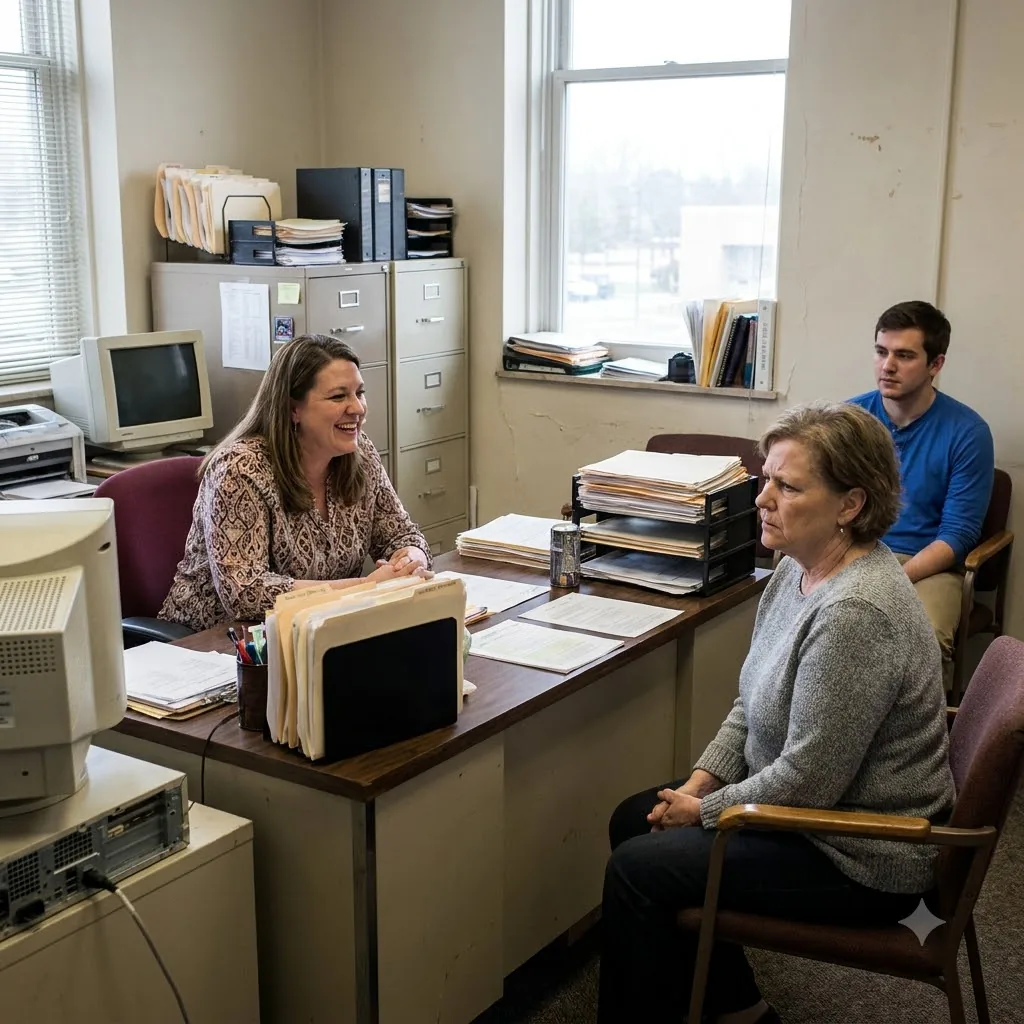
Tina Brooks smiled across the college aid office and said, loud enough for Mrs. Ellis to hear over the printer and the shuffle of folders, “After everything I did to help you, I need you to stop acting like this recommendation packet just appeared by itself.” My hand was still on the packet she had set near the edge of her desk, and that was the first moment I understood she was talking about help like it had turned into a bill. I had come in to ask one direct question about where my file stood, and somehow I was already being told I owed a debt I never agreed to.
The office was busy in that thin, ordinary way that makes everything feel more public. A student near the door was filling out a form on a clipboard. Mrs. Ellis was sorting stacks of folders into metal trays without looking up for long. A phone kept ringing at the far desk and stopping before anyone answered it. Nothing about the room looked dramatic, which made Tina’s voice sound even stranger.
I said, “I asked if my packet had been sent. That’s all.”
Tina leaned back in her chair like I was being difficult on purpose. “Maya, come on. I pushed this along for you. I made sure people looked at it. You know that.”
She tapped the top of the recommendation packet with two polished fingernails. My professors’ letters were in there. My advising note was in there. The packet looked ordinary from the outside, thick manila, my name written across the tab in black marker. But she kept touching it like it belonged to her more than it belonged to me.
I said, “I didn’t ask you to do me any special favor.”
Her smile stayed in place, but it got flatter. “You didn’t have to ask. Sometimes people in this office help students who know how to appreciate it.”
That landed harder than if she had raised her voice. She said it smoothly, almost like advice. I could hear the printer kick on again behind me. Mrs. Ellis slid another file into a tray and looked over for half a second, then back down.
I kept my voice even. “Appreciate it how?”
Tina folded her hands and gave me a look that said I was making her spell out something obvious. “By not questioning me every time I try to keep your process moving. By remembering who made sure your packet didn’t get buried. By being cooperative when I need something simple in return.”
She never said money. She never said exactly what the return was. But she said cooperative in a way that made the word heavy.
I asked, “What simple thing?”
“Let’s not do that in front of everyone,” she said.
That was another trick in the same minute. She was the one who had spoken loud enough for the room to hear, but now she wanted me to feel like I was the person dragging something into public. She reached for the packet and drew it two inches closer to her side of the desk.
I watched that movement more than her face.
“Is my file complete or not?” I asked.
“It would be a lot easier to answer if you stopped coming in here with this attitude,” she said. “I’ve already gone beyond routine for you. Most students would be grateful.”
I had been in that office enough times to know what routine looked like. Wait in line. Ask the question. Get sent to a form or a website or another appointment. Tina had never acted like she was doing anything extra until the minute I asked for a clear answer.
My phone buzzed in my bag. I glanced down and saw a text preview from my mother: Any update? We need to know what we’re dealing with. I put the phone away without opening it. I didn’t need Tina seeing family money on my face.
I said, “If this is routine, then tell me the routine. If it’s not routine, tell me what you changed.”
For the first time, Tina didn’t answer right away. She adjusted the packet so the tab lined up with the edge of her desk. Then she gave a short laugh with no smile in it.
“You are focused on the wrong thing,” she said. “The point is that I helped you. That created a relationship.”
I repeated her words because I wanted to hear how they sounded out loud. “A relationship.”
“Yes,” she said. “And now when I ask you not to push back on timing, or not to make me look bad by second-guessing my work, I expect that to matter.”
There it was. Still polished. Still soft enough to deny later. But clear.
I looked down at the packet again. She had framed it like she rescued me with it. But I had hand-delivered two of those letters myself. I had followed up with one professor three times because his office kept saying they were behind. I had stood in this same office the week before and watched Tina ask Mrs. Ellis where my file even was.
I said, “What exactly did you do?”
Tina’s expression didn’t change. She just slid the packet another inch toward herself and said, “More than you realize.”
That should have sounded like bragging. Instead, with the way she had just claimed I owed her, it sounded like a warning. And standing there, watching her keep one hand on my recommendation packet like she needed it under her control, I realized the worst part wasn’t that she wanted gratitude.
It was that I still couldn’t tell whether she had helped my packet move forward, or whether my packet had helped her start this whole story that I owed her.
Tina Brooks smiled across the college aid office and said, loud enough for Mrs. Ellis to hear over the printer and the shuffle of folders, “After everything I did to help you, I need you to stop acting like this recommendation packet just appeared by itself.” My hand was still on the packet she had set near the edge of her desk, and that was the first moment I understood she was talking about help like it had turned into a bill. I had come in to ask one direct question about where my file stood, and somehow I was already being told I owed a debt I never agreed to.
The office was busy in that thin, ordinary way that makes everything feel more public. A student near the door was filling out a form on a clipboard. Mrs. Ellis was sorting stacks of folders into metal trays without looking up for long. A phone kept ringing at the far desk and stopping before anyone answered it. Nothing about the room looked dramatic, which made Tina’s voice sound even stranger.
I said, “I asked if my packet had been sent. That’s all.”
Tina leaned back in her chair like I was being difficult on purpose. “Maya, come on. I pushed this along for you. I made sure people looked at it. You know that.”
She tapped the top of the recommendation packet with two polished fingernails. My professors’ letters were in there. My advising note was in there. The packet looked ordinary from the outside, thick manila, my name written across the tab in black marker. But she kept touching it like it belonged to her more than it belonged to me.
I said, “I didn’t ask you to do me any special favor.”
Her smile stayed in place, but it got flatter. “You didn’t have to ask. Sometimes people in this office help students who know how to appreciate it.”
That landed harder than if she had raised her voice. She said it smoothly, almost like advice. I could hear the printer kick on again behind me. Mrs. Ellis slid another file into a tray and looked over for half a second, then back down.
I kept my voice even. “Appreciate it how?”
Tina folded her hands and gave me a look that said I was making her spell out something obvious. “By not questioning me every time I try to keep your process moving. By remembering who made sure your packet didn’t get buried. By being cooperative when I need something simple in return.”
She never said money. She never said exactly what the return was. But she said cooperative in a way that made the word heavy.
I asked, “What simple thing?”
“Let’s not do that in front of everyone,” she said.
That was another trick in the same minute. She was the one who had spoken loud enough for the room to hear, but now she wanted me to feel like I was the person dragging something into public. She reached for the packet and drew it two inches closer to her side of the desk.
I watched that movement more than her face.
“Is my file complete or not?” I asked.
“It would be a lot easier to answer if you stopped coming in here with this attitude,” she said. “I’ve already gone beyond routine for you. Most students would be grateful.”
I had been in that office enough times to know what routine looked like. Wait in line. Ask the question. Get sent to a form or a website or another appointment. Tina had never acted like she was doing anything extra until the minute I asked for a clear answer.
My phone buzzed in my bag. I glanced down and saw a text preview from my mother: Any update? We need to know what we’re dealing with. I put the phone away without opening it. I didn’t need Tina seeing family money on my face.
I said, “If this is routine, then tell me the routine. If it’s not routine, tell me what you changed.”
For the first time, Tina didn’t answer right away. She adjusted the packet so the tab lined up with the edge of her desk. Then she gave a short laugh with no smile in it.
“You are focused on the wrong thing,” she said. “The point is that I helped you. That created a relationship.”
I repeated her words because I wanted to hear how they sounded out loud. “A relationship.”
“Yes,” she said. “And now when I ask you not to push back on timing, or not to make me look bad by second-guessing my work, I expect that to matter.”
There it was. Still polished. Still soft enough to deny later. But clear.
I looked down at the packet again. She had framed it like she rescued me with it. But I had hand-delivered two of those letters myself. I had followed up with one professor three times because his office kept saying they were behind. I had stood in this same office the week before and watched Tina ask Mrs. Ellis where my file even was.
I said, “What exactly did you do?”
Tina’s expression didn’t change. She just slid the packet another inch toward herself and said, “More than you realize.”
That should have sounded like bragging. Instead, with the way she had just claimed I owed her, it sounded like a warning. And standing there, watching her keep one hand on my recommendation packet like she needed it under her control, I realized the worst part wasn’t that she wanted gratitude.
It was that I still couldn’t tell whether she had helped my packet move forward, or whether my packet had helped her start this whole story that I owed her.