Story code: ST-000708
Part 1: The Backpack Between Them
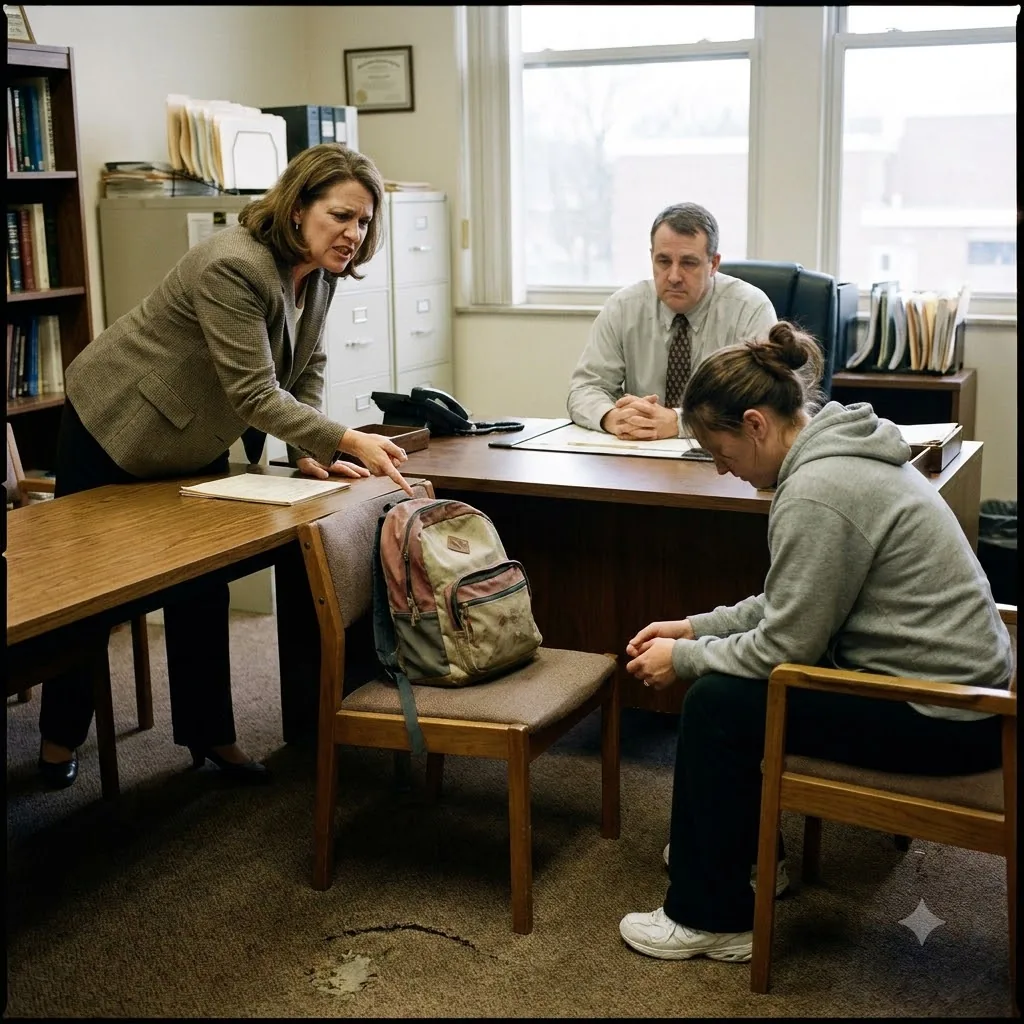
Dana Mercer used Principal Bennett’s office like it was her own meeting room and tried to shame another mother into handing over money with a child’s backpack sitting between their chairs. I was at the side desk sorting late sign-in slips when Dana said, in that polished PTA voice, that refusing to pay would be “the kind of thing a child remembers,” and Marisol Vega’s hand closed around the top handle of her son’s bag so fast the zipper tabs clicked together.
Our main office runs through Bennett’s doorway all day, so I hear plenty without meaning to. The copier was feeding out attendance sheets behind me. The sign-in clipboard was half full. A second grader was waiting on a nurse pass near reception. In the middle of that ordinary school noise, Dana had placed Noah Vega’s backpack upright on the rug like it was a piece of evidence.
“I’m not saying no to helping,” Marisol said. She kept her voice low, but every word came out tight and flat. “I’m saying no to this. Today. I can’t do that.”
Dana rested one manicured hand near the backpack and tipped her head toward Bennett without really looking at him. “Tom, this is what I mean. We tell families we’re a community, and then when one child needs something basic, suddenly everyone has a boundary.”
Bennett stayed in his chair with his calendar open in front of him. He lifted one hand a little, the way he does when he wants a room quiet without actually stepping into the middle of it. “Let’s keep this respectful,” he said.
Dana nodded as if she’d been the respectful one all along. Her volunteer lanyard slid across her blouse when she leaned forward. The expensive canvas tote at her feet had the school’s auction logo on it.
“Respectful is exactly what I’m being,” she said. “Noah should not be the one paying for adult pride. The money is for family need. For his school things. We all know what that means.”
At that, Marisol looked at the backpack instead of Dana. It was a blue one, scuffed at the bottom corners, with one side pocket stretched out from a water bottle. The supply pouch inside had worked its way toward the top, so I could see glue sticks and two chewed pencils through the open gap.
“You already said what it was for,” Marisol said. “My answer is still no.”
Dana gave a small laugh with no smile in it. “So that’s it? You’d rather make this difficult in the principal’s office than do one decent thing for your own family?”
The word family landed hard because she said it louder than everything else. The nurse-pass kid in reception looked over. I kept my eyes on the attendance sheets and reached for a stapler I did not need, because front office work teaches you how to be present without becoming part of the furniture people throw things at.
Marisol finally looked up. “Don’t do that,” she said.
Dana spread both hands. “Do what? Tell the truth? Ask for support? Noah is the one caught in the middle here. Not me.”
Noah was just outside the open office door then, close enough for me to see one sneaker and the hem of his jeans. He must have been brought in during the last transition because a hall pass stuck out of the backpack’s front pocket. He didn’t come in. He stayed near the frame, where kids stand when adults keep using their name like they aren’t there.
Bennett cleared his throat. Late. “Maybe we should focus on options,” he said.
“There was an option,” Marisol answered. “I said no.”
Dana turned in her chair and reached into her tote. For a second I thought she was pulling out paperwork, but it was only her wallet and keys. One new plastic tag swung from the ring, bright and glossy under the office lights.
Then Noah shifted at the door, and the backpack tilted. Something clipped to the top loop flashed the same bright color.
It was a fresh keychain, still stiff, still shiny, not the kind of thing that had been hanging there all semester. A little sneaker charm with a gold letter N. Dana noticed it too. Her hand stopped over the tote. Marisol’s eyes cut from Dana’s keys to Noah’s bag and stayed there.
Dana had spent the last five minutes saying the money was urgently for Noah’s school need tied to that backpack. But the first new thing attached to that bag that day wasn’t a missing supply or a repair. It was a brand-new charm, matching the one on Dana’s key ring like they’d come from the same checkout peg.
No one said anything for one long beat.
Then Dana straightened, put on a smile that showed all her teeth, and said, “Oh good, he already got it,” and that was the first moment the whole story stopped sounding the way she’d told it.
Dana Mercer used Principal Bennett’s office like it was her own meeting room and tried to shame another mother into handing over money with a child’s backpack sitting between their chairs. I was at the side desk sorting late sign-in slips when Dana said, in that polished PTA voice, that refusing to pay would be “the kind of thing a child remembers,” and Marisol Vega’s hand closed around the top handle of her son’s bag so fast the zipper tabs clicked together.
Our main office runs through Bennett’s doorway all day, so I hear plenty without meaning to. The copier was feeding out attendance sheets behind me. The sign-in clipboard was half full. A second grader was waiting on a nurse pass near reception. In the middle of that ordinary school noise, Dana had placed Noah Vega’s backpack upright on the rug like it was a piece of evidence.
“I’m not saying no to helping,” Marisol said. She kept her voice low, but every word came out tight and flat. “I’m saying no to this. Today. I can’t do that.”
Dana rested one manicured hand near the backpack and tipped her head toward Bennett without really looking at him. “Tom, this is what I mean. We tell families we’re a community, and then when one child needs something basic, suddenly everyone has a boundary.”
Bennett stayed in his chair with his calendar open in front of him. He lifted one hand a little, the way he does when he wants a room quiet without actually stepping into the middle of it. “Let’s keep this respectful,” he said.
Dana nodded as if she’d been the respectful one all along. Her volunteer lanyard slid across her blouse when she leaned forward. The expensive canvas tote at her feet had the school’s auction logo on it.
“Respectful is exactly what I’m being,” she said. “Noah should not be the one paying for adult pride. The money is for family need. For his school things. We all know what that means.”
At that, Marisol looked at the backpack instead of Dana. It was a blue one, scuffed at the bottom corners, with one side pocket stretched out from a water bottle. The supply pouch inside had worked its way toward the top, so I could see glue sticks and two chewed pencils through the open gap.
“You already said what it was for,” Marisol said. “My answer is still no.”
Dana gave a small laugh with no smile in it. “So that’s it? You’d rather make this difficult in the principal’s office than do one decent thing for your own family?”
The word family landed hard because she said it louder than everything else. The nurse-pass kid in reception looked over. I kept my eyes on the attendance sheets and reached for a stapler I did not need, because front office work teaches you how to be present without becoming part of the furniture people throw things at.
Marisol finally looked up. “Don’t do that,” she said.
Dana spread both hands. “Do what? Tell the truth? Ask for support? Noah is the one caught in the middle here. Not me.”
Noah was just outside the open office door then, close enough for me to see one sneaker and the hem of his jeans. He must have been brought in during the last transition because a hall pass stuck out of the backpack’s front pocket. He didn’t come in. He stayed near the frame, where kids stand when adults keep using their name like they aren’t there.
Bennett cleared his throat. Late. “Maybe we should focus on options,” he said.
“There was an option,” Marisol answered. “I said no.”
Dana turned in her chair and reached into her tote. For a second I thought she was pulling out paperwork, but it was only her wallet and keys. One new plastic tag swung from the ring, bright and glossy under the office lights.
Then Noah shifted at the door, and the backpack tilted. Something clipped to the top loop flashed the same bright color.
It was a fresh keychain, still stiff, still shiny, not the kind of thing that had been hanging there all semester. A little sneaker charm with a gold letter N. Dana noticed it too. Her hand stopped over the tote. Marisol’s eyes cut from Dana’s keys to Noah’s bag and stayed there.
Dana had spent the last five minutes saying the money was urgently for Noah’s school need tied to that backpack. But the first new thing attached to that bag that day wasn’t a missing supply or a repair. It was a brand-new charm, matching the one on Dana’s key ring like they’d come from the same checkout peg.
No one said anything for one long beat.
Then Dana straightened, put on a smile that showed all her teeth, and said, “Oh good, he already got it,” and that was the first moment the whole story stopped sounding the way she’d told it.