Story code: ST-000967
Part 1: She Said I Was Using Her Mother
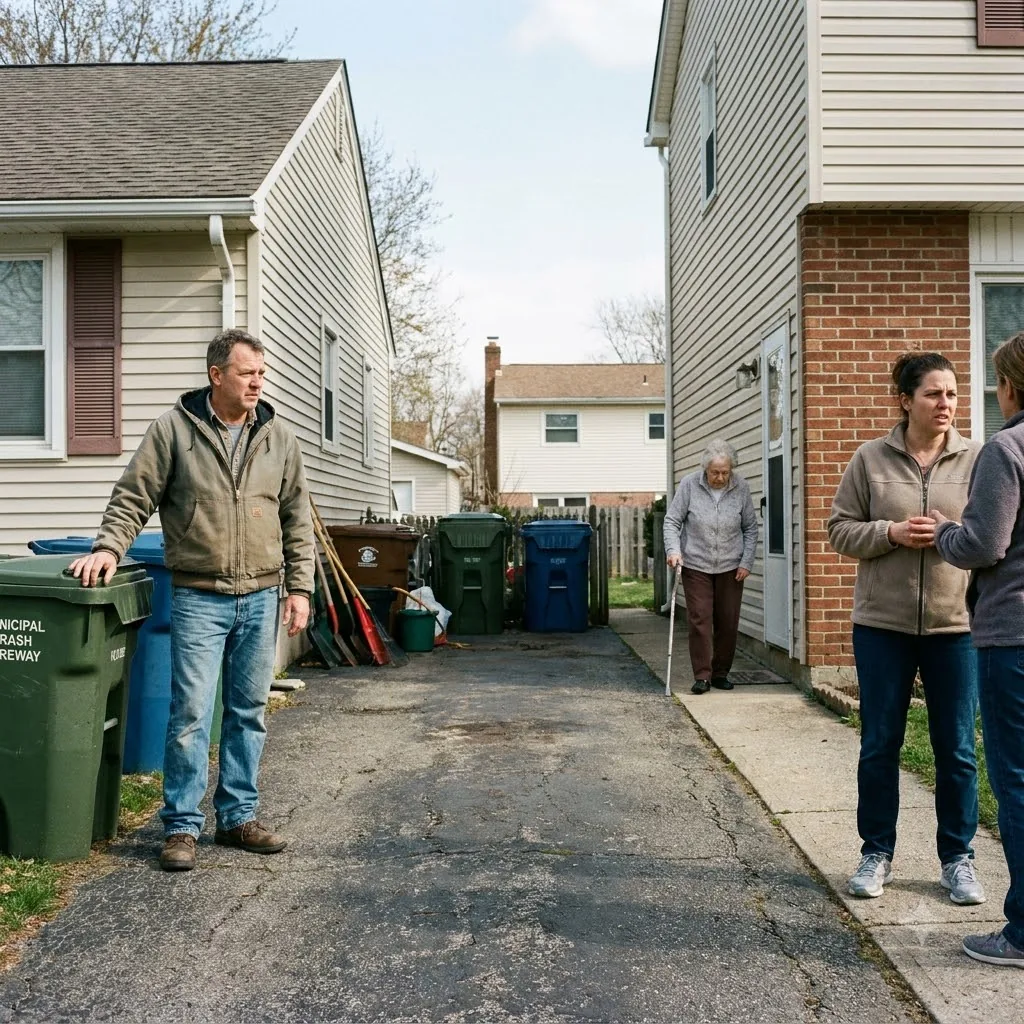
Last Tuesday I dragged my neighbor’s trash bin back from the curb so her mother wouldn’t have to squeeze past it with her cane, and by dinner my next-door neighbor was outside in the shared driveway telling people I was “trying to control access” to her house. She said it loud enough for the houses across from us to hear, with one hand pointed at the bins like they were evidence. The worst part was that I had only touched them because she had left them blocking the side path again. We share one of those narrow suburban driveways where two houses sit too close together and everything ends up visible. If one bin is left at an angle, it cuts the walking space in half. If the recycling bin stays near the Brand side door, Lorraine Brand has to step around it to get to her car or the mailbox path. I know that because I’ve watched her stop, look down, and wait until she could steady herself before trying to pass. I never set out to become part of their routine. I just started doing what was right in front of me. A few months ago, I noticed their bins still at the curb late in the day after pickup. Then I noticed Lorraine by the side door, cardigan on, keys in hand, staring at the recycling bin like it was a piece of furniture someone had dropped in the wrong room. I had my work gloves on already because I was hauling in my own cans. I asked, “Do you want me to pull that over?” She gave one short nod and said, “If you don’t mind.” That was it. No speech. No arrangement. Just a visible problem and an older woman who clearly was not going to muscle a wheeled bin around a shared driveway. After that, if I saw both bins left out too long or set where they blocked the path, I moved them. Sometimes I rolled theirs down with mine the night before pickup if I could see Lorraine trying to manage the lids. Sometimes I brought them back in after the truck came through. I didn’t ring the bell. I didn’t text. I just did it and went back inside. Then Kelsey Brand started catching me at it. The first time, she was backing out fast on a Wednesday morning while I was straightening the recycling bin so it wouldn’t roll toward the path. She lowered her window and said, “You don’t need to handle our property.” I kept my voice even. “It was in your mother’s way.” She gave a tight smile that didn’t reach her eyes and said, “My mother is fine. Please worry about your own side.” Then she drove off. So I did. For almost two weeks, I touched nothing that wasn’t mine. On the second Friday of that stretch, I opened my garage-side door and saw Lorraine standing by her side door with the trash bin turned sideways across the narrowest part of the driveway. She wasn’t calling out. She was just waiting. I walked over and said, “Do you want me to move it?” Before she answered, Kelsey came out of the house behind her and said, “No, actually. We don’t need your help. This is exactly the problem.” I stepped back. “I asked because it’s blocking the path.” Kelsey said, louder this time, “No, the problem is you keep creating reasons to involve yourself.” Lorraine looked down at the concrete. She didn’t argue. She also didn’t move the bin. After a few seconds, Kelsey yanked it back herself, hard enough that one wheel bounced. Then she looked at me and said, “Please stop inserting yourself into my family situation.” That should have been the end of it. I should have learned my lesson, kept my hands off their bins forever, and let them handle their own mess. But trash day in a shared driveway does not stay private when someone stops doing the work. The next week, both Brand bins sat at the curb until after dark. The recycling bin had tipped partly into the driveway apron. Lorraine did not come out at all that evening. I brought only my bins in and left theirs there. The morning after that, I heard Kelsey outside talking to someone near the mailbox cluster. I couldn’t catch every word from my porch, but I heard my name, and I heard, “She keeps messing with our bins,” and, “She acts like my mother can’t do anything.” By the weekend, Miguel Alvarez from across the way gave me that careful neighbor half-nod people use when they know there’s a story and don’t want to ask. Another woman I usually chat with during dog walks said, “I hope things smooth over with next door.” That was how I knew Kelsey had not kept it to one conversation. Then came Tuesday. Pickup had happened early. Around noon, I pulled into my garage and saw both Brand bins still at the curb, one lid blown open, and Lorraine standing at her side door with a small kitchen trash bag in one hand. She looked at the driveway, then at the bins, then back at the door. I put my groceries down inside, grabbed my gloves, and rolled both bins back up, tucking the recycling bin against their fence line so the path stayed clear. At six o’clock, Kelsey came home to an audience I hadn’t known was forming. Miguel was checking his mail. The couple from two houses down were unloading soccer bags. I was watering the planter by my garage. Kelsey stopped in the middle of the driveway, pointed at the bins, and said, “There she goes again. Moving our stuff around like she owns the place.” I said, “I moved them in from the curb.” She laughed once, sharp and short. “No, you move them to make a point. You want everyone to think I’m neglecting my mother.” I felt every.
Last Tuesday I dragged my neighbor’s trash bin back from the curb so her mother wouldn’t have to squeeze past it with her cane, and by dinner my next-door neighbor was outside in the shared driveway telling people I was “trying to control access” to her house. She said it loud enough for the houses across from us to hear, with one hand pointed at the bins like they were evidence. The worst part was that I had only touched them because she had left them blocking the side path again. We share one of those narrow suburban driveways where two houses sit too close together and everything ends up visible. If one bin is left at an angle, it cuts the walking space in half. If the recycling bin stays near the Brand side door, Lorraine Brand has to step around it to get to her car or the mailbox path. I know that because I’ve watched her stop, look down, and wait until she could steady herself before trying to pass. I never set out to become part of their routine. I just started doing what was right in front of me. A few months ago, I noticed their bins still at the curb late in the day after pickup. Then I noticed Lorraine by the side door, cardigan on, keys in hand, staring at the recycling bin like it was a piece of furniture someone had dropped in the wrong room. I had my work gloves on already because I was hauling in my own cans. I asked, “Do you want me to pull that over?” She gave one short nod and said, “If you don’t mind.” That was it. No speech. No arrangement. Just a visible problem and an older woman who clearly was not going to muscle a wheeled bin around a shared driveway. After that, if I saw both bins left out too long or set where they blocked the path, I moved them. Sometimes I rolled theirs down with mine the night before pickup if I could see Lorraine trying to manage the lids. Sometimes I brought them back in after the truck came through. I didn’t ring the bell. I didn’t text. I just did it and went back inside. Then Kelsey Brand started catching me at it. The first time, she was backing out fast on a Wednesday morning while I was straightening the recycling bin so it wouldn’t roll toward the path. She lowered her window and said, “You don’t need to handle our property.” I kept my voice even. “It was in your mother’s way.” She gave a tight smile that didn’t reach her eyes and said, “My mother is fine. Please worry about your own side.” Then she drove off. So I did. For almost two weeks, I touched nothing that wasn’t mine. On the second Friday of that stretch, I opened my garage-side door and saw Lorraine standing by her side door with the trash bin turned sideways across the narrowest part of the driveway. She wasn’t calling out. She was just waiting. I walked over and said, “Do you want me to move it?” Before she answered, Kelsey came out of the house behind her and said, “No, actually. We don’t need your help. This is exactly the problem.” I stepped back. “I asked because it’s blocking the path.” Kelsey said, louder this time, “No, the problem is you keep creating reasons to involve yourself.” Lorraine looked down at the concrete. She didn’t argue. She also didn’t move the bin. After a few seconds, Kelsey yanked it back herself, hard enough that one wheel bounced. Then she looked at me and said, “Please stop inserting yourself into my family situation.” That should have been the end of it. I should have learned my lesson, kept my hands off their bins forever, and let them handle their own mess. But trash day in a shared driveway does not stay private when someone stops doing the work. The next week, both Brand bins sat at the curb until after dark. The recycling bin had tipped partly into the driveway apron. Lorraine did not come out at all that evening. I brought only my bins in and left theirs there. The morning after that, I heard Kelsey outside talking to someone near the mailbox cluster. I couldn’t catch every word from my porch, but I heard my name, and I heard, “She keeps messing with our bins,” and, “She acts like my mother can’t do anything.” By the weekend, Miguel Alvarez from across the way gave me that careful neighbor half-nod people use when they know there’s a story and don’t want to ask. Another woman I usually chat with during dog walks said, “I hope things smooth over with next door.” That was how I knew Kelsey had not kept it to one conversation. Then came Tuesday. Pickup had happened early. Around noon, I pulled into my garage and saw both Brand bins still at the curb, one lid blown open, and Lorraine standing at her side door with a small kitchen trash bag in one hand. She looked at the driveway, then at the bins, then back at the door. I put my groceries down inside, grabbed my gloves, and rolled both bins back up, tucking the recycling bin against their fence line so the path stayed clear. At six o’clock, Kelsey came home to an audience I hadn’t known was forming. Miguel was checking his mail. The couple from two houses down were unloading soccer bags. I was watering the planter by my garage. Kelsey stopped in the middle of the driveway, pointed at the bins, and said, “There she goes again. Moving our stuff around like she owns the place.” I said, “I moved them in from the curb.” She laughed once, sharp and short. “No, you move them to make a point. You want everyone to think I’m neglecting my mother.” I felt every.