Story code: ST-000147
Part 1: He Said She Was the Problem
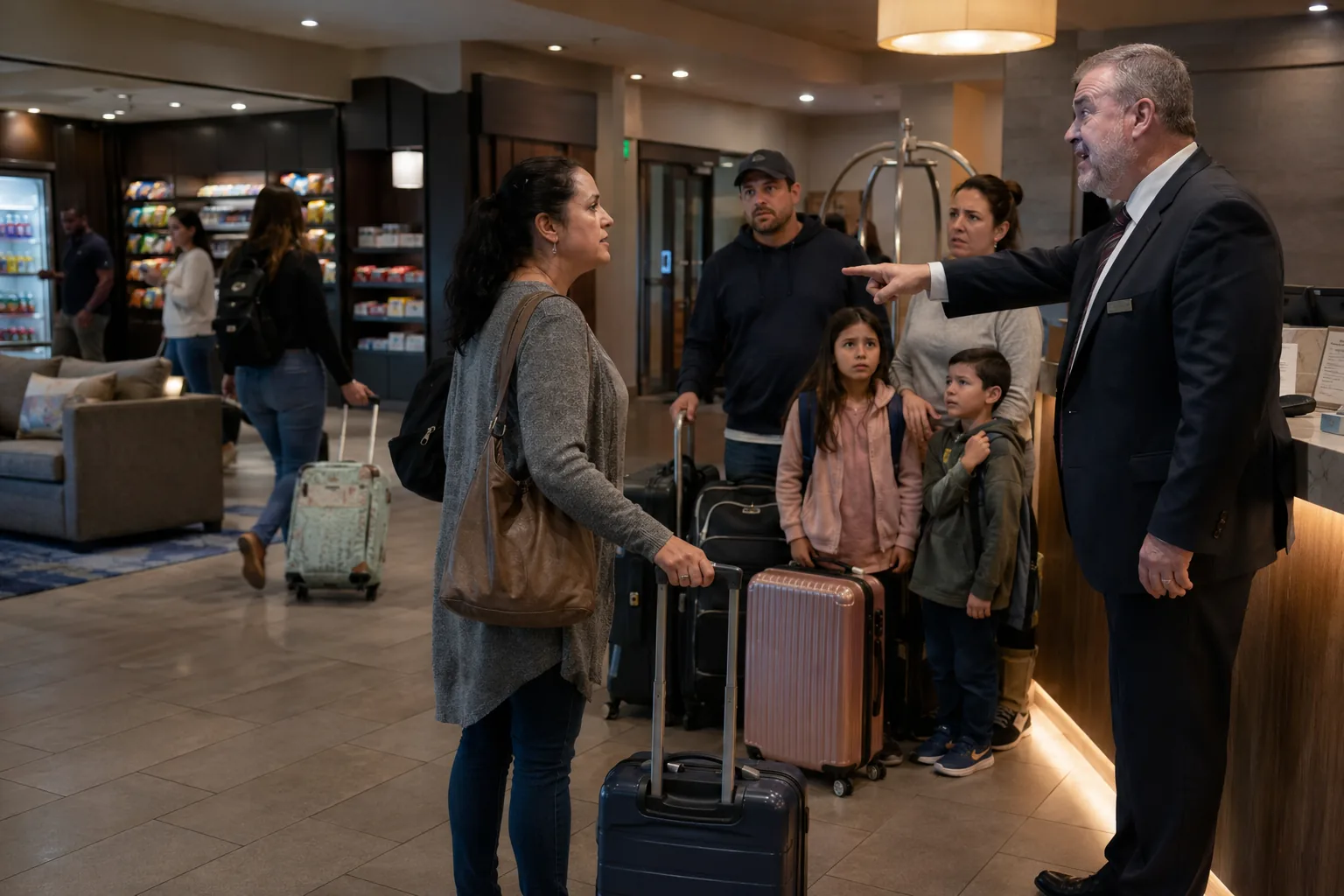
The hotel manager pointed at Tessa Morales in the middle of the lobby and said, loud enough for people crossing from the snack alcove to the elevators to hear, “Ma’am, if you keep interfering with this family’s check-in, I’m going to have to ask you to step back.” She was the one holding a tired little boy’s backpack, steering a rolling suitcase with her foot, and keeping two fresh keycards from sliding off the printed folio sleeve while her sister dug through her phone. That was the first ugly thing about it. The second was that half the lobby had just watched Tessa do the work that kept the family moving.
Mr. Devlin had been waiting by the stanchion with a carry-on and a room-temperature bottle of water from the lobby cooler. He had a clear line to the desk because the family had arrived in pieces and then tightened into one knot right in front of him. A child stood by the handle of a large navy suitcase. Another leaned against Lena Morales’s hip and kept asking, “Are we going upstairs now?”
Lena had the reservation email open on her phone, but the screen kept going dark while she answered questions in bursts.
“Last name?”
“Morales.”
“Photo ID?”
She shifted her purse, tucked the phone under her arm, nearly dropped a small zip pouch, and looked over her shoulder for one of the kids at the same time. Tessa was already there, taking the zip pouch before it hit the floor, nudging the bigger suitcase out of the path of a luggage cart, and telling the older child, Maya, “Stay by me, okay? Hand on the handle.”
No one at the desk said thank you for any of that. Brandon Pike, the manager, kept his smile set in the polished way hotel people use when they want the room to hear them being reasonable.
“For the protection of our guests,” he said, looking at Lena but speaking around Tessa, “I need the registered guest to handle the transaction directly. Too many voices can create confusion.”
Tessa did not raise her voice. “She’s handling it. I’m holding the kids’ stuff because she only has two hands.”
That could have ended it. Mr. Devlin saw that. A clerk at the side terminal glanced up, then back down fast enough to look like a practiced move.
Instead Brandon slid the keycards a few inches back from the counter with two fingers and said, “And that’s exactly the issue. You already took possession of room access before the check-in was complete. That is not helping.”
A couple in golf shirts slowed near the seating area by the windows. Maya’s hand tightened on the suitcase handle. Lena looked from the keycards to Tessa and back to Brandon.
“She didn’t take anything,” Lena said. “You handed them over when I was getting my ID out.”
Brandon’s smile did not move, but his voice got firmer. “Ma’am, I handed temporary materials to the reservation party. What happened after that is why I need clear boundaries right now.”
The wording landed exactly where he wanted it to land. The older guest near the coffee station turned his head. A woman with a tote bag looked at Tessa the way people look when they think they have identified the difficult person in a public place.
Tessa set the backpack upright by Maya’s feet, flattened the folio sleeve on the counter, and lined the two keycards on top of it like evidence she was trying not to call evidence.
“You gave me those while my sister was holding her son and fishing for her wallet,” she said. “I put them on the sleeve so they wouldn’t fall. That’s all.”
Brandon kept one hand near the keyboard. “And now we’re debating instead of completing check-in. That’s my concern. The children need stability, not extra disruption.”
It was a clean line, and ugly because it borrowed the shape of care while aiming it at the only person doing visible care work. Tessa had one suitcase angled behind her calf, one eye on Maya, and enough reach to catch the younger child when he drifted toward the brass luggage cart. Brandon had a keyboard, a key encoder, and a voice that carried.
Lena tried to move it along. She put her ID on the counter. “Can we just finish this? Please. We need the room.”
“Of course,” Brandon said, though he did not move as fast as the word suggested. He tapped the keyboard, frowned at the monitor, and asked for the card on file. Lena started digging in her purse again. Tessa quietly took the younger child’s juice pouch before it spilled and set it on the counter edge beside the phone with the reservation email.
Then Brandon looked at the keycards and said, “Actually, I need to reissue these since control of them has already become unclear.”
He said it like she had contaminated them.
Mr. Devlin had seen the first handoff. He had also seen who kept touching what after that: Tessa with the children, the bags, the sleeve, the cards only long enough to stop them sliding; Lena with the phone, purse, and ID; Brandon with the keyboard and the machine that made the cards blink green before he changed his mind.
Tessa stared at the desk for one beat, then said, very flat, “Fine. Reissue them. But if you’re pulling logs, pull the timestamps too.”
That made Brandon’s fingers pause over the keyboard. Not long. Just long enough for Mr. Devlin to notice.
The new cards had not printed yet, and suddenly the question in the lobby was no longer whether Tessa was helping too much. It was what the desk record would show if anyone looked at when those first keycards were made, who they were handed toward, and who had actually kept that family from coming apart at the front desk.
The hotel manager pointed at Tessa Morales in the middle of the lobby and said, loud enough for people crossing from the snack alcove to the elevators to hear, “Ma’am, if you keep interfering with this family’s check-in, I’m going to have to ask you to step back.” She was the one holding a tired little boy’s backpack, steering a rolling suitcase with her foot, and keeping two fresh keycards from sliding off the printed folio sleeve while her sister dug through her phone. That was the first ugly thing about it. The second was that half the lobby had just watched Tessa do the work that kept the family moving.
Mr. Devlin had been waiting by the stanchion with a carry-on and a room-temperature bottle of water from the lobby cooler. He had a clear line to the desk because the family had arrived in pieces and then tightened into one knot right in front of him. A child stood by the handle of a large navy suitcase. Another leaned against Lena Morales’s hip and kept asking, “Are we going upstairs now?”
Lena had the reservation email open on her phone, but the screen kept going dark while she answered questions in bursts.
“Last name?”
“Morales.”
“Photo ID?”
She shifted her purse, tucked the phone under her arm, nearly dropped a small zip pouch, and looked over her shoulder for one of the kids at the same time. Tessa was already there, taking the zip pouch before it hit the floor, nudging the bigger suitcase out of the path of a luggage cart, and telling the older child, Maya, “Stay by me, okay? Hand on the handle.”
No one at the desk said thank you for any of that. Brandon Pike, the manager, kept his smile set in the polished way hotel people use when they want the room to hear them being reasonable.
“For the protection of our guests,” he said, looking at Lena but speaking around Tessa, “I need the registered guest to handle the transaction directly. Too many voices can create confusion.”
Tessa did not raise her voice. “She’s handling it. I’m holding the kids’ stuff because she only has two hands.”
That could have ended it. Mr. Devlin saw that. A clerk at the side terminal glanced up, then back down fast enough to look like a practiced move.
Instead Brandon slid the keycards a few inches back from the counter with two fingers and said, “And that’s exactly the issue. You already took possession of room access before the check-in was complete. That is not helping.”
A couple in golf shirts slowed near the seating area by the windows. Maya’s hand tightened on the suitcase handle. Lena looked from the keycards to Tessa and back to Brandon.
“She didn’t take anything,” Lena said. “You handed them over when I was getting my ID out.”
Brandon’s smile did not move, but his voice got firmer. “Ma’am, I handed temporary materials to the reservation party. What happened after that is why I need clear boundaries right now.”
The wording landed exactly where he wanted it to land. The older guest near the coffee station turned his head. A woman with a tote bag looked at Tessa the way people look when they think they have identified the difficult person in a public place.
Tessa set the backpack upright by Maya’s feet, flattened the folio sleeve on the counter, and lined the two keycards on top of it like evidence she was trying not to call evidence.
“You gave me those while my sister was holding her son and fishing for her wallet,” she said. “I put them on the sleeve so they wouldn’t fall. That’s all.”
Brandon kept one hand near the keyboard. “And now we’re debating instead of completing check-in. That’s my concern. The children need stability, not extra disruption.”
It was a clean line, and ugly because it borrowed the shape of care while aiming it at the only person doing visible care work. Tessa had one suitcase angled behind her calf, one eye on Maya, and enough reach to catch the younger child when he drifted toward the brass luggage cart. Brandon had a keyboard, a key encoder, and a voice that carried.
Lena tried to move it along. She put her ID on the counter. “Can we just finish this? Please. We need the room.”
“Of course,” Brandon said, though he did not move as fast as the word suggested. He tapped the keyboard, frowned at the monitor, and asked for the card on file. Lena started digging in her purse again. Tessa quietly took the younger child’s juice pouch before it spilled and set it on the counter edge beside the phone with the reservation email.
Then Brandon looked at the keycards and said, “Actually, I need to reissue these since control of them has already become unclear.”
He said it like she had contaminated them.
Mr. Devlin had seen the first handoff. He had also seen who kept touching what after that: Tessa with the children, the bags, the sleeve, the cards only long enough to stop them sliding; Lena with the phone, purse, and ID; Brandon with the keyboard and the machine that made the cards blink green before he changed his mind.
Tessa stared at the desk for one beat, then said, very flat, “Fine. Reissue them. But if you’re pulling logs, pull the timestamps too.”
That made Brandon’s fingers pause over the keyboard. Not long. Just long enough for Mr. Devlin to notice.
The new cards had not printed yet, and suddenly the question in the lobby was no longer whether Tessa was helping too much. It was what the desk record would show if anyone looked at when those first keycards were made, who they were handed toward, and who had actually kept that family from coming apart at the front desk.