Story code: ST-000382
Part 1: The Door He Said He Never Crossed
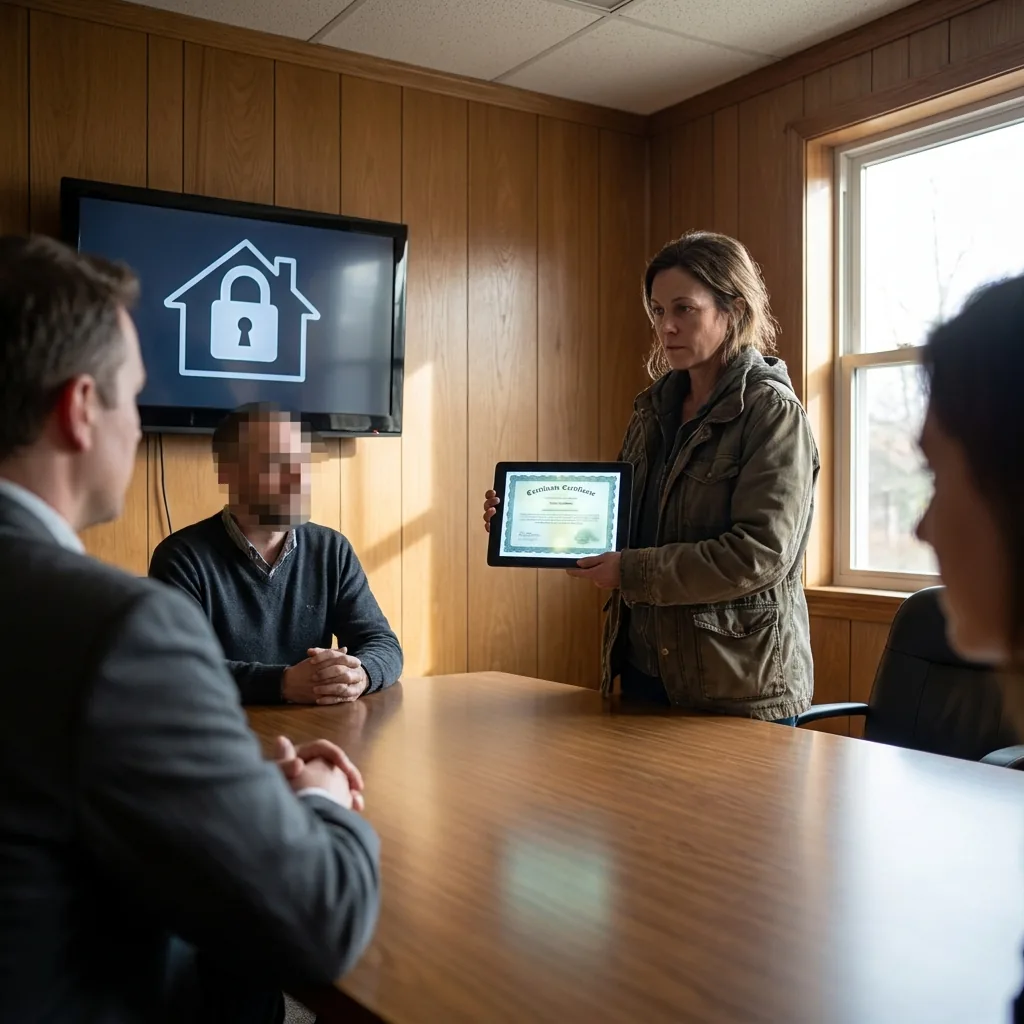
I was checking parties into a private hearing room in the virtual courthouse when a tenant came in holding up her digital deed with both hands and said her landlord had walked through her locked home threshold anyway. Her voice stayed level for the first few words, but her avatar kept resetting half a step back from the room edge like her body still expected somebody to come through after her. The ugly part was standing right there in the intake panel with us: her deed showed private-residence status, and the landlord was already in my queue insisting no boundary had been crossed at all.
Most intake shifts are simple. I confirm the parties, pin the visible evidence lane, make sure nobody drags in side panels the judge did not authorize, and move them into the hearing room in order. That morning I had three lease disputes stacked, one access-repair petition, and then Tessa Vaughn appearing on my threshold with her residence deed already enlarged in front of her like she knew she would have to keep it visible every second or lose the room.
“Name for the complaint,” I said.
“Tessa Vaughn. Private entry violation.” She slid the deed toward my review column. “He came in at 9:14 platform time. My place was locked. I was inside.”
She did not give me anything extra. People who are performing usually do. They add speeches before I ask basic verification. Tessa just kept one fingertip pressed to the deed seal where the permission ring glowed blue around resident access only.
Grant Mercer entered from the opposite queue a second later with the kind of clean, polished avatar finish that always reads expensive in this system. He did not look at Tessa first. He looked at the deed display, then at my intake controls.
“This is being framed incorrectly,” he said. “Management presence is not the same as unauthorized entry.”
Tessa snapped her head toward him. “You were inside my bedroom skin.”
I lifted one hand before it could turn into a cross-argument at my station. “Only direct responses in intake. Judge Ortega will handle argument. Deed stays visible. Any access log stays in the proof lane only.”
Grant gave me a short nod, too quick to mean much. “There was no threshold crossing by me.”
That was the first wording shift I noticed. Not no entry. Not I was never there. Just no threshold crossing by me.
I tagged the complaint and opened the private hearing room. The walls resolved into the standard courthouse gray with the shared record ribbon across the center, and the threshold marker lit under each avatar as they stepped in. Judge Lena Ortega was already present at the bench line, still as a pinned icon, one hand resting near the room controls.
“Display the deed,” she said.
Tessa brought it up immediately. The seal floated between them: resident rights, lease term, private threshold protection, landlord management permissions limited to maintenance windows and notice-linked functions. Clean enough for a first pass.
Judge Ortega looked at Grant. “Do you dispute that this deed governs the residence?”
“No. I dispute the characterization of what occurred.”
“Then characterize it carefully.”
His shoulders squared a little. “A system-normal access event tied to property oversight. Not a private boundary breach.”
Tessa let out one sharp breath through her nose. “He is trying to rename my door.”
The judge did not react to the line. “Timestamp.”
Tessa touched the entry mark on the deed-linked record. “9:14. I revoked all guest permissions two weeks before that. There was no maintenance window.”
I pulled the access companion panel into the side lane and locked it for court view. Only a thin slice showed at first: entry time, residence ID, deed authority reference. The direct actor field was blanked pending judicial expansion.
Grant saw that blank field and relaxed just enough for me to catch it.
Judge Ortega caught it too, or at least she paused there. “Mr. Mercer, if your position is system-normal access, identify the permission used.”
“I don’t control how the platform labels internal routing,” he said. “Landlord tools can touch a property without constituting entry.”
“Touch is not the issue before me,” she said. “Threshold crossing is.”
Tessa did not interrupt again, but her hand tightened around the edge of her deed until the display trembled for a second. The access panel refreshed. One more layer of routing data appeared under the deed reference, not the full chain, just enough to show that the event had not originated from Grant’s visible management console.
That was when the room changed.
Tessa leaned toward the panel. Grant stopped speaking mid-breath. Judge Ortega tapped once and held the display where it was.
I read the routing tag as it resolved, then read it again because the linked credential name was not Grant Mercer.
It was Vaughn.
Not Tessa Vaughn’s resident credential. A secondary credential marker. Shared surname. Separate user string.
Tessa’s voice came out thin and flat. “Why is that name on my door?”
Judge Ortega did not answer her. She looked at me. “Seal the current display. No expansion without instruction.”
I sealed it.
Then she looked back at Grant and said, “Now we are no longer discussing whether someone crossed the threshold. We are discussing how your denial survives that route.”
Grant’s mouth opened, then closed. Tessa never took her eyes off the frozen routing line.
The name on it was Eli Vaughn.
I was checking parties into a private hearing room in the virtual courthouse when a tenant came in holding up her digital deed with both hands and said her landlord had walked through her locked home threshold anyway. Her voice stayed level for the first few words, but her avatar kept resetting half a step back from the room edge like her body still expected somebody to come through after her. The ugly part was standing right there in the intake panel with us: her deed showed private-residence status, and the landlord was already in my queue insisting no boundary had been crossed at all.
Most intake shifts are simple. I confirm the parties, pin the visible evidence lane, make sure nobody drags in side panels the judge did not authorize, and move them into the hearing room in order. That morning I had three lease disputes stacked, one access-repair petition, and then Tessa Vaughn appearing on my threshold with her residence deed already enlarged in front of her like she knew she would have to keep it visible every second or lose the room.
“Name for the complaint,” I said.
“Tessa Vaughn. Private entry violation.” She slid the deed toward my review column. “He came in at 9:14 platform time. My place was locked. I was inside.”
She did not give me anything extra. People who are performing usually do. They add speeches before I ask basic verification. Tessa just kept one fingertip pressed to the deed seal where the permission ring glowed blue around resident access only.
Grant Mercer entered from the opposite queue a second later with the kind of clean, polished avatar finish that always reads expensive in this system. He did not look at Tessa first. He looked at the deed display, then at my intake controls.
“This is being framed incorrectly,” he said. “Management presence is not the same as unauthorized entry.”
Tessa snapped her head toward him. “You were inside my bedroom skin.”
I lifted one hand before it could turn into a cross-argument at my station. “Only direct responses in intake. Judge Ortega will handle argument. Deed stays visible. Any access log stays in the proof lane only.”
Grant gave me a short nod, too quick to mean much. “There was no threshold crossing by me.”
That was the first wording shift I noticed. Not no entry. Not I was never there. Just no threshold crossing by me.
I tagged the complaint and opened the private hearing room. The walls resolved into the standard courthouse gray with the shared record ribbon across the center, and the threshold marker lit under each avatar as they stepped in. Judge Lena Ortega was already present at the bench line, still as a pinned icon, one hand resting near the room controls.
“Display the deed,” she said.
Tessa brought it up immediately. The seal floated between them: resident rights, lease term, private threshold protection, landlord management permissions limited to maintenance windows and notice-linked functions. Clean enough for a first pass.
Judge Ortega looked at Grant. “Do you dispute that this deed governs the residence?”
“No. I dispute the characterization of what occurred.”
“Then characterize it carefully.”
His shoulders squared a little. “A system-normal access event tied to property oversight. Not a private boundary breach.”
Tessa let out one sharp breath through her nose. “He is trying to rename my door.”
The judge did not react to the line. “Timestamp.”
Tessa touched the entry mark on the deed-linked record. “9:14. I revoked all guest permissions two weeks before that. There was no maintenance window.”
I pulled the access companion panel into the side lane and locked it for court view. Only a thin slice showed at first: entry time, residence ID, deed authority reference. The direct actor field was blanked pending judicial expansion.
Grant saw that blank field and relaxed just enough for me to catch it.
Judge Ortega caught it too, or at least she paused there. “Mr. Mercer, if your position is system-normal access, identify the permission used.”
“I don’t control how the platform labels internal routing,” he said. “Landlord tools can touch a property without constituting entry.”
“Touch is not the issue before me,” she said. “Threshold crossing is.”
Tessa did not interrupt again, but her hand tightened around the edge of her deed until the display trembled for a second. The access panel refreshed. One more layer of routing data appeared under the deed reference, not the full chain, just enough to show that the event had not originated from Grant’s visible management console.
That was when the room changed.
Tessa leaned toward the panel. Grant stopped speaking mid-breath. Judge Ortega tapped once and held the display where it was.
I read the routing tag as it resolved, then read it again because the linked credential name was not Grant Mercer.
It was Vaughn.
Not Tessa Vaughn’s resident credential. A secondary credential marker. Shared surname. Separate user string.
Tessa’s voice came out thin and flat. “Why is that name on my door?”
Judge Ortega did not answer her. She looked at me. “Seal the current display. No expansion without instruction.”
I sealed it.
Then she looked back at Grant and said, “Now we are no longer discussing whether someone crossed the threshold. We are discussing how your denial survives that route.”
Grant’s mouth opened, then closed. Tessa never took her eyes off the frozen routing line.
The name on it was Eli Vaughn.