Story code: ST-000875
Part 1: She Wanted the Baby Moved Right Now
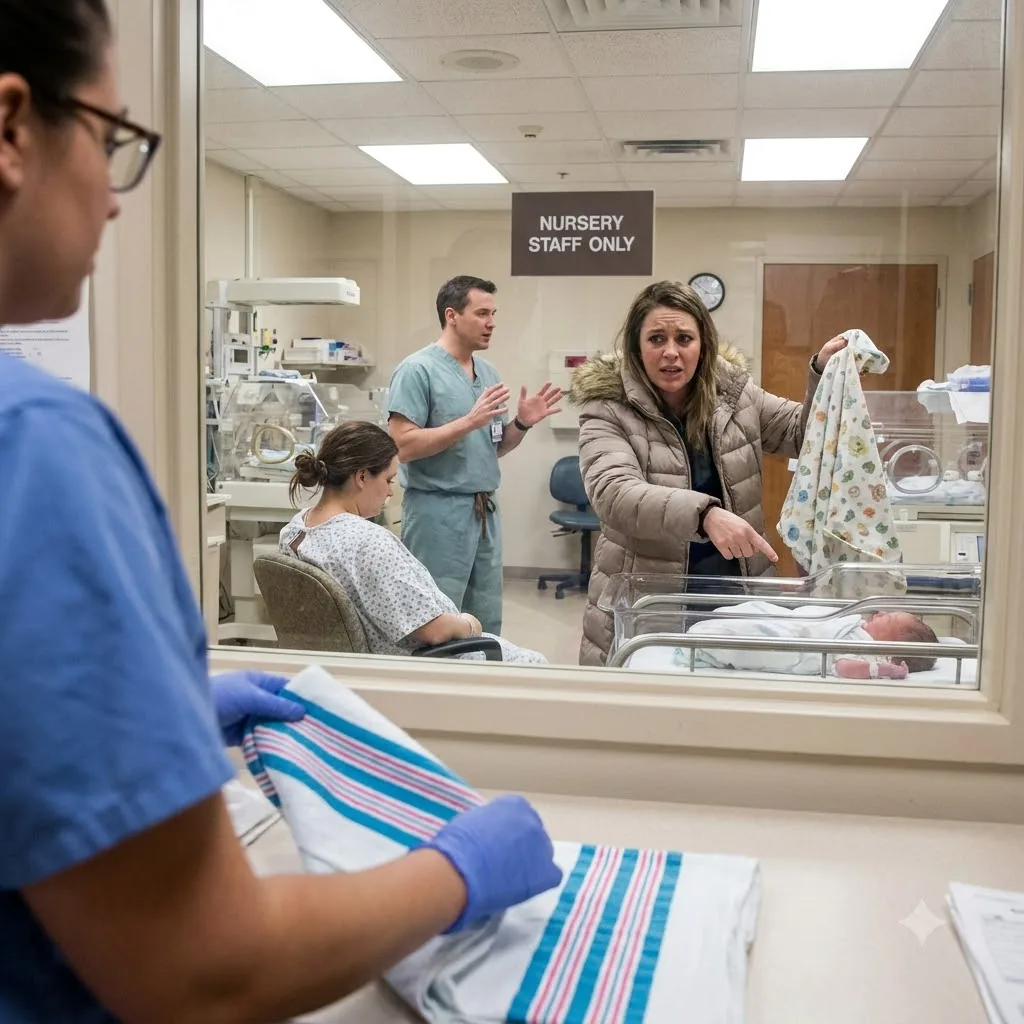
I was folding nursery blankets beside the bassinet row when Alyssa Grant came through the doors holding one of our baby blankets like it was proof of a fire, pointed at a newborn behind the glass, and told me I needed to hand that baby over immediately before he was hurt. She said it loud enough for the other families near the observation window to hear, and when I told her nobody removed a baby on a shouted claim, she stepped closer, snapped that every second mattered, and made it sound like I was the one putting a newborn at risk.
I work the front side of the nursery, which means I handle labels, blankets, bassinets, and all the small routine things people think are simple until somebody tries to blow through procedure. That morning had been normal. I had a rolling linen cart parked near the window, three stacks of blankets half folded, and the usual soft machine noise in the room. Babies were sleeping. Nurse Dana Pike was checking a chart at the far station. Tiana Brooks was in a chair just outside the nursery doors where she could still see in, moving slower than everybody else, hospital socks on, postpartum wristband bright against the arm of the chair.
Then Alyssa came in fast enough that the badge door was still closing behind her when she started talking.
“That blanket was on the wrong baby,” she said. She shook the blanket once in front of me. It had our nursery pattern on it, tiny ducks and pale stripes. “You need to move him now. Right now. If that blanket was mixed up, then he could have been exposed to something, and I’m not waiting while everybody stands here.”
Her voice rose on “right now.” Eric Grant stayed near the doorway with his phone in his hand, checking the screen like he was measuring us against a clock only he could see.
I kept my hands off the bassinet and said, “If you’re making a medical concern, I need the charge nurse.”
“No,” Alyssa said, cutting right over me. Then she corrected herself so quickly it almost stacked on top of the first word. “I mean yes, but I need that baby brought out first. You can call whoever after.”
That was the first hard turn in the room. She wanted emergency language, but only in the order that gave her the baby first.
By then Dana had already looked up. She crossed the floor without hurrying. That was one thing about her. She never matched volume with volume.
“Tell me exactly what you’re claiming,” Dana said.
Alyssa turned toward her and lifted the blanket higher. “This blanket was switched. I know it was. If this came off another baby, then he needs to be taken out of there and brought to me now. You need neonatal support or infection control or whoever handles this, because I am not letting this keep going.”
A couple standing by the window stopped talking. Tiana pushed herself up from the chair outside the door and came closer, one hand on the wall, eyes fixed on the blanket and then on the bassinet Alyssa had pointed at.
Dana said, “If you’re alleging exposure or contamination, no one is moving this infant into a hallway handoff. We escalate inside protocol. Marisol, keep the bassinet in place. Eric, step clear of the door.”
Eric stepped back half a pace. Alyssa didn’t.
“This is exactly why hospitals get sued,” she said. “You people wait and wait while a baby sits there. I said call support. Do it.”
Dana reached for the desk phone and hit the nursery line for backup. She asked for supervisor response and neonatal evaluation to the nursery, her tone flat and precise. I could hear every word because the room had gone so quiet around Alyssa’s voice.
That was when Alyssa changed again.
She put her free hand up toward the phone like she could stop the call after it had already gone through. “No, not like that,” she said. “You don’t need to make it into a whole incident. I was just saying the blanket is wrong. Just bring him out and let me fix it.”
Dana lowered the phone but did not hang up. “You just requested urgent outside help based on a possible exposure claim,” she said.
“I said the blanket was wrong,” Alyssa shot back. “Don’t twist my words.”
Tiana’s voice came from the doorway, steady but carrying. “If it’s an exposure claim, why are you trying to stop the nurse from calling help?”
Nobody answered her for a second. Eric looked down at his phone, then slipped it into his pocket. Alyssa kept hold of the blanket with both hands now, bunching the edge tight between her fingers.
Dana finished the call.
The room stayed bright and still in that strange hospital way, every face turned toward the same bassinet, the same blanket, the same woman who had spent the last two minutes saying this could not wait and was now telling us not to bring the exact people she had demanded. And when Dana asked one more time, in front of all of us, whether Alyssa was making a medical emergency claim or not, Alyssa opened her mouth, looked at the blanket, and did not give the same answer twice.
I was folding nursery blankets beside the bassinet row when Alyssa Grant came through the doors holding one of our baby blankets like it was proof of a fire, pointed at a newborn behind the glass, and told me I needed to hand that baby over immediately before he was hurt. She said it loud enough for the other families near the observation window to hear, and when I told her nobody removed a baby on a shouted claim, she stepped closer, snapped that every second mattered, and made it sound like I was the one putting a newborn at risk.
I work the front side of the nursery, which means I handle labels, blankets, bassinets, and all the small routine things people think are simple until somebody tries to blow through procedure. That morning had been normal. I had a rolling linen cart parked near the window, three stacks of blankets half folded, and the usual soft machine noise in the room. Babies were sleeping. Nurse Dana Pike was checking a chart at the far station. Tiana Brooks was in a chair just outside the nursery doors where she could still see in, moving slower than everybody else, hospital socks on, postpartum wristband bright against the arm of the chair.
Then Alyssa came in fast enough that the badge door was still closing behind her when she started talking.
“That blanket was on the wrong baby,” she said. She shook the blanket once in front of me. It had our nursery pattern on it, tiny ducks and pale stripes. “You need to move him now. Right now. If that blanket was mixed up, then he could have been exposed to something, and I’m not waiting while everybody stands here.”
Her voice rose on “right now.” Eric Grant stayed near the doorway with his phone in his hand, checking the screen like he was measuring us against a clock only he could see.
I kept my hands off the bassinet and said, “If you’re making a medical concern, I need the charge nurse.”
“No,” Alyssa said, cutting right over me. Then she corrected herself so quickly it almost stacked on top of the first word. “I mean yes, but I need that baby brought out first. You can call whoever after.”
That was the first hard turn in the room. She wanted emergency language, but only in the order that gave her the baby first.
By then Dana had already looked up. She crossed the floor without hurrying. That was one thing about her. She never matched volume with volume.
“Tell me exactly what you’re claiming,” Dana said.
Alyssa turned toward her and lifted the blanket higher. “This blanket was switched. I know it was. If this came off another baby, then he needs to be taken out of there and brought to me now. You need neonatal support or infection control or whoever handles this, because I am not letting this keep going.”
A couple standing by the window stopped talking. Tiana pushed herself up from the chair outside the door and came closer, one hand on the wall, eyes fixed on the blanket and then on the bassinet Alyssa had pointed at.
Dana said, “If you’re alleging exposure or contamination, no one is moving this infant into a hallway handoff. We escalate inside protocol. Marisol, keep the bassinet in place. Eric, step clear of the door.”
Eric stepped back half a pace. Alyssa didn’t.
“This is exactly why hospitals get sued,” she said. “You people wait and wait while a baby sits there. I said call support. Do it.”
Dana reached for the desk phone and hit the nursery line for backup. She asked for supervisor response and neonatal evaluation to the nursery, her tone flat and precise. I could hear every word because the room had gone so quiet around Alyssa’s voice.
That was when Alyssa changed again.
She put her free hand up toward the phone like she could stop the call after it had already gone through. “No, not like that,” she said. “You don’t need to make it into a whole incident. I was just saying the blanket is wrong. Just bring him out and let me fix it.”
Dana lowered the phone but did not hang up. “You just requested urgent outside help based on a possible exposure claim,” she said.
“I said the blanket was wrong,” Alyssa shot back. “Don’t twist my words.”
Tiana’s voice came from the doorway, steady but carrying. “If it’s an exposure claim, why are you trying to stop the nurse from calling help?”
Nobody answered her for a second. Eric looked down at his phone, then slipped it into his pocket. Alyssa kept hold of the blanket with both hands now, bunching the edge tight between her fingers.
Dana finished the call.
The room stayed bright and still in that strange hospital way, every face turned toward the same bassinet, the same blanket, the same woman who had spent the last two minutes saying this could not wait and was now telling us not to bring the exact people she had demanded. And when Dana asked one more time, in front of all of us, whether Alyssa was making a medical emergency claim or not, Alyssa opened her mouth, looked at the blanket, and did not give the same answer twice.