Story code: ST-000518
Part 1: The Word She Used Like a Weapon
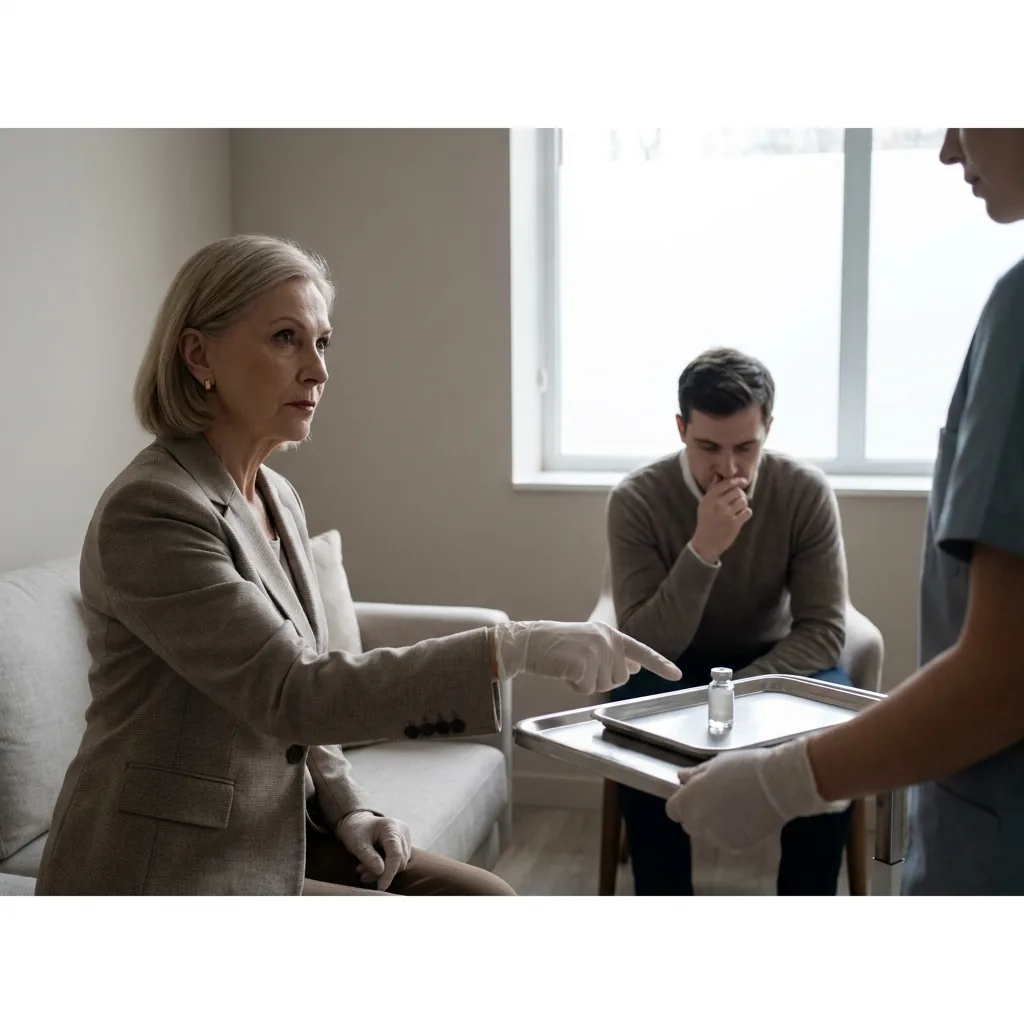
Evelyn Hart pointed at the treatment vial on my tray and used a word none of us had used all morning, then watched her son stop talking like she had pressed a hand over his mouth from across the room. We were in one of the specialist consult rooms at the longevity clinic, with the paper liner still crisp on the exam chair and the stainless prep tray between us, and she said it in that polished voice people use here when they want money to sound like expertise. Noah had only asked what was actually going into his body.
I was standing at the counter beside the sink, checking the lot sticker against the label on the vial. The vial stayed in plain sight the whole time, upright in its molded holder, amber glass catching the soft wall light. At our clinic, expensive things are displayed carefully. Not casually. Carefully. Even the packaging looks coached.
Dr. Daniel Kessler sat across from them with his tablet face down on his knee, listening. He has a way of letting a room show itself before he narrows it. Noah was on the low chair near the tray, hands together, elbows on his knees. He kept glancing at the vial instead of at his mother.
“I just want the normal explanation,” Noah said. “What it does, what the schedule is, and what the risks are.”
Evelyn gave a short laugh through her nose and cut across him before Dr. Kessler answered.
“Noah, please. This is not a starter vitamin drip. This protocol depends on receptor-phase preservation. If you keep asking these very basic questions, you are going to make yourself sound unprepared for care at this level.”
She said receptor-phase preservation like it was printed on the wall.
Noah looked at Dr. Kessler, then at me, then back to the vial. “I asked what the risks were.”
Evelyn leaned forward and tapped one manicured nail just beside the label without touching the glass. “And I am telling you the issue is sequencing. This vial only works when the receptor phase is respected. That is why premium clinics screen for comprehension.”
That landed exactly the way she meant it to. Not loud. Worse than loud. Smooth enough to make the other person sound like the problem for wanting plain English.
I kept my hands still on the tray. Staff are expected to stay neutral in that room unless procedure is involved, and family money changes the air even when nobody says the number out loud. Noah opened his mouth, then shut it. His thumbs started rubbing against each other. He asked, quieter, “Comprehension of what?”
Evelyn did not look at him when she answered. She looked at Dr. Kessler, as if they were the two adults managing an interruption.
“Doctor, this is exactly what I meant on the phone. He reads one article, panics, and suddenly wants a remedial walkthrough. We already agreed this treatment is appropriate if the receptor-phase integrity is protected.”
It was the second new phrase in less than a minute. Dr. Kessler’s face did not change, but he lifted his eyes from her to the vial and back.
“I don’t believe we used that language on the phone,” he said.
Evelyn smiled without showing teeth. “Maybe not with staff. But that is the concept.”
Noah shifted in the chair. “What concept?”
She turned to him then, and her tone got softer in the way some people get softer when they want the cut to go in deeper.
“The concept that not every decision has to be dragged down to the level of somebody who refuses to learn the vocabulary.”
The room went very still after that. Not dramatic stillness. The kind where you can hear the air vent pushing through the ceiling slot and the tiny click of glass when I settled the vial deeper into its holder.
Dr. Kessler finally stood and came to the tray. He did not touch the vial. He looked at the printed label, then the boxed insert under it, then at me.
“Marisol, keep that there for a moment,” he said.
“Of course,” I said.
Noah’s jaw moved once. He kept his eyes on the tray.
Evelyn crossed one leg over the other and folded her hands, composed enough to look like she had already won the room.
“The point,” she said, “is that this formulation is designed for receptor-phase preservation before administration. If he cannot grasp that, delaying may be smarter.”
There it was again, firmer this time, like repetition could make it real.
Dr. Kessler rested two fingers on the counter beside the vial and spoke in the same even tone he used when reviewing dosing instructions.
“Mrs. Hart,” he said, “before we go further, I want to be precise about what you mean by receptor-phase preservation in relation to this vial.”
Evelyn’s smile held for half a second too long, and Noah finally looked up from the tray.
Evelyn Hart pointed at the treatment vial on my tray and used a word none of us had used all morning, then watched her son stop talking like she had pressed a hand over his mouth from across the room. We were in one of the specialist consult rooms at the longevity clinic, with the paper liner still crisp on the exam chair and the stainless prep tray between us, and she said it in that polished voice people use here when they want money to sound like expertise. Noah had only asked what was actually going into his body.
I was standing at the counter beside the sink, checking the lot sticker against the label on the vial. The vial stayed in plain sight the whole time, upright in its molded holder, amber glass catching the soft wall light. At our clinic, expensive things are displayed carefully. Not casually. Carefully. Even the packaging looks coached.
Dr. Daniel Kessler sat across from them with his tablet face down on his knee, listening. He has a way of letting a room show itself before he narrows it. Noah was on the low chair near the tray, hands together, elbows on his knees. He kept glancing at the vial instead of at his mother.
“I just want the normal explanation,” Noah said. “What it does, what the schedule is, and what the risks are.”
Evelyn gave a short laugh through her nose and cut across him before Dr. Kessler answered.
“Noah, please. This is not a starter vitamin drip. This protocol depends on receptor-phase preservation. If you keep asking these very basic questions, you are going to make yourself sound unprepared for care at this level.”
She said receptor-phase preservation like it was printed on the wall.
Noah looked at Dr. Kessler, then at me, then back to the vial. “I asked what the risks were.”
Evelyn leaned forward and tapped one manicured nail just beside the label without touching the glass. “And I am telling you the issue is sequencing. This vial only works when the receptor phase is respected. That is why premium clinics screen for comprehension.”
That landed exactly the way she meant it to. Not loud. Worse than loud. Smooth enough to make the other person sound like the problem for wanting plain English.
I kept my hands still on the tray. Staff are expected to stay neutral in that room unless procedure is involved, and family money changes the air even when nobody says the number out loud. Noah opened his mouth, then shut it. His thumbs started rubbing against each other. He asked, quieter, “Comprehension of what?”
Evelyn did not look at him when she answered. She looked at Dr. Kessler, as if they were the two adults managing an interruption.
“Doctor, this is exactly what I meant on the phone. He reads one article, panics, and suddenly wants a remedial walkthrough. We already agreed this treatment is appropriate if the receptor-phase integrity is protected.”
It was the second new phrase in less than a minute. Dr. Kessler’s face did not change, but he lifted his eyes from her to the vial and back.
“I don’t believe we used that language on the phone,” he said.
Evelyn smiled without showing teeth. “Maybe not with staff. But that is the concept.”
Noah shifted in the chair. “What concept?”
She turned to him then, and her tone got softer in the way some people get softer when they want the cut to go in deeper.
“The concept that not every decision has to be dragged down to the level of somebody who refuses to learn the vocabulary.”
The room went very still after that. Not dramatic stillness. The kind where you can hear the air vent pushing through the ceiling slot and the tiny click of glass when I settled the vial deeper into its holder.
Dr. Kessler finally stood and came to the tray. He did not touch the vial. He looked at the printed label, then the boxed insert under it, then at me.
“Marisol, keep that there for a moment,” he said.
“Of course,” I said.
Noah’s jaw moved once. He kept his eyes on the tray.
Evelyn crossed one leg over the other and folded her hands, composed enough to look like she had already won the room.
“The point,” she said, “is that this formulation is designed for receptor-phase preservation before administration. If he cannot grasp that, delaying may be smarter.”
There it was again, firmer this time, like repetition could make it real.
Dr. Kessler rested two fingers on the counter beside the vial and spoke in the same even tone he used when reviewing dosing instructions.
“Mrs. Hart,” he said, “before we go further, I want to be precise about what you mean by receptor-phase preservation in relation to this vial.”
Evelyn’s smile held for half a second too long, and Noah finally looked up from the tray.