Story code: ST-001067
Part 1: The Telemetry Dispute
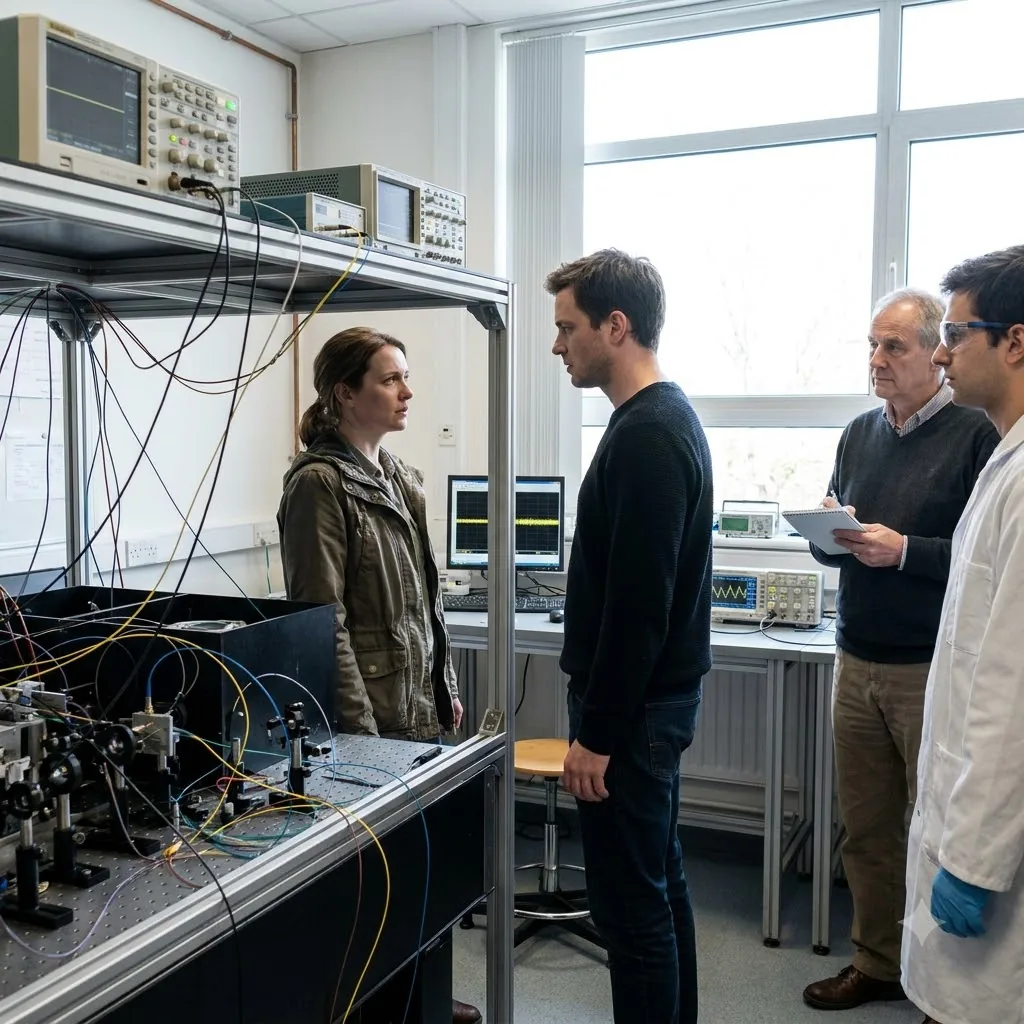
I watched Dr. Marcus Vance point a manicured finger at his sister Helen right in the middle of our university entanglement lab, accusing her of sabotaging their sick mother Clara’s medical sensor bracelet just to shirk her caretaking duties. In front of the graduate students calibrating the cryo-telemetry rigs, Marcus reframed Helen’s constant overtime as a selfish play to edge him out of their joint patent while leaving their mother unattended. He shook the silver-plated biomimetic band, its blue status LED flashing against the textured nylon strap, claiming she had recalibrated the receiver to silence emergency alerts. The university lab was supposed to be running a standard calibration run on our biomimetic receivers, but all ordinary activity had ground to a halt.
“You adjusted the threshold frequency, Helen,” Marcus said, his voice carrying clearly across the concrete floor. “You shut off the alerts on your shifts because you didn’t want to leave the lab. You’re letting her sit there in discomfort while you claim the credit for our quantum telemetry papers.”
Helen stood by the main server rack, her faded blue cardigan buttoned to the neck. She kept her hair pinned tightly back. She did not raise her voice. “The sensor was burning her wrist, Marcus. The telemetry was looping and sending false alarms every twenty minutes. I adjusted the decoherence filter to stop the alarms from waking her up.”
“You bypassed a medical sensor,” Marcus said, turning to face the rest of the lab staff. He spread his hands, his gold watch catching the overhead fluorescent lights. “She bypassed the safety parameters of our mother’s primary care link. While I’ve been coordinating with the home health aides and handling the logistics, my own sister and co-lead researcher has been systematically disabling our mother’s lifeline to keep her lab hours up.”
I sat at the calibration console, pretending to adjust the local sensor grids. Two graduate assistants at the next desk had stopped typing entirely. The hum of the cryogenic cooling pumps filled the silence. Helen did not look at the rest of us. She looked only at the silver-plated band in Marcus’s hand.
“I did not disable the lifeline,” Helen said, her voice dropping to a level, quiet pitch. “I routed the alerts directly to the local server log so we could monitor the false positives. The server recorded every response.”
Marcus tossed the bracelet onto Helen’s desk. It slid across a stack of schematic printouts, its blue LED blinking rhythmically. “The server logs won’t save you from a safety review, Helen. You neglected her, and you tampered with the equipment to hide it.”
Helen walked past him, her boots clicking against the linoleum. She reached the terminal next to my station, her shoulder slightly tense as she reached for the keyboard. “Let’s check the server logs, Marcus. The telemetry database is immutable.”
She typed in her administrator credentials, her strokes rapid and precise. The screen flickered, loading the database query window. The columns of timestamps, sensor IDs, and user response logs began to populate the display. I leaned closer to my monitor, looking at the mirrored output screen. Marcus took a step forward, his posture rigid as the rows of data settled into neat, chronological lines.
I watched Dr. Marcus Vance point a manicured finger at his sister Helen right in the middle of our university entanglement lab, accusing her of sabotaging their sick mother Clara’s medical sensor bracelet just to shirk her caretaking duties. In front of the graduate students calibrating the cryo-telemetry rigs, Marcus reframed Helen’s constant overtime as a selfish play to edge him out of their joint patent while leaving their mother unattended. He shook the silver-plated biomimetic band, its blue status LED flashing against the textured nylon strap, claiming she had recalibrated the receiver to silence emergency alerts. The university lab was supposed to be running a standard calibration run on our biomimetic receivers, but all ordinary activity had ground to a halt.
“You adjusted the threshold frequency, Helen,” Marcus said, his voice carrying clearly across the concrete floor. “You shut off the alerts on your shifts because you didn’t want to leave the lab. You’re letting her sit there in discomfort while you claim the credit for our quantum telemetry papers.”
Helen stood by the main server rack, her faded blue cardigan buttoned to the neck. She kept her hair pinned tightly back. She did not raise her voice. “The sensor was burning her wrist, Marcus. The telemetry was looping and sending false alarms every twenty minutes. I adjusted the decoherence filter to stop the alarms from waking her up.”
“You bypassed a medical sensor,” Marcus said, turning to face the rest of the lab staff. He spread his hands, his gold watch catching the overhead fluorescent lights. “She bypassed the safety parameters of our mother’s primary care link. While I’ve been coordinating with the home health aides and handling the logistics, my own sister and co-lead researcher has been systematically disabling our mother’s lifeline to keep her lab hours up.”
I sat at the calibration console, pretending to adjust the local sensor grids. Two graduate assistants at the next desk had stopped typing entirely. The hum of the cryogenic cooling pumps filled the silence. Helen did not look at the rest of us. She looked only at the silver-plated band in Marcus’s hand.
“I did not disable the lifeline,” Helen said, her voice dropping to a level, quiet pitch. “I routed the alerts directly to the local server log so we could monitor the false positives. The server recorded every response.”
Marcus tossed the bracelet onto Helen’s desk. It slid across a stack of schematic printouts, its blue LED blinking rhythmically. “The server logs won’t save you from a safety review, Helen. You neglected her, and you tampered with the equipment to hide it.”
Helen walked past him, her boots clicking against the linoleum. She reached the terminal next to my station, her shoulder slightly tense as she reached for the keyboard. “Let’s check the server logs, Marcus. The telemetry database is immutable.”
She typed in her administrator credentials, her strokes rapid and precise. The screen flickered, loading the database query window. The columns of timestamps, sensor IDs, and user response logs began to populate the display. I leaned closer to my monitor, looking at the mirrored output screen. Marcus took a step forward, his posture rigid as the rows of data settled into neat, chronological lines.