Story code: ST-001322
Part 1: The Silent Overrides
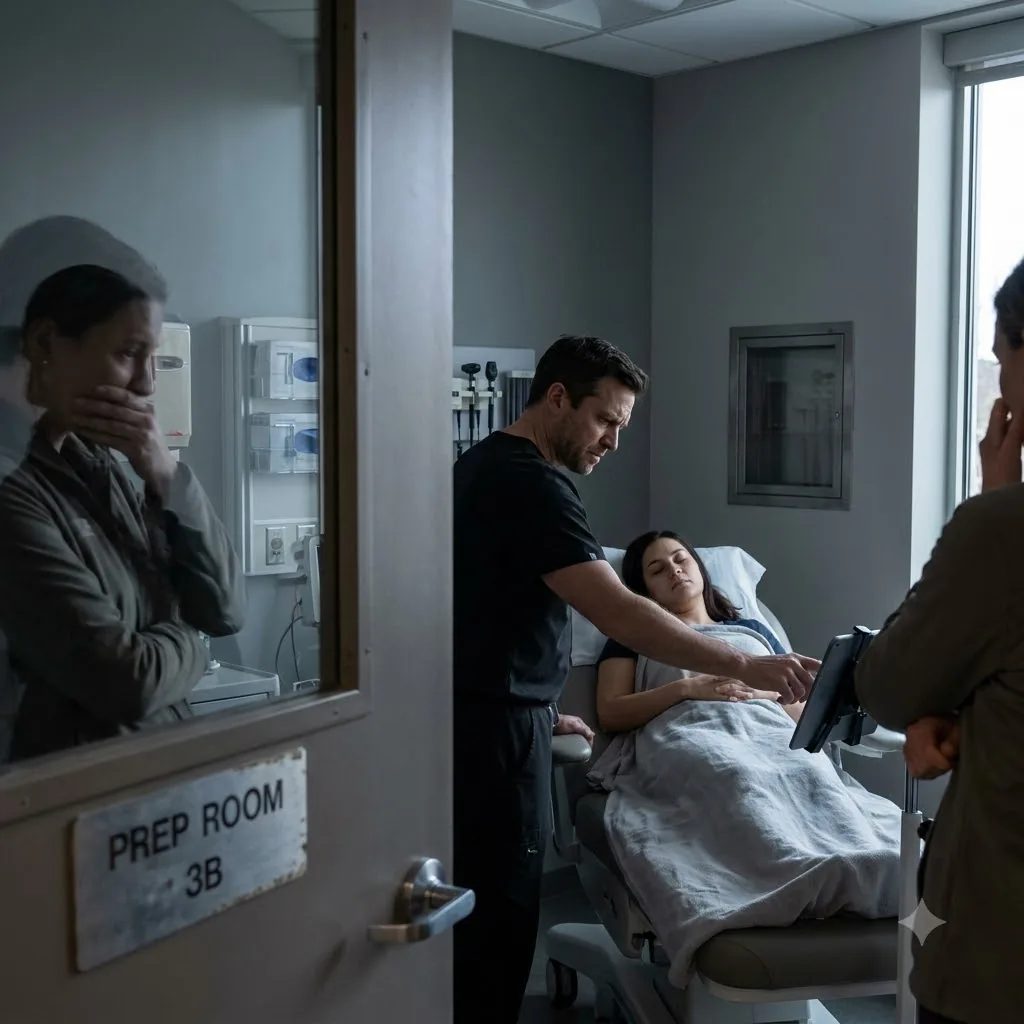
Inside Prep Room 3B, I watched lead technician Marcus step across the threshold without authorization, leaning over sleeping patient Elena Vance to alter her Implant Consent Tablet. By modifying her neural implant’s active parameters while she was sedated, he was threatening her home and body autonomy under the cover of standard clinic preparation. The screen of the tablet flashed amber as he bypassed her biometric sync patch, a direct violation of our clinic’s strict safety protocols.
I stood by the secondary diagnostic cart, a sterile tray of sensor leads in my hands. The room was quiet, except for the rhythmic beep of Elena’s heart monitor. Elena lay reclined in the padded prep chair, her eyes closed under the light sedation we used for standard calibration. A small, blue indicator light on her temple showed that her local neural implant was active and ready for pairing. The room’s cool overhead LED lights cast long shadows across the gray tile floor as Marcus worked. I set the sensor leads down on the tray, the metal clips clinking softly.
The Implant Consent Tablet was a sleek, silver unit tethered to the prep chair’s armrest. It was designed to remain locked until the patient pressed their thumb to the biometric sync patch, proving conscious consent. Marcus, however, had plugged a bypass dongle into the tablet’s maintenance port. The screen flickered, transitioning from the clinic’s blue welcome screen to a grid of raw system code.
“Marcus,” I said, keeping my voice level. “She hasn’t signed off on the boundary changes. The sync patch isn’t authorized yet.”
Marcus’s shoulders stiffened for a second, but he did not pause his typing. “I’m just pre-loading the protocol,” he said, his voice flat. “It saves ten minutes on the calibration cycle.”
“The protocol you’re loading lowers the domestic privacy barrier,” I said, walking closer to the bedside. “That requires a physical signature. She’s unconscious.”
He swiped his personal clinic credential card across the tablet’s reader, bypassing the biometric lock screen. On the wall monitor, the green safety status bar turned a sharp orange. The domestic boundary configuration-the digital shield that prevented external override of her home door locks and physical neural feedback loops-switched from Protected to Shared.
I looked down at the tablet in his hand. The interface was glowing with a sequence of override keys. Marcus quickly tapped a confirmation box, and the amber warning cleared, returning the screen to its default menu. He set the tablet back onto the metal bracket beside Elena’s chair.
“It’s standard calibration, Jesse,” Marcus said, turning to face me. “Don’t overcomplicate the prep sheet.”
He stepped away from the chair, heading toward the doorway. I walked over to the console terminal to verify the session log. The screen displayed the transaction history. Under the override credential column, a foreign key was listed. It was not a clinic emergency code. The name associated with the encryption key read: Vance, H.
I looked back at the doorway, but Marcus was already stepping into the Central Console Corridor, leaving me alone with the sleeping patient and a modified consent file that pointed directly to her husband. I zoomed in on the terminal screen, verifying the timestamp. The signature code was generated from a residential IP address two hours before Elena even arrived at the clinic.
Inside Prep Room 3B, I watched lead technician Marcus step across the threshold without authorization, leaning over sleeping patient Elena Vance to alter her Implant Consent Tablet. By modifying her neural implant’s active parameters while she was sedated, he was threatening her home and body autonomy under the cover of standard clinic preparation. The screen of the tablet flashed amber as he bypassed her biometric sync patch, a direct violation of our clinic’s strict safety protocols.
I stood by the secondary diagnostic cart, a sterile tray of sensor leads in my hands. The room was quiet, except for the rhythmic beep of Elena’s heart monitor. Elena lay reclined in the padded prep chair, her eyes closed under the light sedation we used for standard calibration. A small, blue indicator light on her temple showed that her local neural implant was active and ready for pairing. The room’s cool overhead LED lights cast long shadows across the gray tile floor as Marcus worked. I set the sensor leads down on the tray, the metal clips clinking softly.
The Implant Consent Tablet was a sleek, silver unit tethered to the prep chair’s armrest. It was designed to remain locked until the patient pressed their thumb to the biometric sync patch, proving conscious consent. Marcus, however, had plugged a bypass dongle into the tablet’s maintenance port. The screen flickered, transitioning from the clinic’s blue welcome screen to a grid of raw system code.
“Marcus,” I said, keeping my voice level. “She hasn’t signed off on the boundary changes. The sync patch isn’t authorized yet.”
Marcus’s shoulders stiffened for a second, but he did not pause his typing. “I’m just pre-loading the protocol,” he said, his voice flat. “It saves ten minutes on the calibration cycle.”
“The protocol you’re loading lowers the domestic privacy barrier,” I said, walking closer to the bedside. “That requires a physical signature. She’s unconscious.”
He swiped his personal clinic credential card across the tablet’s reader, bypassing the biometric lock screen. On the wall monitor, the green safety status bar turned a sharp orange. The domestic boundary configuration-the digital shield that prevented external override of her home door locks and physical neural feedback loops-switched from Protected to Shared.
I looked down at the tablet in his hand. The interface was glowing with a sequence of override keys. Marcus quickly tapped a confirmation box, and the amber warning cleared, returning the screen to its default menu. He set the tablet back onto the metal bracket beside Elena’s chair.
“It’s standard calibration, Jesse,” Marcus said, turning to face me. “Don’t overcomplicate the prep sheet.”
He stepped away from the chair, heading toward the doorway. I walked over to the console terminal to verify the session log. The screen displayed the transaction history. Under the override credential column, a foreign key was listed. It was not a clinic emergency code. The name associated with the encryption key read: Vance, H.
I looked back at the doorway, but Marcus was already stepping into the Central Console Corridor, leaving me alone with the sleeping patient and a modified consent file that pointed directly to her husband. I zoomed in on the terminal screen, verifying the timestamp. The signature code was generated from a residential IP address two hours before Elena even arrived at the clinic.