Story code: ST-000522
Part 1: She Said No and Leah Reached Anyway
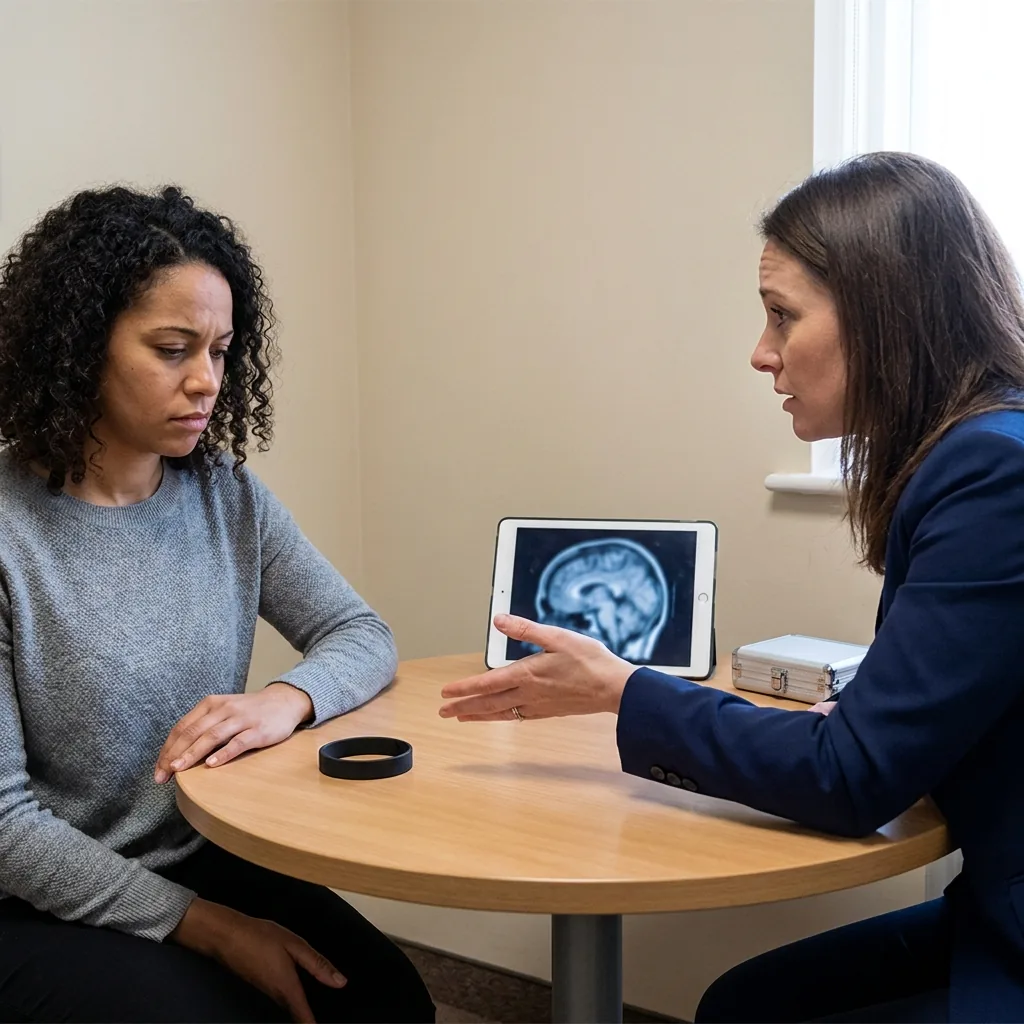
Nina Alvarez said, “No,” and kept her sync band by her elbow, and Leah Alvarez still leaned across the small demo table like that word had not been said. I was standing inside a private implant demo room with my tablet open and the pairing cradle lit up between them, watching a family setup turn into something else the second Leah crossed into Nina’s space. The unfair part hit fast: this was supposed to be one person’s body choice, but Leah was already treating the band like the room could vote on it.
I had just finished the ordinary part of the session. Nina was in the chair nearest the table. Her bag was looped around one chair leg on her side. The sync band sat beside it, matte silver, not in the cradle. Marisol Alvarez stood close behind Nina’s shoulder with one hand on her own purse strap. Leah was on the other side of the table, talking faster than I usually hear during a first pairing.
“We can at least get the band recognized,” Leah said.
Nina did not raise her voice. “No. Not today.”
I said the line I am supposed to say when someone declines. “That’s fine. We can stop before pairing.”
Leah turned one palm toward me without looking at me, like she was smoothing over a small delay. “It’s not pairing-pairing. It’s just the first step so she can see the interface.”
Nina’s hand moved to the band. She didn’t grab it hard. She just laid her fingers over it and slid it closer to the edge of her side of the table.
“I said no,” she said.
The room got very small after that. Not physically. Just in the way people hold still when they are waiting to see if a line will be respected.
Leah stepped around the corner of the table instead of staying where visitors usually stay. That was the first thing that made me stop tapping my screen. She came into the pocket of space between Nina’s chair and the table edge, close enough that Nina shifted back half a pace without standing up. Leah reached down toward the band.
I said, “Please don’t handle patient items unless she passes it over.”
Leah pulled her hand back an inch, but not all the way. “I’m not handling it. I’m showing her where it sits in the cradle.”
There was no cradle on Nina’s side. The pairing cradle was in front of me, on the center line of the table. Leah’s fingers were pointed at Nina’s band, not the cradle.
Nina stood up then. She picked up the sync band and kept it in her hand. “No,” she said again, still in that same controlled voice. “Stop asking me like I’m not answering.”
Marisol looked from Nina to Leah and back again. She didn’t say anything. Her fingers tightened on the purse strap, then loosened.
Leah gave a quick laugh that didn’t change the room. “Nobody’s forcing you. Mom already said the home side would be easier if we just got this connected.”
Nina’s face didn’t change much, but she turned slightly so the band stayed against her own body instead of between her and Leah. “My body isn’t the home side,” she said.
That was the first moment I heard the shape of the argument clearly. Up to then it could still have passed for family pressure, the kind people bring into private medical rooms and then try to call practical. But when Leah said “the home side,” and said it while reaching after a direct no, it landed different. In our demos, the sync band doesn’t just wake the display. It surfaces permissions, linked routines, what can talk to what. The band is the visible thing in the room, and everyone in that room knows it matters.
I glanced at my tablet because the session prompt was still waiting on the same screen. No pairing had started. No permissions had opened. The room was paused right on the threshold.
Leah saw me look and started explaining again, faster now. “I’m saying if she doesn’t want to wear the full setup yet, we can still get the baseline and let Marisol hold proximity for the demo. That way nobody has to keep redoing this.”
Nobody spoke for about two seconds.
Nina turned her head toward Marisol. Not sharply. Just enough to make the space between them matter. Marisol’s eyes flicked to the band in Nina’s hand, then to Leah.
I heard myself say, “Proximity for whose account?”
Leah answered too quickly. “Temporary household access. Just to illustrate the environment.”
Nina looked at Marisol and asked, very plainly, “Why would she say that like you’ve already talked about it?”
Marisol opened her mouth, closed it, and shifted one step nearer Nina’s chair instead of away from it.
That was when the contradiction in the room finally showed itself in a shape I could point to: Nina had given a clear no, Leah had crossed into her private setup space anyway, and now the path around that no seemed to run straight through the person standing closest to her side of the table. I still hadn’t seen the whole proof, but by the way Leah had asked it, and by the way Marisol didn’t answer, Part 2 was sitting there in plain sight.
Nina Alvarez said, “No,” and kept her sync band by her elbow, and Leah Alvarez still leaned across the small demo table like that word had not been said. I was standing inside a private implant demo room with my tablet open and the pairing cradle lit up between them, watching a family setup turn into something else the second Leah crossed into Nina’s space. The unfair part hit fast: this was supposed to be one person’s body choice, but Leah was already treating the band like the room could vote on it.
I had just finished the ordinary part of the session. Nina was in the chair nearest the table. Her bag was looped around one chair leg on her side. The sync band sat beside it, matte silver, not in the cradle. Marisol Alvarez stood close behind Nina’s shoulder with one hand on her own purse strap. Leah was on the other side of the table, talking faster than I usually hear during a first pairing.
“We can at least get the band recognized,” Leah said.
Nina did not raise her voice. “No. Not today.”
I said the line I am supposed to say when someone declines. “That’s fine. We can stop before pairing.”
Leah turned one palm toward me without looking at me, like she was smoothing over a small delay. “It’s not pairing-pairing. It’s just the first step so she can see the interface.”
Nina’s hand moved to the band. She didn’t grab it hard. She just laid her fingers over it and slid it closer to the edge of her side of the table.
“I said no,” she said.
The room got very small after that. Not physically. Just in the way people hold still when they are waiting to see if a line will be respected.
Leah stepped around the corner of the table instead of staying where visitors usually stay. That was the first thing that made me stop tapping my screen. She came into the pocket of space between Nina’s chair and the table edge, close enough that Nina shifted back half a pace without standing up. Leah reached down toward the band.
I said, “Please don’t handle patient items unless she passes it over.”
Leah pulled her hand back an inch, but not all the way. “I’m not handling it. I’m showing her where it sits in the cradle.”
There was no cradle on Nina’s side. The pairing cradle was in front of me, on the center line of the table. Leah’s fingers were pointed at Nina’s band, not the cradle.
Nina stood up then. She picked up the sync band and kept it in her hand. “No,” she said again, still in that same controlled voice. “Stop asking me like I’m not answering.”
Marisol looked from Nina to Leah and back again. She didn’t say anything. Her fingers tightened on the purse strap, then loosened.
Leah gave a quick laugh that didn’t change the room. “Nobody’s forcing you. Mom already said the home side would be easier if we just got this connected.”
Nina’s face didn’t change much, but she turned slightly so the band stayed against her own body instead of between her and Leah. “My body isn’t the home side,” she said.
That was the first moment I heard the shape of the argument clearly. Up to then it could still have passed for family pressure, the kind people bring into private medical rooms and then try to call practical. But when Leah said “the home side,” and said it while reaching after a direct no, it landed different. In our demos, the sync band doesn’t just wake the display. It surfaces permissions, linked routines, what can talk to what. The band is the visible thing in the room, and everyone in that room knows it matters.
I glanced at my tablet because the session prompt was still waiting on the same screen. No pairing had started. No permissions had opened. The room was paused right on the threshold.
Leah saw me look and started explaining again, faster now. “I’m saying if she doesn’t want to wear the full setup yet, we can still get the baseline and let Marisol hold proximity for the demo. That way nobody has to keep redoing this.”
Nobody spoke for about two seconds.
Nina turned her head toward Marisol. Not sharply. Just enough to make the space between them matter. Marisol’s eyes flicked to the band in Nina’s hand, then to Leah.
I heard myself say, “Proximity for whose account?”
Leah answered too quickly. “Temporary household access. Just to illustrate the environment.”
Nina looked at Marisol and asked, very plainly, “Why would she say that like you’ve already talked about it?”
Marisol opened her mouth, closed it, and shifted one step nearer Nina’s chair instead of away from it.
That was when the contradiction in the room finally showed itself in a shape I could point to: Nina had given a clear no, Leah had crossed into her private setup space anyway, and now the path around that no seemed to run straight through the person standing closest to her side of the table. I still hadn’t seen the whole proof, but by the way Leah had asked it, and by the way Marisol didn’t answer, Part 2 was sitting there in plain sight.