Story code: ST-000924
Part 1: He Moved My Brother’s Credit With One Tap
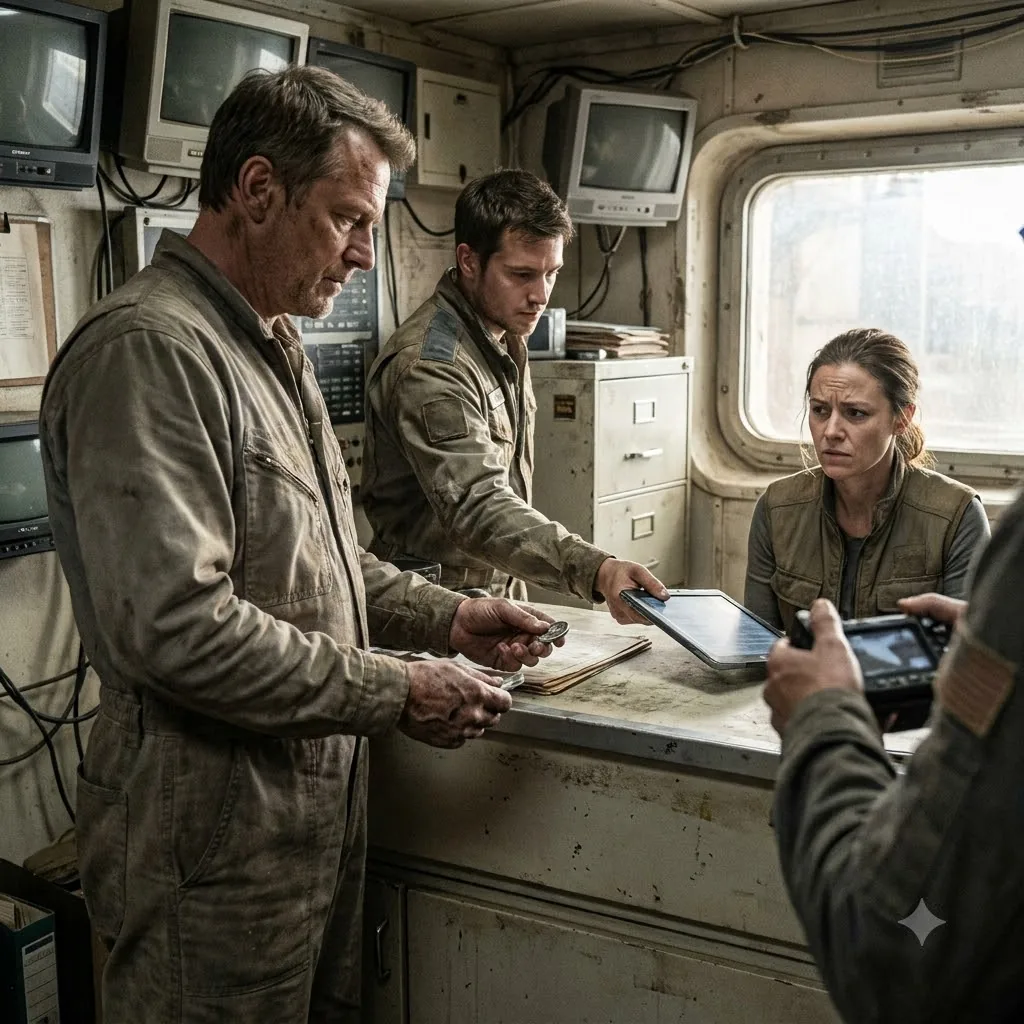
Graham Pike took the mineral claim token out of Eli Wren’s dust-black hand, set it on the contract counter, and slid the credit to Tessa Vale’s family line while I was still calling up the intake screen. Eli had just come in off shift with rock grit on his sleeves, and in less than ten seconds his payout, his crew share, and the standing attached to that haul were sitting under somebody else’s name in the middle of a busy mining contract office. The worst part was Graham said it like it was routine, but Tessa’s hands were already hovering over a claim she did not know how to talk about.
The office floor was loud the way it always gets at shift change, with boots thudding in a slow line and the wall printer coughing out payout strips every few seconds. I was on the side terminal beside the main work counter, close enough to see the token spin once under Graham’s fingers. It was a nickel-gray claim chip with the ridge worn down on one edge from glove use. Eli had carried it in clipped between two fingers the way miners do when they don’t want to drop a hard-earned route marker into a floor drain.
“Transfer correction,” Graham said, not looking at me first, just looking at the ledger-facing screen as if the room had already agreed with him. “This belongs on Vale household settlement. Crew split was logged wrong upstream.”
That got heads up out of the queue. Nobody likes the words transfer correction when money is on the counter.
Eli stepped forward so fast his knee hit the metal rail. “No, it wasn’t. That’s our shard line. We pulled Red Cleft Nine ourselves.”
Graham kept one palm flat on the token. “You brought it in, Eli. That doesn’t make it yours.”
June Wren was two people back in line when this started. By the time Graham tapped the assignment field, she was at Eli’s shoulder with her work tote still hanging off one arm. “Don’t do that in front of me,” she said. “That credit buys our oxygen extension this week.”
Graham’s face stayed smooth. He gave the kind of small nod brokers use when they want everybody else to feel late to a conversation. “Then you know why clean records matter.”
On my screen, the household line flipped. WREN extraction credit dropped out. VALE settlement climbed. The printer at Graham’s station fed out a payout confirmation with Tessa’s name on it.
That was the first harm right there, plain enough for everybody in line to see. Eli’s haul wasn’t just argued over. It was erased from his family’s side of the ledger while his shift dust was still drying on his collar.
Tessa stepped in when the strip printed. She was already wearing clean dock shoes, not mag-boots, and she reached for the paper before Graham handed it to her. “We already straightened this,” she said. Her voice came out flat at first, then sharper when Eli didn’t move back. “Your family hauled on our mapped seam.”
Eli gave one short laugh through his nose and pointed at the token. “Say the seam cut, then. If it’s yours, say what angle the break opened at after second charge.”
Graham turned his head toward Eli, quick. “We’re not running a yard quiz at the counter.”
He said it too fast.
That caught my attention more than the shouting. We handle arguments all day. The routine ones have steps. Log the incoming token. Confirm route trace. Ask for extraction markers if households dispute a load. Graham skipped straight past the usual pacing and used a broker override before I finished the intake mirror.
June saw me looking at the screen. “Mara,” she said, controlled and very clear, “did he just move that before verification closed?”
Every face near the rail turned my way. I kept my eyes on the ledger because that was the only place in the room that wouldn’t start yelling back. “He processed a reassignment before the intake lock finished,” I said.
Graham finally looked at me. “And you can see the broker channel accepted it.”
“I can see it accepted it,” I said.
That was not the same thing.
Tessa still had her hand out, but she didn’t answer Eli’s question. She looked at the token instead, then at Graham, then reached for the payout strip again. Eli didn’t let go of the counter rail.
“Say where the dust clumped,” Eli said. “Red Cleft Nine throws iron glitter into the left filter if you cut from the west. If it’s your seam, say it.”
Tessa wet her lips. “It depends how your rig is vented.”
“Not that rig,” Eli said.
The line behind them had gone quiet enough that I could hear the printer teeth clicking as the payout strip sat half-fed. Graham lifted the token, not high, just enough to break Eli’s line of sight with it, and dropped it into his own palm like he was protecting office property.
“We’re done with theatrics,” he said. “Tessa, confirm extraction tool used on retrieval.”
It was a simple rescue prompt, and that bothered me more than the override. People who mined their own claim answer those questions before you finish asking.
Tessa squared her shoulders and said, “Standard bore head.”
Eli looked at me then, not at Graham. He held up his right glove. Two fingertips were burned shiny from handling a hot pulse key.
“We didn’t use a bore head,” he said. “We had to switch to manual pulse cut when the feed jammed. Everybody on that seam knows why. So how does she have my token and not know what tool touched the rock?”
Graham Pike took the mineral claim token out of Eli Wren’s dust-black hand, set it on the contract counter, and slid the credit to Tessa Vale’s family line while I was still calling up the intake screen. Eli had just come in off shift with rock grit on his sleeves, and in less than ten seconds his payout, his crew share, and the standing attached to that haul were sitting under somebody else’s name in the middle of a busy mining contract office. The worst part was Graham said it like it was routine, but Tessa’s hands were already hovering over a claim she did not know how to talk about.
The office floor was loud the way it always gets at shift change, with boots thudding in a slow line and the wall printer coughing out payout strips every few seconds. I was on the side terminal beside the main work counter, close enough to see the token spin once under Graham’s fingers. It was a nickel-gray claim chip with the ridge worn down on one edge from glove use. Eli had carried it in clipped between two fingers the way miners do when they don’t want to drop a hard-earned route marker into a floor drain.
“Transfer correction,” Graham said, not looking at me first, just looking at the ledger-facing screen as if the room had already agreed with him. “This belongs on Vale household settlement. Crew split was logged wrong upstream.”
That got heads up out of the queue. Nobody likes the words transfer correction when money is on the counter.
Eli stepped forward so fast his knee hit the metal rail. “No, it wasn’t. That’s our shard line. We pulled Red Cleft Nine ourselves.”
Graham kept one palm flat on the token. “You brought it in, Eli. That doesn’t make it yours.”
June Wren was two people back in line when this started. By the time Graham tapped the assignment field, she was at Eli’s shoulder with her work tote still hanging off one arm. “Don’t do that in front of me,” she said. “That credit buys our oxygen extension this week.”
Graham’s face stayed smooth. He gave the kind of small nod brokers use when they want everybody else to feel late to a conversation. “Then you know why clean records matter.”
On my screen, the household line flipped. WREN extraction credit dropped out. VALE settlement climbed. The printer at Graham’s station fed out a payout confirmation with Tessa’s name on it.
That was the first harm right there, plain enough for everybody in line to see. Eli’s haul wasn’t just argued over. It was erased from his family’s side of the ledger while his shift dust was still drying on his collar.
Tessa stepped in when the strip printed. She was already wearing clean dock shoes, not mag-boots, and she reached for the paper before Graham handed it to her. “We already straightened this,” she said. Her voice came out flat at first, then sharper when Eli didn’t move back. “Your family hauled on our mapped seam.”
Eli gave one short laugh through his nose and pointed at the token. “Say the seam cut, then. If it’s yours, say what angle the break opened at after second charge.”
Graham turned his head toward Eli, quick. “We’re not running a yard quiz at the counter.”
He said it too fast.
That caught my attention more than the shouting. We handle arguments all day. The routine ones have steps. Log the incoming token. Confirm route trace. Ask for extraction markers if households dispute a load. Graham skipped straight past the usual pacing and used a broker override before I finished the intake mirror.
June saw me looking at the screen. “Mara,” she said, controlled and very clear, “did he just move that before verification closed?”
Every face near the rail turned my way. I kept my eyes on the ledger because that was the only place in the room that wouldn’t start yelling back. “He processed a reassignment before the intake lock finished,” I said.
Graham finally looked at me. “And you can see the broker channel accepted it.”
“I can see it accepted it,” I said.
That was not the same thing.
Tessa still had her hand out, but she didn’t answer Eli’s question. She looked at the token instead, then at Graham, then reached for the payout strip again. Eli didn’t let go of the counter rail.
“Say where the dust clumped,” Eli said. “Red Cleft Nine throws iron glitter into the left filter if you cut from the west. If it’s your seam, say it.”
Tessa wet her lips. “It depends how your rig is vented.”
“Not that rig,” Eli said.
The line behind them had gone quiet enough that I could hear the printer teeth clicking as the payout strip sat half-fed. Graham lifted the token, not high, just enough to break Eli’s line of sight with it, and dropped it into his own palm like he was protecting office property.
“We’re done with theatrics,” he said. “Tessa, confirm extraction tool used on retrieval.”
It was a simple rescue prompt, and that bothered me more than the override. People who mined their own claim answer those questions before you finish asking.
Tessa squared her shoulders and said, “Standard bore head.”
Eli looked at me then, not at Graham. He held up his right glove. Two fingertips were burned shiny from handling a hot pulse key.
“We didn’t use a bore head,” he said. “We had to switch to manual pulse cut when the feed jammed. Everybody on that seam knows why. So how does she have my token and not know what tool touched the rock?”