Story code: ST-000750
Part 1: The Clip Hit Our Feed
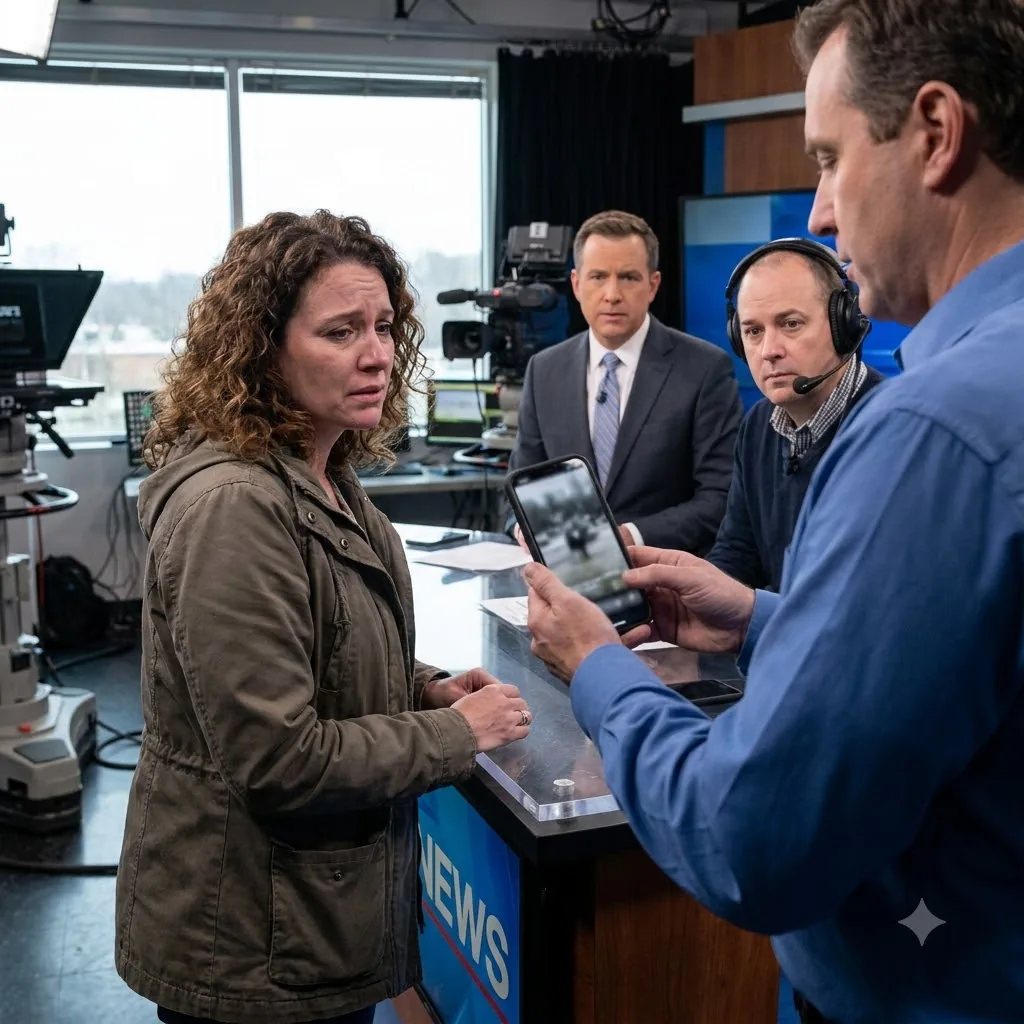
The clip hit the studio phone screen while I was standing beside the weather desk, and the whole room stopped pretending it was just another ordinary activity inside a local news studio. On the live group chat feed Talia kept on the wall monitor, somebody had posted a deepfake family-scandal clip tied to Devon, and the first visible harm was plain: a private moment got shown without permission and turned into public entertainment before anybody had verified a thing. I could see the asset itself, too, not just the reaction to it – a grainy deepfake clip with our family kitchen in the frame, my brother’s face pasted into it wrong in a way that looked almost right at a glance, the kind of lie that gets faster than the correction. The location was our newsroom, bright cameras still rolling, and the relationship tag between me and the man in the clip sat right there in front of everyone before I could even step away from the monitors.
Jules was the first one I saw move. He leaned toward the phone in Talia’s hand, then toward the wall screen, then back again, like he was trying to match the same second in two places. Somebody at the producer row let out a short, ugly laugh that died fast when Talia lifted her head. No one said the word fake. No one said the word edited. The room treated the clip like it was either proof or entertainment, and that was the same kind of damage from where I stood.
Talia’s hand stayed on the switcher panel, fingers spread over the buttons without pressing anything. She pointed once at the monitor, then at the on-air light, then at the screen again. The anchor chair stayed empty for a beat too long. A graphic box on the big studio feed kept looping the same paused frame, and the lower third under it still read like this was a normal segment. I heard my own voice come out sharper than I meant it to when I said, “Who put that up?”
Nobody answered me right away. Instead, one of the assistants swiped on a tablet and the clip refreshed. The same moment played again, but shorter this time, cut tighter around Devon’s face. That was when I saw what made my stomach go cold: the first version had a little more room around the edges. This new one had been trimmed to remove something just off frame. I could not tell what it was yet, only that someone had already edited the clip after it landed, and the edit changed how the scene read. Jules looked from the tablet to the big screen and then stopped talking altogether.
Talia finally said, “We are not airing that live.” Her voice was flat, but the crew heard it. One camera operator pivoted away from the desk. Another person in the back of the room had already pulled out a phone of their own, thumb moving fast. That was the part I could see clearly: the feed had escaped the one screen it started on, and now it was multiplying through the room in people’s hands.
Devon’s name came up in two different places at once. One of the interns whispered it like it might carry farther if she kept it low. On the wall monitor, the clip froze on Devon’s mouth mid-word, and beneath it the chat moved too quickly to read line by line. I caught enough to see the room dividing into the same two camps before anyone had the facts: people who wanted the clip to mean everything, and people who wanted it to mean something else but did not yet have the words.
I stepped closer to the main screen and watched the frame edge tremble as the upload buffered again. The image had one stubborn flaw I could see from where I stood: the hand in the corner did not match the rest of the motion, like it belonged to a different take. That was the gap. That was the contradiction sitting inside the shot.
So when Talia said, “If there’s a longer version, find it now,” I already knew somebody had clipped out part of the scene, but the question sitting in the room was still unanswered: what was missing from the frame that made the version on the feed look so certain?
The clip hit the studio phone screen while I was standing beside the weather desk, and the whole room stopped pretending it was just another ordinary activity inside a local news studio. On the live group chat feed Talia kept on the wall monitor, somebody had posted a deepfake family-scandal clip tied to Devon, and the first visible harm was plain: a private moment got shown without permission and turned into public entertainment before anybody had verified a thing. I could see the asset itself, too, not just the reaction to it – a grainy deepfake clip with our family kitchen in the frame, my brother’s face pasted into it wrong in a way that looked almost right at a glance, the kind of lie that gets faster than the correction. The location was our newsroom, bright cameras still rolling, and the relationship tag between me and the man in the clip sat right there in front of everyone before I could even step away from the monitors.
Jules was the first one I saw move. He leaned toward the phone in Talia’s hand, then toward the wall screen, then back again, like he was trying to match the same second in two places. Somebody at the producer row let out a short, ugly laugh that died fast when Talia lifted her head. No one said the word fake. No one said the word edited. The room treated the clip like it was either proof or entertainment, and that was the same kind of damage from where I stood.
Talia’s hand stayed on the switcher panel, fingers spread over the buttons without pressing anything. She pointed once at the monitor, then at the on-air light, then at the screen again. The anchor chair stayed empty for a beat too long. A graphic box on the big studio feed kept looping the same paused frame, and the lower third under it still read like this was a normal segment. I heard my own voice come out sharper than I meant it to when I said, “Who put that up?”
Nobody answered me right away. Instead, one of the assistants swiped on a tablet and the clip refreshed. The same moment played again, but shorter this time, cut tighter around Devon’s face. That was when I saw what made my stomach go cold: the first version had a little more room around the edges. This new one had been trimmed to remove something just off frame. I could not tell what it was yet, only that someone had already edited the clip after it landed, and the edit changed how the scene read. Jules looked from the tablet to the big screen and then stopped talking altogether.
Talia finally said, “We are not airing that live.” Her voice was flat, but the crew heard it. One camera operator pivoted away from the desk. Another person in the back of the room had already pulled out a phone of their own, thumb moving fast. That was the part I could see clearly: the feed had escaped the one screen it started on, and now it was multiplying through the room in people’s hands.
Devon’s name came up in two different places at once. One of the interns whispered it like it might carry farther if she kept it low. On the wall monitor, the clip froze on Devon’s mouth mid-word, and beneath it the chat moved too quickly to read line by line. I caught enough to see the room dividing into the same two camps before anyone had the facts: people who wanted the clip to mean everything, and people who wanted it to mean something else but did not yet have the words.
I stepped closer to the main screen and watched the frame edge tremble as the upload buffered again. The image had one stubborn flaw I could see from where I stood: the hand in the corner did not match the rest of the motion, like it belonged to a different take. That was the gap. That was the contradiction sitting inside the shot.
So when Talia said, “If there’s a longer version, find it now,” I already knew somebody had clipped out part of the scene, but the question sitting in the room was still unanswered: what was missing from the frame that made the version on the feed look so certain?