Story code: ST-000274
Part 1: The Screen Said I Owed Her
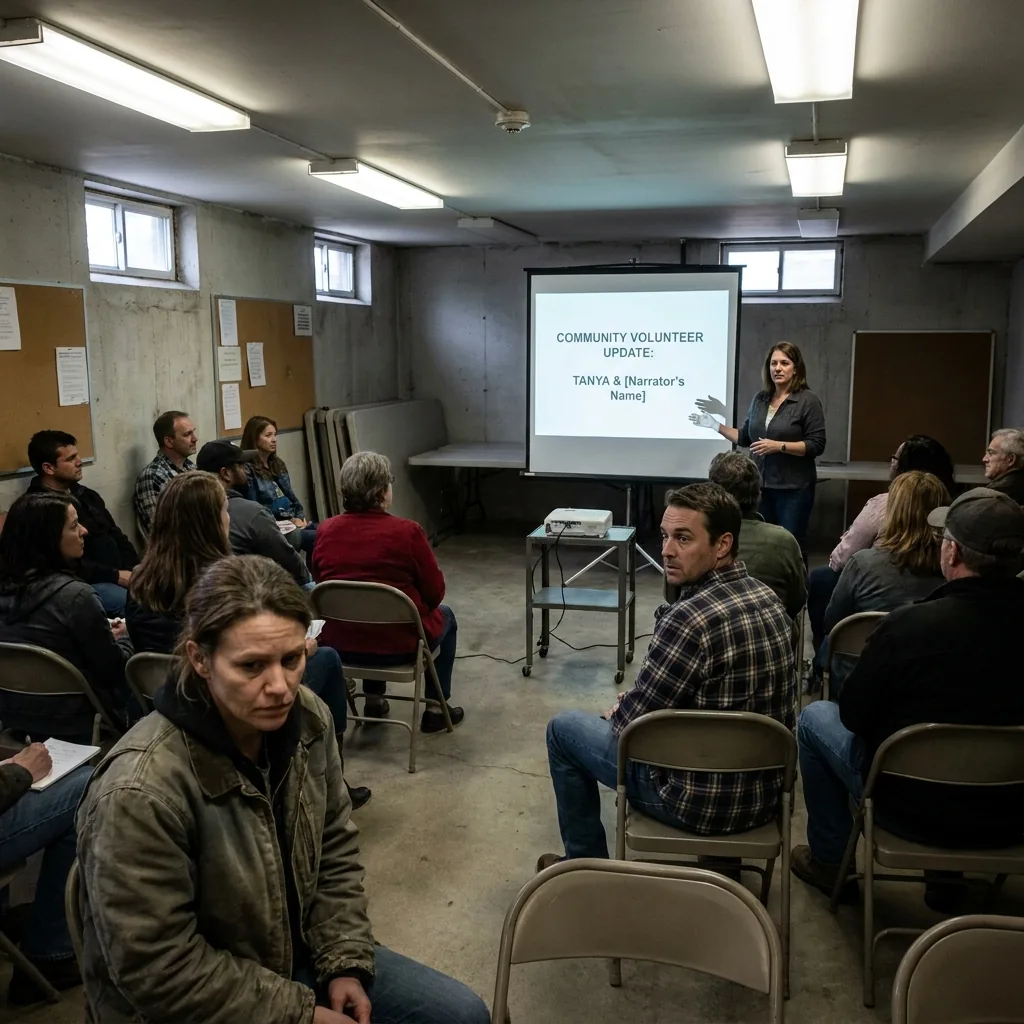
Tanya had the announcement screen lit up with my name over the folding chairs in the community center basement, and she was using it to tell the room I owed her obedience because she had “sacrificed” for me. I was standing beside the supply table with a stack of paper plates in my hands when she said it, in the same calm voice she used for sign-up sheets, and the whole thing landed like a trap with a spotlight on it. DeShawn looked up from the chair stack. Linda stopped with her paper bag half-open. Nobody was laughing. Nobody was moving except Tanya, who stood closest to the screen like she owned the wall behind her.
I had come in through the side hallway with the snack bins because that was my job tonight. Ordinary Tuesday stuff. Set out cups. Straighten the tables. Help with the kids’ room after the meeting. The center was full of that low volunteer noise, the clink of metal chair legs and someone calling for tape in the next room. Then Tanya stepped in front of the projector glow, tapped the remote, and put my face on the screen beside a block of text that made my stomach go hard.
“Before we start,” she said, “I want everyone to remember what I had to carry for this group.” She pointed at the screen. “Some of us have spent time, money, and energy making sure people like Mara had support. The least she can do is respect the chain of leadership here.”
The words on the screen were worse than her tone. They turned a story into a debt. They made her sound like the person who had taken a hit for everybody else, like I was supposed to be grateful just because she had chosen to put her own name in the middle of it. The screen was the biggest thing in the room, and she knew it. Every pair of eyes had to pass over it before they could land anywhere else.
“What are you talking about?” I asked.
Tanya did not look at me right away. She kept one hand on the remote and the other open toward the room, like she was speaking for all of us. “I’m talking about the extra effort I made for this center. The donations I lined up. The hours I stayed late. The things people forget once they get comfortable.” She glanced at me then, quick and sharp. “So when I ask for cooperation, I expect it.”
That was the first clean hit of it. Not just that she was claiming sacrifice. She was using it as leverage in front of everybody. I could feel the room watching the screen, then me, then the screen again, like they were being told where the truth lived.
I set the paper plates down very carefully. My hands were steady on purpose. “You want cooperation for what?”
“For the program,” Tanya said. “For the schedule. For the respect this place runs on.” She smiled without warmth. “If you can accept help, you can accept a little accountability.”
Linda took one step back with her paper bag. DeShawn’s eyes moved from Tanya to me and back to the screen. Nobody interrupted. That silence made the accusation feel organized.
Tanya clicked the remote again. The screen changed to a second slide, and I saw my name at the top with a bullet list under it. It was all phrased like a reminder, like I had forgotten a debt I never agreed to carry. The first line said gratitude. The second line said cooperation. The third line said public support.
My throat went tight, but my voice stayed level. “Where did this come from?”
“From what you were given,” Tanya said. “Let’s not pretend you don’t know that.”
I looked at the slide again. The room had gone too quiet for a basement full of people. Even the clatter from the hallway seemed farther away. Tanya kept her place by the screen, close enough that the light edged her shoulders. She kept talking as if every sentence was proof.
“People see what I do for them,” she said. “They understand obligations. They don’t turn around and act surprised when the group expects something back.”
There it was. Gratitude turned into control right in front of everybody.
I looked at the screen, then at her hand on the remote, then at the table of cups I was supposed to keep filling for this meeting. Something in the room had shifted, and Tanya was counting on me to keep participating so her version would hold. I could hear the soft buzz of the projector fan, the scrape of a chair leg, Linda’s bag crinkling in her hand.
So I said, “Take my name off the screen.”
Tanya’s mouth flattened. She did not answer me right away. She looked at the room instead, like she was waiting for the room to back her up.
Then she said, too smoothly, “You don’t get to withdraw when you’ve already benefited from what I provided.”
That was the line that made the whole thing snap into focus for me. If she was the one who had done the sacrificing, why did she sound so nervous when I asked for the screen to be cleared?
Tanya had the announcement screen lit up with my name over the folding chairs in the community center basement, and she was using it to tell the room I owed her obedience because she had “sacrificed” for me. I was standing beside the supply table with a stack of paper plates in my hands when she said it, in the same calm voice she used for sign-up sheets, and the whole thing landed like a trap with a spotlight on it. DeShawn looked up from the chair stack. Linda stopped with her paper bag half-open. Nobody was laughing. Nobody was moving except Tanya, who stood closest to the screen like she owned the wall behind her.
I had come in through the side hallway with the snack bins because that was my job tonight. Ordinary Tuesday stuff. Set out cups. Straighten the tables. Help with the kids’ room after the meeting. The center was full of that low volunteer noise, the clink of metal chair legs and someone calling for tape in the next room. Then Tanya stepped in front of the projector glow, tapped the remote, and put my face on the screen beside a block of text that made my stomach go hard.
“Before we start,” she said, “I want everyone to remember what I had to carry for this group.” She pointed at the screen. “Some of us have spent time, money, and energy making sure people like Mara had support. The least she can do is respect the chain of leadership here.”
The words on the screen were worse than her tone. They turned a story into a debt. They made her sound like the person who had taken a hit for everybody else, like I was supposed to be grateful just because she had chosen to put her own name in the middle of it. The screen was the biggest thing in the room, and she knew it. Every pair of eyes had to pass over it before they could land anywhere else.
“What are you talking about?” I asked.
Tanya did not look at me right away. She kept one hand on the remote and the other open toward the room, like she was speaking for all of us. “I’m talking about the extra effort I made for this center. The donations I lined up. The hours I stayed late. The things people forget once they get comfortable.” She glanced at me then, quick and sharp. “So when I ask for cooperation, I expect it.”
That was the first clean hit of it. Not just that she was claiming sacrifice. She was using it as leverage in front of everybody. I could feel the room watching the screen, then me, then the screen again, like they were being told where the truth lived.
I set the paper plates down very carefully. My hands were steady on purpose. “You want cooperation for what?”
“For the program,” Tanya said. “For the schedule. For the respect this place runs on.” She smiled without warmth. “If you can accept help, you can accept a little accountability.”
Linda took one step back with her paper bag. DeShawn’s eyes moved from Tanya to me and back to the screen. Nobody interrupted. That silence made the accusation feel organized.
Tanya clicked the remote again. The screen changed to a second slide, and I saw my name at the top with a bullet list under it. It was all phrased like a reminder, like I had forgotten a debt I never agreed to carry. The first line said gratitude. The second line said cooperation. The third line said public support.
My throat went tight, but my voice stayed level. “Where did this come from?”
“From what you were given,” Tanya said. “Let’s not pretend you don’t know that.”
I looked at the slide again. The room had gone too quiet for a basement full of people. Even the clatter from the hallway seemed farther away. Tanya kept her place by the screen, close enough that the light edged her shoulders. She kept talking as if every sentence was proof.
“People see what I do for them,” she said. “They understand obligations. They don’t turn around and act surprised when the group expects something back.”
There it was. Gratitude turned into control right in front of everybody.
I looked at the screen, then at her hand on the remote, then at the table of cups I was supposed to keep filling for this meeting. Something in the room had shifted, and Tanya was counting on me to keep participating so her version would hold. I could hear the soft buzz of the projector fan, the scrape of a chair leg, Linda’s bag crinkling in her hand.
So I said, “Take my name off the screen.”
Tanya’s mouth flattened. She did not answer me right away. She looked at the room instead, like she was waiting for the room to back her up.
Then she said, too smoothly, “You don’t get to withdraw when you’ve already benefited from what I provided.”
That was the line that made the whole thing snap into focus for me. If she was the one who had done the sacrificing, why did she sound so nervous when I asked for the screen to be cleared?