Story code: ST-000794
Part 1: She Said I Owed Her a Yes
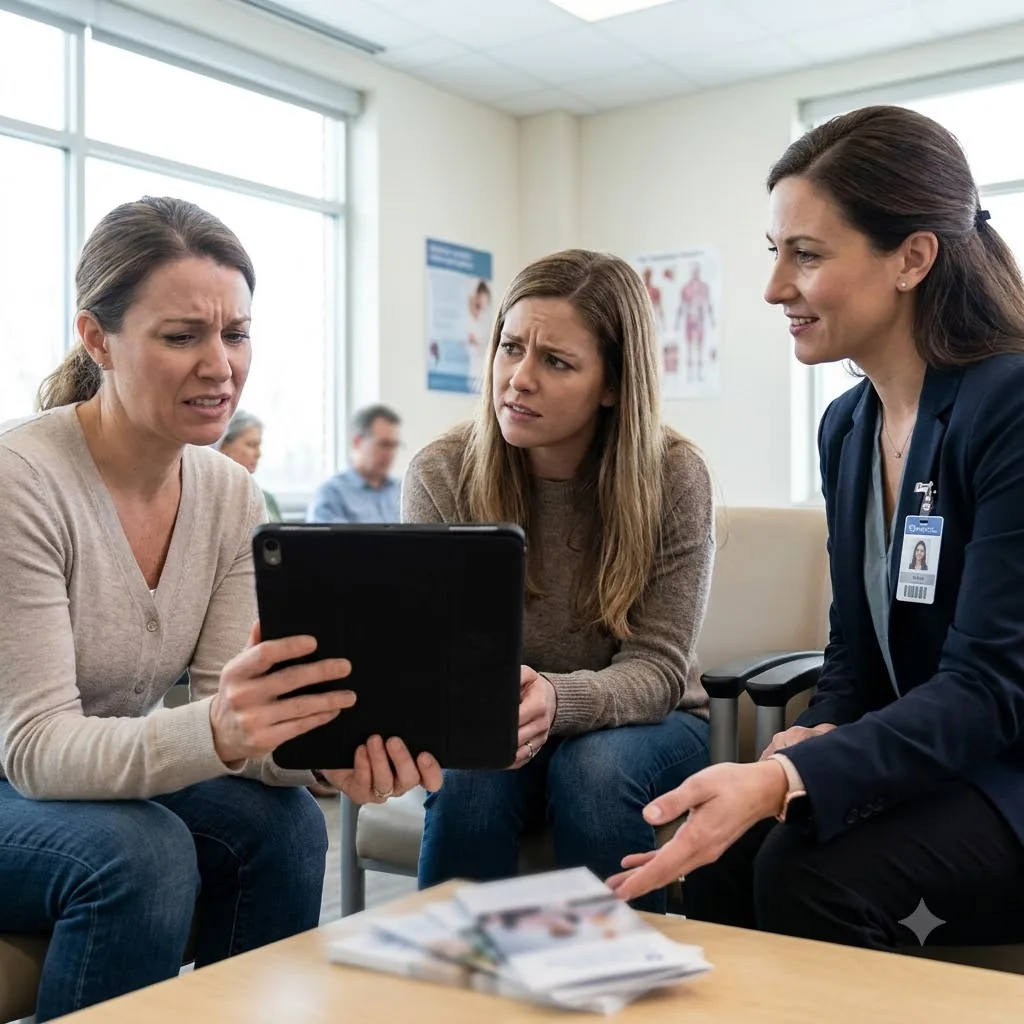
Mara Bell put the implant consent tablet in my hands, smiled at my sister over the stack of pamphlets, and said, “I already gave up enough for this family to get you in today, Nina.” We were sitting in a neuro clinic consultation room while someone in the hallway rolled a vitals cart past the door, and just like that, my medical choice got turned into a debt I was supposed to repay by tapping yes. When I looked down at the tablet instead of signing, Mara said it again, louder, like gratitude and obedience were the same thing.
The tablet was docked to a stand between me and her, with a tethered stylus clipped to the side. My clinic wristband kept catching on the edge when I shifted. On the screen was the consent flow for the memory implant consult, one page at a time, each one with blocks of text and a button at the bottom to continue.
Mara kept one hand on the edge of the stand like it belonged more to her than to me.
“I stayed late yesterday to keep this slot from getting reassigned,” she told Elena. “People don’t realize how much back-end work goes into helping a family like this.”
Elena gave her the quick grateful smile she gives airline gate agents and pharmacists and anybody standing between us and the thing we need. “We appreciate you so much,” she said. “Really.”
I said, “I appreciate the help. I’m still reading.”
That should have been a normal sentence in a clinic. Instead Mara’s smile tightened. “Of course,” she said. “I just don’t want us to lose momentum after everything I’ve done to get you here.”
Us.
I reread the first page. Elective neural memory support implant. Potential benefits. Potential side effects. Follow-up requirements. The words were clear enough until the room started leaning on them.
Elena shifted in her chair and tapped the procedure estimate sheet on her knee. “Nina, if you already know you’re doing this, maybe don’t drag it out.”
“I’m not dragging it out. I’m reading what they’re asking me to agree to.”
Mara leaned back with a soft exhale that was meant to be heard. “Nobody is rushing you. I just wish patients understood what staff members carry to make these appointments happen. I skipped my lunch to hold this room. Dr. Reese’s schedule is packed. If we miss the window, there isn’t always another one.”
She said it in that warm clinic voice that makes everything sound generous while it corners you. Not once did she ask if I had questions about the implant itself. She kept talking about what she had done, what she had held, what she had sacrificed, as if my body had become the place where her effort was supposed to get paid back.
I used the stylus to scroll slower.
“Can you explain this section?” I asked. “The line about adaptive recall mapping after placement.”
“That’s standard,” Mara said immediately. “We can cover details after consent.”
I looked up. “It’s on the consent screen now.”
“Right, and it’s routine.”
Elena jumped in before I could answer. “Nina, she’s trying to help.”
There it was. The first real cut. Not the implant language. Not the estimate sheet. Help, turned into something I was rude for questioning.
I set the stylus down in its cradle. “I didn’t say she wasn’t helping. I said I want an explanation before I move to the next page.”
Mara folded her hands. “I cleared multiple internal barriers for you. If every step becomes a debate, it puts me in a very difficult position.”
I stared at her. “How does me reading my own consent form put you in a difficult position?”
For half a second, nobody said anything. I could hear the low hum from the air vent and the rattle of ice in the paper cup by the pamphlets.
Mara gave a small laugh that didn’t sound amused. “Because there are a lot of moving pieces. Families ask us to advocate for them, and then when we do, we get treated like we’re the problem.”
I hadn’t asked her to advocate for me. I hadn’t asked her to stay late or skip lunch or hold a room. The only thing I had done was not tap the button she wanted.
I turned the tablet slightly so it sat squarely in front of me instead of angled toward her. “If this is too much extra work,” I said, keeping my voice even, “please don’t do anything extra on my account. We can slow it down.”
That should have relieved her. It should have released the burden she kept announcing.
Instead her face changed in a way I could actually see happen, like a shade snapping down behind her eyes.
“That’s not how this works,” she said.
Her hand went back to the tablet stand before mine did.
I looked at the screen again, and for the first time I noticed a small line at the top I hadn’t seen her mention at all: Patient may pause consent workflow at any stage and continue after clinician review.
If that was true, why had she been acting like my only decent option was to keep tapping forward for her?
Mara Bell put the implant consent tablet in my hands, smiled at my sister over the stack of pamphlets, and said, “I already gave up enough for this family to get you in today, Nina.” We were sitting in a neuro clinic consultation room while someone in the hallway rolled a vitals cart past the door, and just like that, my medical choice got turned into a debt I was supposed to repay by tapping yes. When I looked down at the tablet instead of signing, Mara said it again, louder, like gratitude and obedience were the same thing.
The tablet was docked to a stand between me and her, with a tethered stylus clipped to the side. My clinic wristband kept catching on the edge when I shifted. On the screen was the consent flow for the memory implant consult, one page at a time, each one with blocks of text and a button at the bottom to continue.
Mara kept one hand on the edge of the stand like it belonged more to her than to me.
“I stayed late yesterday to keep this slot from getting reassigned,” she told Elena. “People don’t realize how much back-end work goes into helping a family like this.”
Elena gave her the quick grateful smile she gives airline gate agents and pharmacists and anybody standing between us and the thing we need. “We appreciate you so much,” she said. “Really.”
I said, “I appreciate the help. I’m still reading.”
That should have been a normal sentence in a clinic. Instead Mara’s smile tightened. “Of course,” she said. “I just don’t want us to lose momentum after everything I’ve done to get you here.”
Us.
I reread the first page. Elective neural memory support implant. Potential benefits. Potential side effects. Follow-up requirements. The words were clear enough until the room started leaning on them.
Elena shifted in her chair and tapped the procedure estimate sheet on her knee. “Nina, if you already know you’re doing this, maybe don’t drag it out.”
“I’m not dragging it out. I’m reading what they’re asking me to agree to.”
Mara leaned back with a soft exhale that was meant to be heard. “Nobody is rushing you. I just wish patients understood what staff members carry to make these appointments happen. I skipped my lunch to hold this room. Dr. Reese’s schedule is packed. If we miss the window, there isn’t always another one.”
She said it in that warm clinic voice that makes everything sound generous while it corners you. Not once did she ask if I had questions about the implant itself. She kept talking about what she had done, what she had held, what she had sacrificed, as if my body had become the place where her effort was supposed to get paid back.
I used the stylus to scroll slower.
“Can you explain this section?” I asked. “The line about adaptive recall mapping after placement.”
“That’s standard,” Mara said immediately. “We can cover details after consent.”
I looked up. “It’s on the consent screen now.”
“Right, and it’s routine.”
Elena jumped in before I could answer. “Nina, she’s trying to help.”
There it was. The first real cut. Not the implant language. Not the estimate sheet. Help, turned into something I was rude for questioning.
I set the stylus down in its cradle. “I didn’t say she wasn’t helping. I said I want an explanation before I move to the next page.”
Mara folded her hands. “I cleared multiple internal barriers for you. If every step becomes a debate, it puts me in a very difficult position.”
I stared at her. “How does me reading my own consent form put you in a difficult position?”
For half a second, nobody said anything. I could hear the low hum from the air vent and the rattle of ice in the paper cup by the pamphlets.
Mara gave a small laugh that didn’t sound amused. “Because there are a lot of moving pieces. Families ask us to advocate for them, and then when we do, we get treated like we’re the problem.”
I hadn’t asked her to advocate for me. I hadn’t asked her to stay late or skip lunch or hold a room. The only thing I had done was not tap the button she wanted.
I turned the tablet slightly so it sat squarely in front of me instead of angled toward her. “If this is too much extra work,” I said, keeping my voice even, “please don’t do anything extra on my account. We can slow it down.”
That should have relieved her. It should have released the burden she kept announcing.
Instead her face changed in a way I could actually see happen, like a shade snapping down behind her eyes.
“That’s not how this works,” she said.
Her hand went back to the tablet stand before mine did.
I looked at the screen again, and for the first time I noticed a small line at the top I hadn’t seen her mention at all: Patient may pause consent workflow at any stage and continue after clinician review.
If that was true, why had she been acting like my only decent option was to keep tapping forward for her?