Story code: ST-000777
Part 3: The Log That Would Not Match
Dr. Singh did not raise his voice. He just kept the log binder open with two fingers and asked Evan to point to the exact line that made the test vial unavailable. Evan leaned in, then straightened, then reached for the binder and stopped when Dr. Singh shifted it an inch away.
The page in front of us had the batch number, the sample list, and a blank sign-off box where the transfer should have been. Evan said the box was waiting on verification. Dr. Singh asked verification from whom. Evan said from the person holding the lane. Tessa looked at me when he said it, then back at the page. Nobody touched the tray.
I wrote down the words exactly because the same rule kept changing shape in front of the same objects. First it had blocked the vial. Then it had covered the tray. Now it had become a lane, which was not written anywhere on the board or the binder. Dr. Singh turned the binder toward Evan and asked him to read the procedure heading aloud. Evan did. The heading said sample handling and logging. It did not say lane. It did not say temporary restriction. It did not say only one cousin could approve access.
Tessa took the lower shelf tubes off the hook one at a time and set them beside the tray. She kept the labels facing up. Then she asked the plainest question in the room: if the vial was blocked because the log was incomplete, why were the other tubes still available when they were on the same batch and the same shelf? Evan reached toward the nearest tube, stopped, and said those were already covered.
Dr. Singh asked covered by what.
Evan said the same thing again, quieter this time, as if repetition would stand in for an answer. Tessa picked up the same tube and showed the blank line under it in the binder. There was no completed chain there either. She put the tube back down with the cap still tight. The tube had not changed. The explanation had.
That was the point where the pressure shifted. Evan was no longer only blocking access. He was being asked to put the rule into one shape that could survive a second reading. He tried three versions in under a minute. The vial needed his sign-off. The tray was under review. The shelf was reserved. Each version left a different object in the room, but none of them matched the page.
Dr. Singh flipped to the current inventory sheet and ran a finger across the blank transfer box. He asked Evan who had initialized the restriction. Evan said he had. Dr. Singh asked where the entry was. Evan said it was verbal. Tessa said verbal did not update the log. Evan said it was still in process. Dr. Singh asked whether he was claiming a sample could be removed from circulation without a written entry, a witness, or a posted rule. Evan did not answer that question.
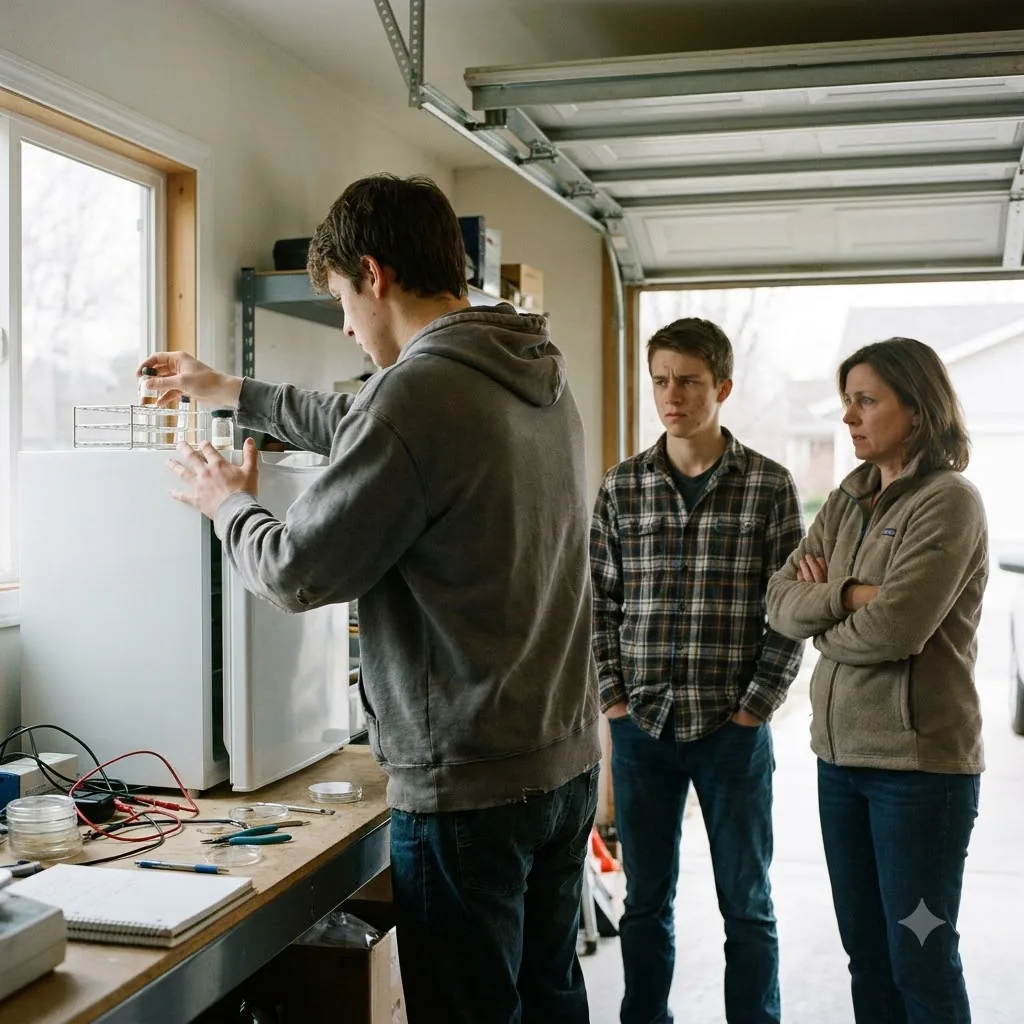
Instead, he pointed at the fridge and said the stock list had been off since morning. That was the first unrelated detail he had offered, and it landed like a deflection because it did not touch the page in front of us. Dr. Singh opened the fridge door himself. Inside were racks, labels, and a taped note about temperature checks. No restricted list. No posted rule. No lane. Just the same supplies we had all been using before Evan decided to stand between us and the vial.
Tessa stepped in beside the door and said, very clearly, that if the rule existed, he could say it the same way twice. Evan said he already had. She said no, he had not. She pointed at the binder, then the tray, then the fridge, in that order. “You keep moving it,” she said. “It was the vial. Then the tray. Then the shelf. Now it is whatever one of us asks for next.”
That was the first time anyone named the pattern out loud.
Dr. Singh did not look surprised. He just wrote something on the top margin of the inventory sheet and tore off the carbon copy underneath. He handed the copy to Tessa and told her to keep it with the labels. Then he asked Evan, one last time, to state the rule in one sentence that would apply to the vial, the tray, and the shelf without changing.
Evan opened his mouth, closed it, and tried again. What came out was not a sentence. It was a patchwork of half-rules: sign-off, inventory, verification, designated person, temporary restriction. None of it stayed in one place long enough to hold.
Dr. Singh took the log binder, the tray sheet, and the carbon copy and aligned them on the bench. The same blank box appeared on all three. He set a small black stamp beside the pile and told Evan to wait by the fridge. Then he said the part that changed the room: the sample handling record could not be used for access until the restriction was entered properly, and until it was, the vial and the batch would remain locked in place.
The consequence was not a speech. It was a process. The paper left the bench with Dr. Singh. Evan still had his hands free, but he no longer had the page that let him move the samples around by talking. He started to say something about cleaning up the logs, then stopped when Dr. Singh took the marker out of his hand and set it down.
I wrote that down because the rule had finally been pinned to the thing it had been hiding behind: not procedure, but a blank record. The next step was obvious from the stack of paper on the bench. Part 4 would have to decide whether Evan could keep the vial blocked once the record itself was being locked down.