Story code: ST-000746
Part 1: The Screen Said Family Before the Math Did
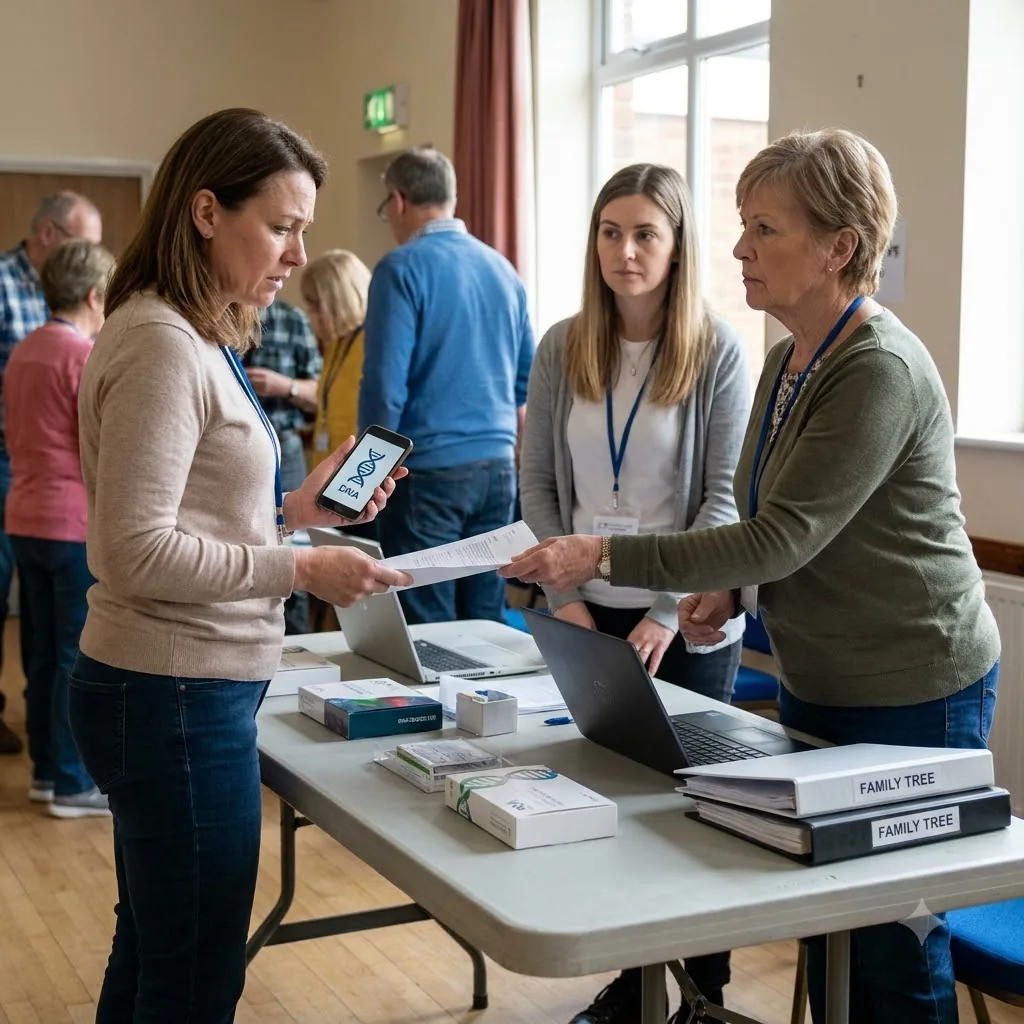
Maya Collins was standing at the result-check station in the US ancestry meetup room, phone open to a DNA app, when Denise Park slid the printed match details across the table and said the sequence was already settled. The room kept doing ordinary things around them-pens scratching, chair legs shifting, someone folding a pamphlet-but the paper in Maya’s hand said her new relative was Eric Hale, and the timestamps on the screen did not sit right with the claim. Denise kept one finger on the posted procedure like that could make the order less important.
I was close enough to see Maya check the phone against the printout more than once. She did not raise her voice. She held the paper flat with both hands, then set one thumb on the app screen and tapped through the match page again. Eric stood a half step back from the table, shoulders square, one hand on the edge of a manila envelope with the kit label showing. Tara Collins hovered beside Maya, looking from the app to the paper to Eric’s face, then back down to the dates printed under the match name.
Denise asked for the app screen number before she would confirm anything else. She said the meetup had a process and the process had to be followed in order. Maya gave it to her in short, even words. Denise wrote the number on the edge of a clipboard, then leaned over the counter lamp and compared it to the printed sheet. Her mouth tightened once, but she did not say what she had seen.
Eric moved first. He lifted the envelope and tapped the corner of the printout. “That’s the match,” he said, loud enough for the nearest table to hear. “It’s already in the system.” He turned the sheet so Maya could see the highlighted line again, as if repeating it would make it stronger. Maya did not touch it. She pointed instead to the timestamp under the match entry on her phone, then to the date on the paper, then to the next line lower on the screen. Her finger stopped there.
Tara leaned in and read the dates aloud. She compared them to the old photo she had pulled up on her own phone, one of those family pictures with names typed in a caption strip at the bottom. “That can’t be right,” she said, and she said it to the paper, not to Eric.
That was the first harm in the room: not a shout, not a scene, just a process that let a family claim look official before the order could survive a basic check. Denise took the paper back, turned it over, and checked the reverse side for a barcode. She asked Eric where he had picked up the kit envelope. He answered without hesitation, still confident, still talking as though the match order would protect him. Then Denise stopped him with a small hand lift and said she needed the full sequence, not the summary.
Maya waited while Denise logged the app number into a laptop at the result station. She did not interrupt. She watched the volunteer scroll, pause, scroll again, and compare one entry against another. The screen glow moved across Denise’s face. Eric started to speak twice and stopped twice when Denise kept reading. Tara shifted her weight and kept staring at the timestamp line on Maya’s phone.
At last Denise said, “I need the earlier entry.”
Maya brought it up. The screen showed the earlier match record, then the later one, then the date stamp on the printout. The order on the app did not match the family story Eric had given at the table. The kit sequence put one connection before another that should have come first if the claim was true. Denise looked at the screen, then at the paper, then at Eric. She did not explain it away. She only said, “This does not line up.”
Eric’s hand tightened on the envelope. He did not answer the next question right away.
The question was simple enough that everyone nearby could follow it: if the app logged this match after the other one, how had he already been presented as the relative who made the timeline fit?
Maya Collins was standing at the result-check station in the US ancestry meetup room, phone open to a DNA app, when Denise Park slid the printed match details across the table and said the sequence was already settled. The room kept doing ordinary things around them-pens scratching, chair legs shifting, someone folding a pamphlet-but the paper in Maya’s hand said her new relative was Eric Hale, and the timestamps on the screen did not sit right with the claim. Denise kept one finger on the posted procedure like that could make the order less important.
I was close enough to see Maya check the phone against the printout more than once. She did not raise her voice. She held the paper flat with both hands, then set one thumb on the app screen and tapped through the match page again. Eric stood a half step back from the table, shoulders square, one hand on the edge of a manila envelope with the kit label showing. Tara Collins hovered beside Maya, looking from the app to the paper to Eric’s face, then back down to the dates printed under the match name.
Denise asked for the app screen number before she would confirm anything else. She said the meetup had a process and the process had to be followed in order. Maya gave it to her in short, even words. Denise wrote the number on the edge of a clipboard, then leaned over the counter lamp and compared it to the printed sheet. Her mouth tightened once, but she did not say what she had seen.
Eric moved first. He lifted the envelope and tapped the corner of the printout. “That’s the match,” he said, loud enough for the nearest table to hear. “It’s already in the system.” He turned the sheet so Maya could see the highlighted line again, as if repeating it would make it stronger. Maya did not touch it. She pointed instead to the timestamp under the match entry on her phone, then to the date on the paper, then to the next line lower on the screen. Her finger stopped there.
Tara leaned in and read the dates aloud. She compared them to the old photo she had pulled up on her own phone, one of those family pictures with names typed in a caption strip at the bottom. “That can’t be right,” she said, and she said it to the paper, not to Eric.
That was the first harm in the room: not a shout, not a scene, just a process that let a family claim look official before the order could survive a basic check. Denise took the paper back, turned it over, and checked the reverse side for a barcode. She asked Eric where he had picked up the kit envelope. He answered without hesitation, still confident, still talking as though the match order would protect him. Then Denise stopped him with a small hand lift and said she needed the full sequence, not the summary.
Maya waited while Denise logged the app number into a laptop at the result station. She did not interrupt. She watched the volunteer scroll, pause, scroll again, and compare one entry against another. The screen glow moved across Denise’s face. Eric started to speak twice and stopped twice when Denise kept reading. Tara shifted her weight and kept staring at the timestamp line on Maya’s phone.
At last Denise said, “I need the earlier entry.”
Maya brought it up. The screen showed the earlier match record, then the later one, then the date stamp on the printout. The order on the app did not match the family story Eric had given at the table. The kit sequence put one connection before another that should have come first if the claim was true. Denise looked at the screen, then at the paper, then at Eric. She did not explain it away. She only said, “This does not line up.”
Eric’s hand tightened on the envelope. He did not answer the next question right away.
The question was simple enough that everyone nearby could follow it: if the app logged this match after the other one, how had he already been presented as the relative who made the timeline fit?