Story code: ST-000954
Part 1: She Kept Using That Bracelet Like a Receipt
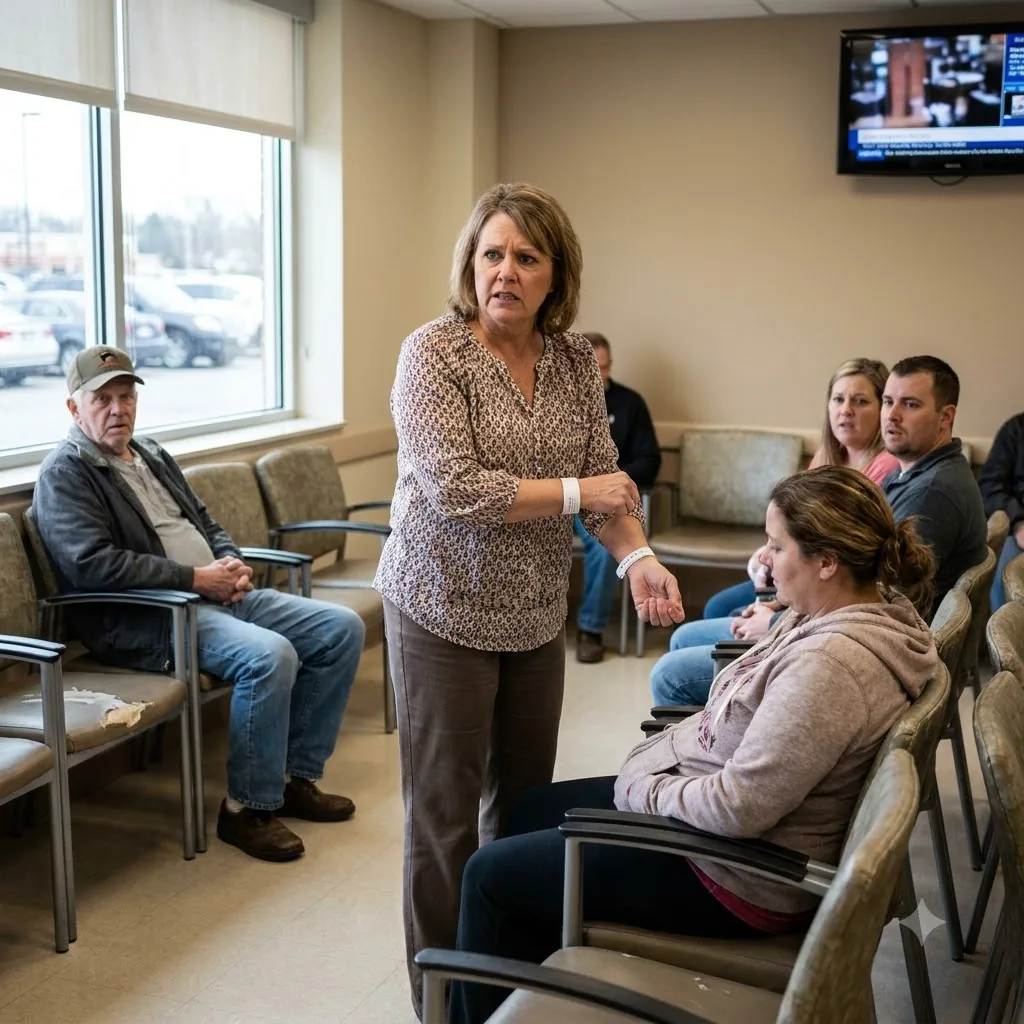
My aunt started telling strangers in the transplant waiting room that she had given up everything for me while she held out her wrist like evidence, the white donor bracelet flashing every time she pointed at me. I was sitting under a muted TV with hospital captions rolling by, my brother was somewhere behind the double doors getting another update, and Aunt Denise was using his transplant crisis to tell me how grateful I should still be. The part that made it hit wrong was that every time she said sacrifice, it ended with an order. The waiting room was full in the way hospital waiting rooms always are when nobody wants to admit how long they have already been there. Paper coffee cups on side tables. Phone chargers crossing under chairs. Families speaking too softly until one voice took over. Ours was Denise’s. “I told her from day one, family comes first,” she said to Sharon, but loud enough for the older couple by the window and the man trying not to sleep in his chair. She tapped the plastic bracelet on her wrist with one fingernail. “People don’t know what I’ve put myself through for these kids. They really don’t.” These kids. I am thirty-four. Sharon gave me the kind of look people use when they want credit for being gentle. “She’s just exhausted, Denise. We all are.” Denise turned to me with her mouth pressed into a thin, brave line. She was always good at making her face look arranged. “No, Sharon, say it. Leah should understand that some people don’t get to be tired. Some of us had to step up. Some of us signed up to give pieces of ourselves. Literally.” That landed exactly where she wanted it to. The donor bracelet made a clean little circle against her wrist bone when she lifted her hand again. Sharon glanced at it. The older couple by the window glanced at it too and then glanced away fast, because nobody wants to get caught listening in a hospital, even when they are. I said, “Can we not do this right now?” “Right now?” Denise let out a short laugh with no humor in it. “Leah, your brother is in surgery and you still make everything about your comfort.” Marcus was not in surgery. He had been taken for additional imaging after an overnight complication scare, and we were waiting to hear whether they were moving forward later that afternoon. But Denise liked any version that made the room more dramatic. I kept my voice flat. “He’s in imaging.” She waved that off like I had corrected a comma. “The point stands. If I had not done what I did for this family, half of you wouldn’t even be sitting here together.” That was another thing about Denise. Her stories never stayed one size. They stretched to fit the audience. When it was just me, her sacrifice was always specific and heavy. You owe me. I changed my life for you. Don’t forget what I almost gave up. In front of other people, it got grander and fuzzier at the same time, as if she had personally held the roof up over all of us for years. Sharon handed me a fresh coffee like that settled anything. “Just let her say her piece,” she murmured. “You know how emotional this is for her.” There it was. Gratitude with a hand around its throat. Denise leaned forward. “A thank-you would not kill you, Leah. A little respect would not kill you either. Not after everything.” I took the cup because if I didn’t, that would become another scene. The coffee was weak and hot enough to sting my tongue. “I have thanked you.” “Not really.” She sat back and crossed one leg over the other. The bracelet shifted again. “Not in the way that counts.” I looked at her wrist because she wanted me to. The band had the hospital logo, a date, and the word DONOR in block print. It had been there since yesterday morning, ever since she had made a point of arriving early and showing it to everyone before Marcus was even taken downstairs. I knew what she wanted that bracelet to mean. She wanted it to end every conversation before it started. She wanted a piece of plastic to do what years of family pressure had done before: make me nod first and sort out what actually happened later, if ever. Nurse Elena Ruiz came through the waiting room doors with a clipboard tucked against her hip and called another family’s name. The whole room straightened at once and then sagged when it wasn’t for them. Denise took that tiny pause in the noise like she had been handed a microphone. “Some people wear their hearts on their sleeves,” she said, touching the bracelet again. “Some of us wear proof.” Nobody answered. The TV kept changing silent headlines. Ice knocked in somebody’s cup at the coffee station alcove. Sharon lowered herself into the chair beside me and whispered, “Just tell her you appreciate her. This is not the time to dig in.” I wanted to ask what exact words would finally buy my freedom, but I already knew the answer from years of this. There weren’t any. With Denise, gratitude was never receipt enough. It was a subscription. So I said nothing. That should have ended it for a minute. Instead Denise studied my face, then pushed harder, as if my silence had denied her something she had expected automatically. “Funny,” she said, louder now, glancing toward the doorway where two more relatives had just come in. “When the nurses were explaining donor screening yesterday, I remember one person leaving out what that meant for me. And now suddenly she can’t even look at me.” I looked up then, because that wasn’t the version she had used before. Yesterday, Denise had told Sharon she volunteered immediately. Now, in front of the new audience, she.
My aunt started telling strangers in the transplant waiting room that she had given up everything for me while she held out her wrist like evidence, the white donor bracelet flashing every time she pointed at me. I was sitting under a muted TV with hospital captions rolling by, my brother was somewhere behind the double doors getting another update, and Aunt Denise was using his transplant crisis to tell me how grateful I should still be. The part that made it hit wrong was that every time she said sacrifice, it ended with an order. The waiting room was full in the way hospital waiting rooms always are when nobody wants to admit how long they have already been there. Paper coffee cups on side tables. Phone chargers crossing under chairs. Families speaking too softly until one voice took over. Ours was Denise’s. “I told her from day one, family comes first,” she said to Sharon, but loud enough for the older couple by the window and the man trying not to sleep in his chair. She tapped the plastic bracelet on her wrist with one fingernail. “People don’t know what I’ve put myself through for these kids. They really don’t.” These kids. I am thirty-four. Sharon gave me the kind of look people use when they want credit for being gentle. “She’s just exhausted, Denise. We all are.” Denise turned to me with her mouth pressed into a thin, brave line. She was always good at making her face look arranged. “No, Sharon, say it. Leah should understand that some people don’t get to be tired. Some of us had to step up. Some of us signed up to give pieces of ourselves. Literally.” That landed exactly where she wanted it to. The donor bracelet made a clean little circle against her wrist bone when she lifted her hand again. Sharon glanced at it. The older couple by the window glanced at it too and then glanced away fast, because nobody wants to get caught listening in a hospital, even when they are. I said, “Can we not do this right now?” “Right now?” Denise let out a short laugh with no humor in it. “Leah, your brother is in surgery and you still make everything about your comfort.” Marcus was not in surgery. He had been taken for additional imaging after an overnight complication scare, and we were waiting to hear whether they were moving forward later that afternoon. But Denise liked any version that made the room more dramatic. I kept my voice flat. “He’s in imaging.” She waved that off like I had corrected a comma. “The point stands. If I had not done what I did for this family, half of you wouldn’t even be sitting here together.” That was another thing about Denise. Her stories never stayed one size. They stretched to fit the audience. When it was just me, her sacrifice was always specific and heavy. You owe me. I changed my life for you. Don’t forget what I almost gave up. In front of other people, it got grander and fuzzier at the same time, as if she had personally held the roof up over all of us for years. Sharon handed me a fresh coffee like that settled anything. “Just let her say her piece,” she murmured. “You know how emotional this is for her.” There it was. Gratitude with a hand around its throat. Denise leaned forward. “A thank-you would not kill you, Leah. A little respect would not kill you either. Not after everything.” I took the cup because if I didn’t, that would become another scene. The coffee was weak and hot enough to sting my tongue. “I have thanked you.” “Not really.” She sat back and crossed one leg over the other. The bracelet shifted again. “Not in the way that counts.” I looked at her wrist because she wanted me to. The band had the hospital logo, a date, and the word DONOR in block print. It had been there since yesterday morning, ever since she had made a point of arriving early and showing it to everyone before Marcus was even taken downstairs. I knew what she wanted that bracelet to mean. She wanted it to end every conversation before it started. She wanted a piece of plastic to do what years of family pressure had done before: make me nod first and sort out what actually happened later, if ever. Nurse Elena Ruiz came through the waiting room doors with a clipboard tucked against her hip and called another family’s name. The whole room straightened at once and then sagged when it wasn’t for them. Denise took that tiny pause in the noise like she had been handed a microphone. “Some people wear their hearts on their sleeves,” she said, touching the bracelet again. “Some of us wear proof.” Nobody answered. The TV kept changing silent headlines. Ice knocked in somebody’s cup at the coffee station alcove. Sharon lowered herself into the chair beside me and whispered, “Just tell her you appreciate her. This is not the time to dig in.” I wanted to ask what exact words would finally buy my freedom, but I already knew the answer from years of this. There weren’t any. With Denise, gratitude was never receipt enough. It was a subscription. So I said nothing. That should have ended it for a minute. Instead Denise studied my face, then pushed harder, as if my silence had denied her something she had expected automatically. “Funny,” she said, louder now, glancing toward the doorway where two more relatives had just come in. “When the nurses were explaining donor screening yesterday, I remember one person leaving out what that meant for me. And now suddenly she can’t even look at me.” I looked up then, because that wasn’t the version she had used before. Yesterday, Denise had told Sharon she volunteered immediately. Now, in front of the new audience, she.