Story code: ST-000170
Part 1: My Scarf Was on the Wedding Hall Screen Before I Even Knew I Was Being Filmed
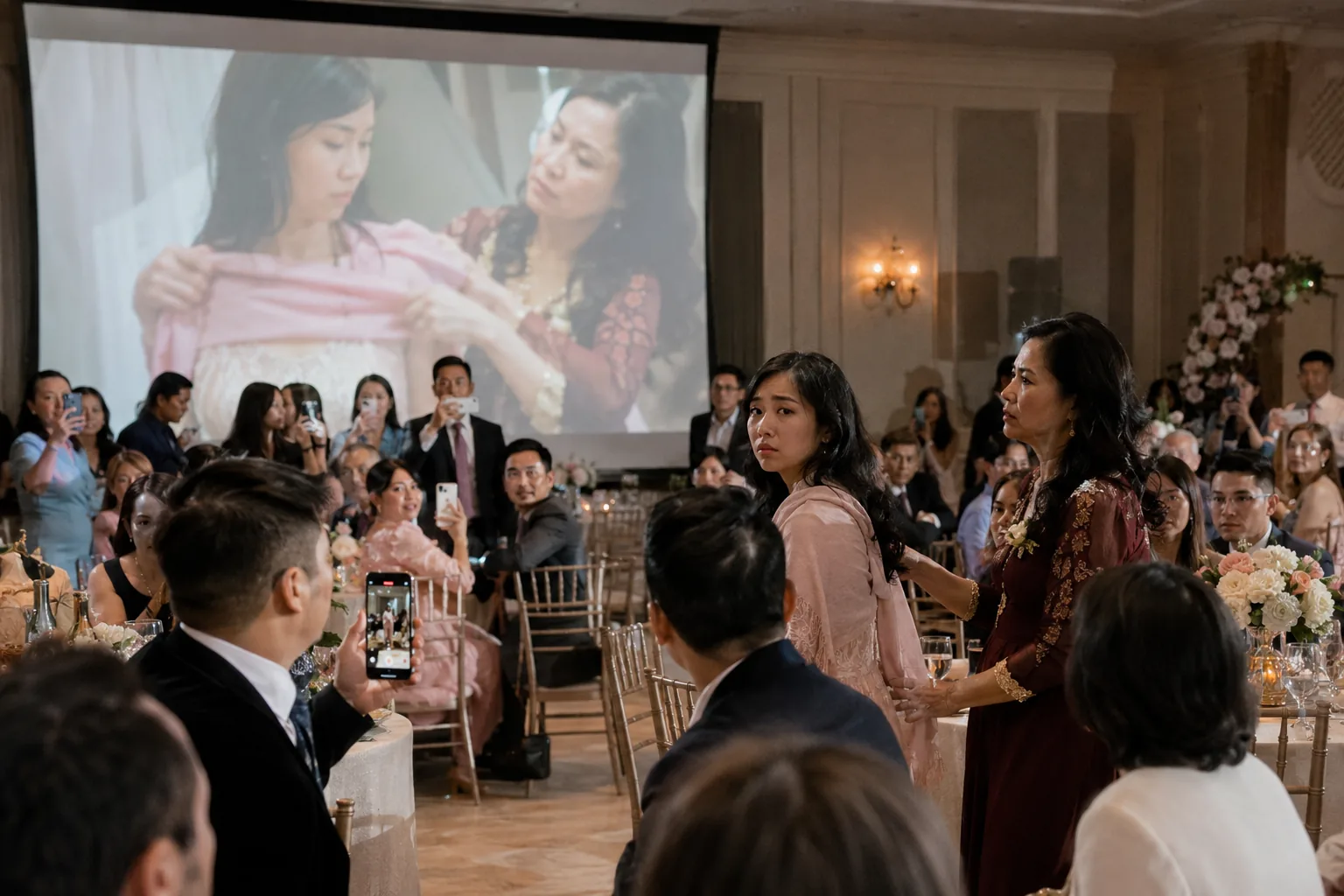
My aunt put a private scarf moment on the wedding hall screen while people were still carrying plates back to their tables, and the room changed fast enough that I could see phones turn toward me before I understood what they were seeing. One second I was near the family photo backdrop fixing a ceremony scarf that had slipped at my shoulder, and the next Aunt Celia was saying, loud enough for the main floor to hear, “Tradition came first in this family before attitude did,” while a cropped clip made me look like I had thrown the scarf away.
That is the version that spread first.
The hall was doing what wedding halls do in the middle hour. Kids were running near the dance floor. A cousin was balancing cake plates. Somebody at the DJ table was lining up a slideshow. Then a sharp burst of laughter hit from one side of the room, not happy laughter, the kind that travels because people know they are allowed to stare now.
I turned and saw my own arm on the projection screen.
Not all of me. Just enough.
The clip was short, maybe six or seven seconds. In it, Aunt Celia held out the ceremony scarf near the side corridor by the backdrop. My hand came up. The scarf shifted. Then the clip jumped to the scarf dipping toward the floor while I stepped back. That was all the room got. No lead-in. No wider angle. No sound clear enough to help. Just the part that let people fill in the rest.
“Why would she do that here?”
“At the wedding too.”
“Celia was only trying to do the family thing.”
You can learn a lot from what people say before they ask a single question.
Tessa was still in her reception dress near the sweetheart table when the first cluster formed. She kept looking from the screen to me to her mother. She said, “Can we not do this right now?” but she had to say it twice because too many people were already talking over each other.
Aunt Celia did not lower her voice. She had one hand around her phone and the other lifted, palm out, like she was managing a problem she had not started. “If somebody rejects a custom in public,” she said, “then people are going to see it in public.”
That line told me two things before I had proof for either one. First, she knew exactly which clip was playing. Second, she was treating the display as a lesson, not an accident.
I did not start yelling. People always expect the younger woman to either explode or cry so they can sort her into a box quickly. I said, “Take it off the screen.” Just that.
Dev Patel, the hall AV guy, was already at the table, looking down at a laptop and then at the casting queue. He did not join the family argument. He said, in the flat tone of somebody who wanted to stay technical, “I can stop the display, but it came from a guest device.”
Marco heard that and moved in closer. Marco never rushes his words. He looks at the nearest screen first. He looked at the projection, then at Aunt Celia’s phone, then at two cousins who were already forwarding something into the family chat. “Who sent it first?” he asked.
No one answered him because by then the damage had widened. The clip had already jumped off the wall and into people’s hands. I saw three versions of the same frame in under a minute: on the screen above the dance floor, on a phone near the cake table, and on an auntie’s tablet with the sound off.
That is when privacy turns into entertainment. Not when one person records. When a whole room decides the private moment belongs to everybody.
I stayed near the side corridor because if I crossed the main floor, I would have to do it under my own face on the wall. The scarf itself was hanging half off a banquet chair where someone had set it after the clip started making rounds. Silk catches light in a way that makes people think it is ceremonial enough to settle an argument by itself. It does not. It only proves what object they decided to fight over.
Tessa came toward me, stopped, then glanced back because somebody was calling her name from the gift table. “Nina,” she said, low and fast, “did you throw it?”
“No,” I said.
That answer should have mattered more than a six-second clip. It did not.
Aunt Celia stepped in before Tessa could ask anything else. “Everybody saw it,” she said. “Why are we pretending they didn’t?”
But that was the trick sitting right in the open. Everybody had not seen it. Everybody had seen the same missing piece.
Marco asked me quietly, “Is there a longer version?”
“Yes,” I said.
He looked back at the screen, where the clip had looped again before Dev cut the feed. “Then somebody trimmed it before it got here.”
That was the first moment the accusation shifted shape. Not enough to save me. Not enough to stop the whispers. But enough to put a crack through the story Aunt Celia was pushing.
Because if the clip was trimmed, then this was not just a family scolding that spilled too far. Somebody had chosen the exact seconds that made me look guilty.
And I still did not know who had put that version on the wall first, or why Dev was staring at the casting log like he had just found a second problem nobody else in the room had noticed.
My aunt put a private scarf moment on the wedding hall screen while people were still carrying plates back to their tables, and the room changed fast enough that I could see phones turn toward me before I understood what they were seeing. One second I was near the family photo backdrop fixing a ceremony scarf that had slipped at my shoulder, and the next Aunt Celia was saying, loud enough for the main floor to hear, “Tradition came first in this family before attitude did,” while a cropped clip made me look like I had thrown the scarf away.
That is the version that spread first.
The hall was doing what wedding halls do in the middle hour. Kids were running near the dance floor. A cousin was balancing cake plates. Somebody at the DJ table was lining up a slideshow. Then a sharp burst of laughter hit from one side of the room, not happy laughter, the kind that travels because people know they are allowed to stare now.
I turned and saw my own arm on the projection screen.
Not all of me. Just enough.
The clip was short, maybe six or seven seconds. In it, Aunt Celia held out the ceremony scarf near the side corridor by the backdrop. My hand came up. The scarf shifted. Then the clip jumped to the scarf dipping toward the floor while I stepped back. That was all the room got. No lead-in. No wider angle. No sound clear enough to help. Just the part that let people fill in the rest.
“Why would she do that here?”
“At the wedding too.”
“Celia was only trying to do the family thing.”
You can learn a lot from what people say before they ask a single question.
Tessa was still in her reception dress near the sweetheart table when the first cluster formed. She kept looking from the screen to me to her mother. She said, “Can we not do this right now?” but she had to say it twice because too many people were already talking over each other.
Aunt Celia did not lower her voice. She had one hand around her phone and the other lifted, palm out, like she was managing a problem she had not started. “If somebody rejects a custom in public,” she said, “then people are going to see it in public.”
That line told me two things before I had proof for either one. First, she knew exactly which clip was playing. Second, she was treating the display as a lesson, not an accident.
I did not start yelling. People always expect the younger woman to either explode or cry so they can sort her into a box quickly. I said, “Take it off the screen.” Just that.
Dev Patel, the hall AV guy, was already at the table, looking down at a laptop and then at the casting queue. He did not join the family argument. He said, in the flat tone of somebody who wanted to stay technical, “I can stop the display, but it came from a guest device.”
Marco heard that and moved in closer. Marco never rushes his words. He looks at the nearest screen first. He looked at the projection, then at Aunt Celia’s phone, then at two cousins who were already forwarding something into the family chat. “Who sent it first?” he asked.
No one answered him because by then the damage had widened. The clip had already jumped off the wall and into people’s hands. I saw three versions of the same frame in under a minute: on the screen above the dance floor, on a phone near the cake table, and on an auntie’s tablet with the sound off.
That is when privacy turns into entertainment. Not when one person records. When a whole room decides the private moment belongs to everybody.
I stayed near the side corridor because if I crossed the main floor, I would have to do it under my own face on the wall. The scarf itself was hanging half off a banquet chair where someone had set it after the clip started making rounds. Silk catches light in a way that makes people think it is ceremonial enough to settle an argument by itself. It does not. It only proves what object they decided to fight over.
Tessa came toward me, stopped, then glanced back because somebody was calling her name from the gift table. “Nina,” she said, low and fast, “did you throw it?”
“No,” I said.
That answer should have mattered more than a six-second clip. It did not.
Aunt Celia stepped in before Tessa could ask anything else. “Everybody saw it,” she said. “Why are we pretending they didn’t?”
But that was the trick sitting right in the open. Everybody had not seen it. Everybody had seen the same missing piece.
Marco asked me quietly, “Is there a longer version?”
“Yes,” I said.
He looked back at the screen, where the clip had looped again before Dev cut the feed. “Then somebody trimmed it before it got here.”
That was the first moment the accusation shifted shape. Not enough to save me. Not enough to stop the whispers. But enough to put a crack through the story Aunt Celia was pushing.
Because if the clip was trimmed, then this was not just a family scolding that spilled too far. Somebody had chosen the exact seconds that made me look guilty.
And I still did not know who had put that version on the wall first, or why Dev was staring at the casting log like he had just found a second problem nobody else in the room had noticed.