Story code: ST-000724
Part 1: The Badge on Linda’s Blazer
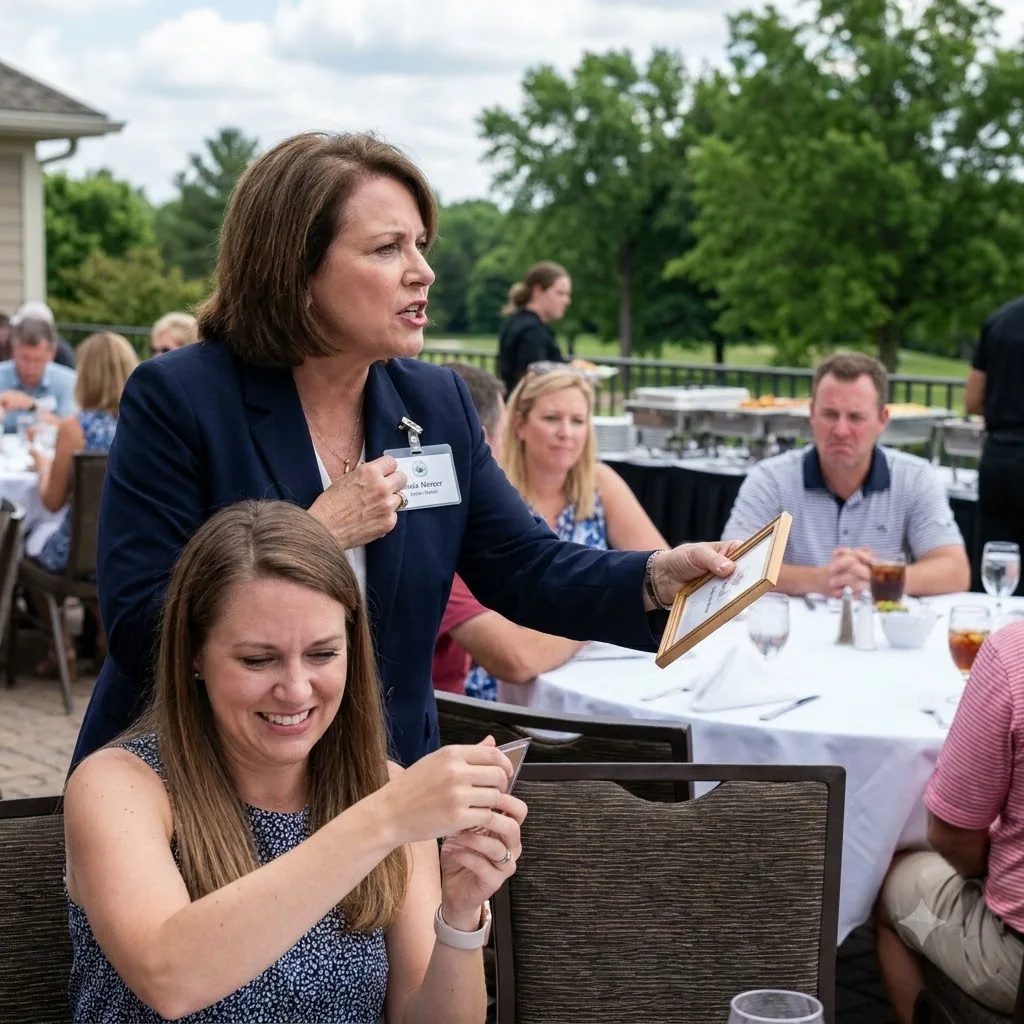
Linda Mercer clipped the guest badge to her blazer at the country club brunch work counter, and in the same motion she took Emily Carter’s setup out of Emily’s hands by speaking over her in front of the family seating cluster. The tray of name cards, mint napkins, and menu inserts was already moving toward the brunch room when Linda stepped in, smiled at the staff, and said, loud enough for Paul and two nearby members to hear, that she had handled the whole setup herself. Emily was standing beside the service traffic lane with the remaining brunch materials pulled tight to her chest, while a club server paused with a stack of plates and looked from one woman to the other. The visible harm was immediate. Emily’s labor disappeared in plain sight, and the guest badge that should have marked a specific person and access point was now hanging on Linda’s jacket like it belonged there.
Nina Alvarez, working the check-in area, did not join the family chatter. She stayed with the practical part of the morning, one hand on her list and the other on the tablet at the side stand. When Linda drifted closer and started talking like she owned the flow, Nina asked the first short question that mattered: who was on the guest badge, and which name had been tied to brunch access for the private seating path. Linda answered fast, with the smooth tone of someone used to being believed, and she did not look at the list before she spoke. Paul nodded along, repeating that Linda had “taken care of everything” as if repeating it could make it true.
Emily did not raise her voice. She did what the work required and answered Nina directly when Nina turned the question back to the person who actually had the setup materials. Emily named the tables, the delivery order, and the sideboard change that had been made after the staff check-in ran short. She also asked for the guest badge back, because the badge was the bridge between brunch access and ownership cues, and it was now pinned to the wrong person. Linda kept one hand over the badge for a beat too long, then shifted sideways so the badge stayed visible while she kept talking. That was the first process gap: Linda was performing authority, but she was borrowing it from the visible objects Emily had already organized.
By the time the first coffee service reached the family seating cluster, the mismatch had started showing in the small things. Linda could repeat the general shape of the plan, but when Nina asked for the exact sequence on the guest entrance and the name tied to the reserved side gate, Linda answered with a vague wave toward Emily and said, “You know how she is with details.” That was not an answer. Nina checked the list again. Paul stopped smiling and looked at the badge, then at the setup materials in Emily’s hands, then back at Linda. One of the servers waited with the coffee urn lifted and did not move until the access question was settled.
Emily took the tray to the buffet line because the line was already forming and no one else had stepped in to keep the brunch moving. She placed the inserts beside the floral arrangement, corrected one menu stack that had been turned upside down, and confirmed the guest badge number with Nina in the same calm voice she used for every practical question. Linda followed her with that practiced confidence that works best when nobody checks the details. She said she had “always” been the one coordinating the morning, and she reached again for the badge as if holding it longer would make the claim stronger.
Then Nina asked one more thing, still flat and procedural: who had the backup code for the private access point if the brunch room needed a reset. Linda blinked once and gave a wrong answer that did not match the club’s routine. Emily, still beside the service traffic lane, looked up immediately and corrected the code without hesitation. Paul heard it. The server heard it. Nina heard it. The badge stopped being decoration and became proof that the woman wearing it did not know the system she was claiming.
Linda’s smile held, but her hand tightened on the blazer edge. Emily looked at the badge, the wrong answer, and the line of people waiting for service, and one missing skill suddenly sat in the open where everyone could see it. If Linda had no idea how to handle the access code, then what exactly had she just told the club she owned?
Linda Mercer clipped the guest badge to her blazer at the country club brunch work counter, and in the same motion she took Emily Carter’s setup out of Emily’s hands by speaking over her in front of the family seating cluster. The tray of name cards, mint napkins, and menu inserts was already moving toward the brunch room when Linda stepped in, smiled at the staff, and said, loud enough for Paul and two nearby members to hear, that she had handled the whole setup herself. Emily was standing beside the service traffic lane with the remaining brunch materials pulled tight to her chest, while a club server paused with a stack of plates and looked from one woman to the other. The visible harm was immediate. Emily’s labor disappeared in plain sight, and the guest badge that should have marked a specific person and access point was now hanging on Linda’s jacket like it belonged there.
Nina Alvarez, working the check-in area, did not join the family chatter. She stayed with the practical part of the morning, one hand on her list and the other on the tablet at the side stand. When Linda drifted closer and started talking like she owned the flow, Nina asked the first short question that mattered: who was on the guest badge, and which name had been tied to brunch access for the private seating path. Linda answered fast, with the smooth tone of someone used to being believed, and she did not look at the list before she spoke. Paul nodded along, repeating that Linda had “taken care of everything” as if repeating it could make it true.
Emily did not raise her voice. She did what the work required and answered Nina directly when Nina turned the question back to the person who actually had the setup materials. Emily named the tables, the delivery order, and the sideboard change that had been made after the staff check-in ran short. She also asked for the guest badge back, because the badge was the bridge between brunch access and ownership cues, and it was now pinned to the wrong person. Linda kept one hand over the badge for a beat too long, then shifted sideways so the badge stayed visible while she kept talking. That was the first process gap: Linda was performing authority, but she was borrowing it from the visible objects Emily had already organized.
By the time the first coffee service reached the family seating cluster, the mismatch had started showing in the small things. Linda could repeat the general shape of the plan, but when Nina asked for the exact sequence on the guest entrance and the name tied to the reserved side gate, Linda answered with a vague wave toward Emily and said, “You know how she is with details.” That was not an answer. Nina checked the list again. Paul stopped smiling and looked at the badge, then at the setup materials in Emily’s hands, then back at Linda. One of the servers waited with the coffee urn lifted and did not move until the access question was settled.
Emily took the tray to the buffet line because the line was already forming and no one else had stepped in to keep the brunch moving. She placed the inserts beside the floral arrangement, corrected one menu stack that had been turned upside down, and confirmed the guest badge number with Nina in the same calm voice she used for every practical question. Linda followed her with that practiced confidence that works best when nobody checks the details. She said she had “always” been the one coordinating the morning, and she reached again for the badge as if holding it longer would make the claim stronger.
Then Nina asked one more thing, still flat and procedural: who had the backup code for the private access point if the brunch room needed a reset. Linda blinked once and gave a wrong answer that did not match the club’s routine. Emily, still beside the service traffic lane, looked up immediately and corrected the code without hesitation. Paul heard it. The server heard it. Nina heard it. The badge stopped being decoration and became proof that the woman wearing it did not know the system she was claiming.
Linda’s smile held, but her hand tightened on the blazer edge. Emily looked at the badge, the wrong answer, and the line of people waiting for service, and one missing skill suddenly sat in the open where everyone could see it. If Linda had no idea how to handle the access code, then what exactly had she just told the club she owned?