Story code: ST-000726
Part 1: The Scarf Hit the Pause Point
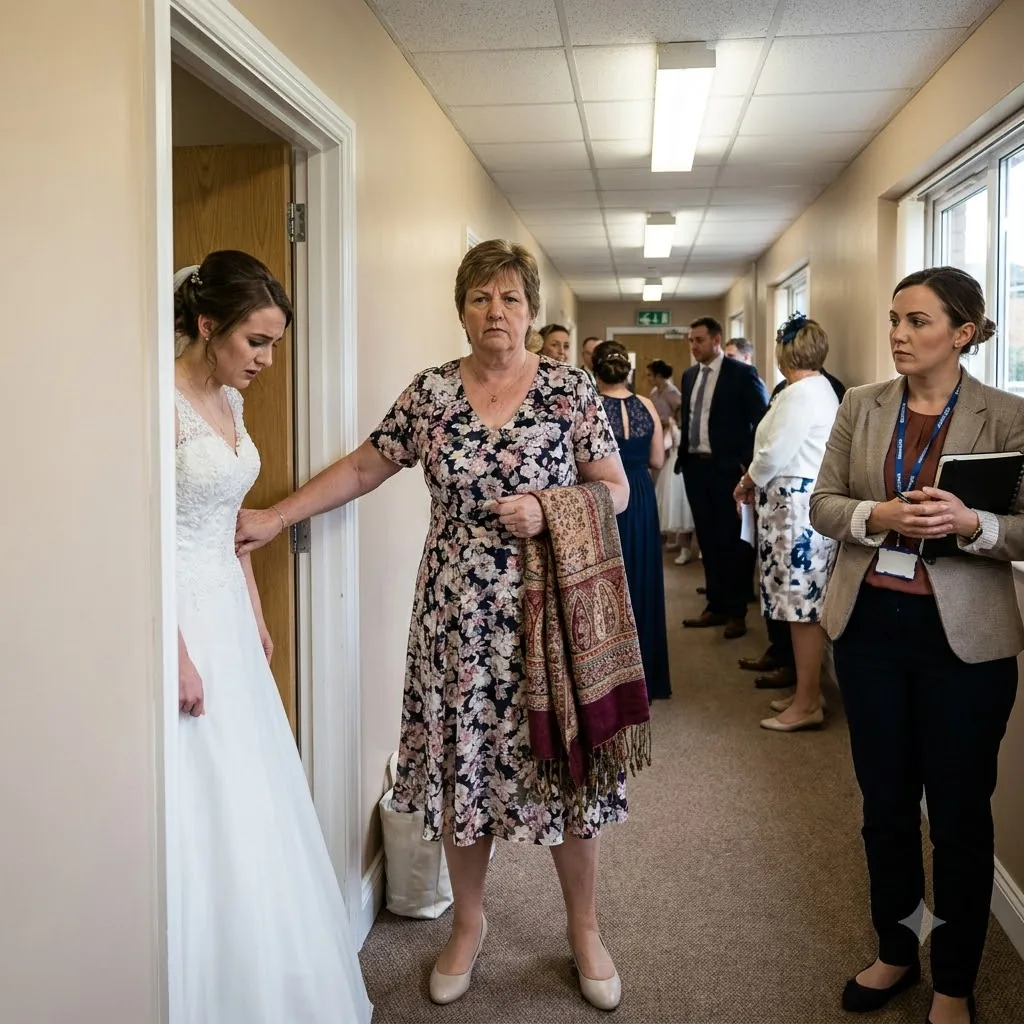
Aunt Vivienne stopped Leah at the bridal prep room doorway with the ceremony scarf in her hand and told Marisol Reed the wedding could not move forward because the order was wrong. We were in the side corridor outside the ceremony room, with guests still shuffling past the open office counter and a coordinator clipboard pressed to Marisol’s chest, and the whole thing got frozen over one visible piece of fabric. Vivienne did not just object. She used the rule like a latch, and the first harm was immediate: Leah was told to stand there in full dress while staff held the next step.
I was close enough to see the scarf. It was folded once, pale and bright against Vivienne’s dark sleeve, and she kept adjusting her grip on it like she owned the timing of the whole day. Leah had one hand at her veil and the other at the side of her dress, making small fixing motions that had nowhere to go. Daniel stood farther down the corridor, jacket still half-buttoned, looking from the wall clock to Marisol’s radio and back again. Marisol kept her voice even, but she did not wave them through. She asked the same question twice: who had the scarf, and when had it been handed over.
Vivienne answered like the answer was already settled. She said the next step could not happen until everyone acknowledged the proper sequence. She said the scarf had to be in place before the ceremony room door opened. She said there was no point rushing because a wrong order made the whole thing improper. The words were tidy. The hallway around them was not. A catering cart rolled past from the main reception floor. Someone in a navy vest moved a stack of folded chair sashes through the office entry. A child laughed once and then got shushed. The hall kept working, but our corner of it had stopped.
Marisol did what venue people do when a family fight starts sounding like a process problem. She did not argue tradition. She asked for the sequence. She wanted the ordinary timeline, the simple version anybody could follow without guessing. Leah said the scarf had been brought in earlier with the garment bag and rack, then held for the final handoff. Vivienne cut in and said that was not the order. Daniel said he had been told to wait in the corridor while Leah was finishing prep. That was all he would say at first, just the parts he had seen. I wrote it down because the line between a ritual rule and a made-up roadblock was already getting thin.
What made the room go tighter was not volume. It was the way Vivienne kept speaking as if the sequence itself were a locked door only she could open. She held the scarf up once, just enough for the staff to see it, and said no one could claim the ceremony was ready unless the handoff had happened in the correct order. Marisol looked at the wall clock. Then she looked at the phone on the counter when Leah’s screen lit up with a lock-screen timestamp from a minute earlier. I saw that too. The numbers did not line up with the order Vivienne was insisting on.
Marisol did not say the claim was false. She said she needed a timeline that made sense. That was when Vivienne repeated the same rule a third time, slower, like repeating it could replace the missing moment. Leah did not speak. She kept one hand on the dress seam and waited through the pause that had swallowed the ceremony.
I was still looking at the scarf when I heard Daniel say, under his breath and just loud enough for me to catch it, that he had seen it in motion before anyone reached the office counter. If that was true, then Vivienne’s version needed a handoff that nobody in the corridor had actually witnessed. So why was she acting like the missing moment had already been proven?
Aunt Vivienne stopped Leah at the bridal prep room doorway with the ceremony scarf in her hand and told Marisol Reed the wedding could not move forward because the order was wrong. We were in the side corridor outside the ceremony room, with guests still shuffling past the open office counter and a coordinator clipboard pressed to Marisol’s chest, and the whole thing got frozen over one visible piece of fabric. Vivienne did not just object. She used the rule like a latch, and the first harm was immediate: Leah was told to stand there in full dress while staff held the next step.
I was close enough to see the scarf. It was folded once, pale and bright against Vivienne’s dark sleeve, and she kept adjusting her grip on it like she owned the timing of the whole day. Leah had one hand at her veil and the other at the side of her dress, making small fixing motions that had nowhere to go. Daniel stood farther down the corridor, jacket still half-buttoned, looking from the wall clock to Marisol’s radio and back again. Marisol kept her voice even, but she did not wave them through. She asked the same question twice: who had the scarf, and when had it been handed over.
Vivienne answered like the answer was already settled. She said the next step could not happen until everyone acknowledged the proper sequence. She said the scarf had to be in place before the ceremony room door opened. She said there was no point rushing because a wrong order made the whole thing improper. The words were tidy. The hallway around them was not. A catering cart rolled past from the main reception floor. Someone in a navy vest moved a stack of folded chair sashes through the office entry. A child laughed once and then got shushed. The hall kept working, but our corner of it had stopped.
Marisol did what venue people do when a family fight starts sounding like a process problem. She did not argue tradition. She asked for the sequence. She wanted the ordinary timeline, the simple version anybody could follow without guessing. Leah said the scarf had been brought in earlier with the garment bag and rack, then held for the final handoff. Vivienne cut in and said that was not the order. Daniel said he had been told to wait in the corridor while Leah was finishing prep. That was all he would say at first, just the parts he had seen. I wrote it down because the line between a ritual rule and a made-up roadblock was already getting thin.
What made the room go tighter was not volume. It was the way Vivienne kept speaking as if the sequence itself were a locked door only she could open. She held the scarf up once, just enough for the staff to see it, and said no one could claim the ceremony was ready unless the handoff had happened in the correct order. Marisol looked at the wall clock. Then she looked at the phone on the counter when Leah’s screen lit up with a lock-screen timestamp from a minute earlier. I saw that too. The numbers did not line up with the order Vivienne was insisting on.
Marisol did not say the claim was false. She said she needed a timeline that made sense. That was when Vivienne repeated the same rule a third time, slower, like repeating it could replace the missing moment. Leah did not speak. She kept one hand on the dress seam and waited through the pause that had swallowed the ceremony.
I was still looking at the scarf when I heard Daniel say, under his breath and just loud enough for me to catch it, that he had seen it in motion before anyone reached the office counter. If that was true, then Vivienne’s version needed a handoff that nobody in the corridor had actually witnessed. So why was she acting like the missing moment had already been proven?