Story code: ST-000783
Part 1: The Word Evelyn Never Used
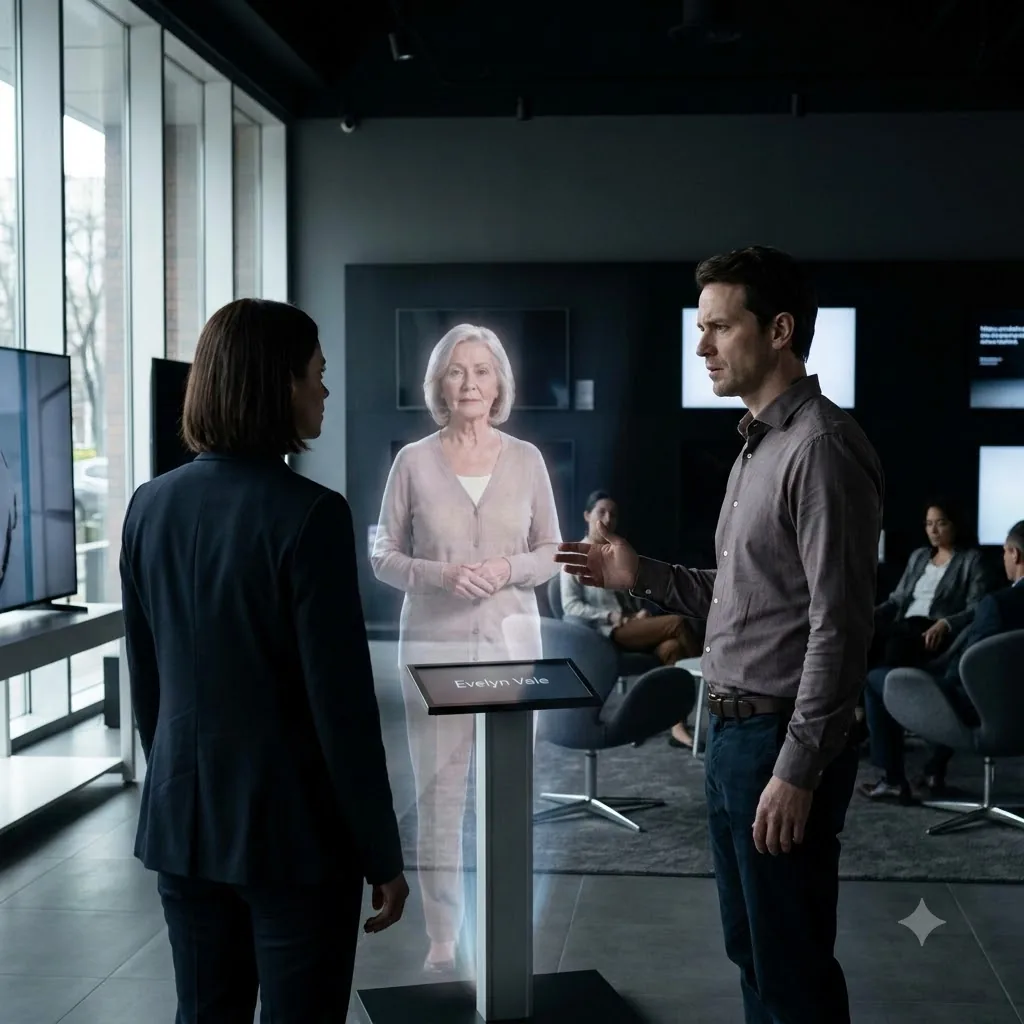
Evelyn Vale’s hologram told Nina to sit down before she had even reached the front row, and Caleb grabbed that line like it settled something that had been hanging over the family for months. Mara was standing by the side display shelves, half watching a looping tribute on one wall and half watching Darren Pike’s hand stay close to the operator tablet by the voice model drive dock, when the polished version of a dead woman used a word the real Evelyn never used.
The Remembrance Gallery had staged the room to look gentle on purpose. Cream chairs sat in a neat family seating row. Thin speaker pedestals framed the front presentation area. A suspended projector array cast Evelyn in a soft blue outline beside a shelf of sample urns and memorial cards, while a little slideshow of old backyard photos moved behind her in silence.
Darren stood off to one side in a navy jacket with the company logo at the collar. He had already given the family his smooth speech about preserving voice, cadence, warmth. He said the system was guided by archived material and family-approved shaping. He said the result was meant to feel natural.
Then Nina rose from the second chair in the front row when Darren invited anyone to step closer if they wanted to address Evelyn directly.
The hologram lifted her chin with a delay that looked just a shade too measured.
“Nina,” Evelyn said. “Sit down. We are not doing this revisionist version again.”
Nina stopped in the aisle so abruptly that the empty chair beside her bumped backward. Mara saw three people in the row look from the projection to Nina at the same time, as if waiting for a familiar family correction to finish itself. Nina’s hands stayed at her sides. She did not move toward the chair.
Darren gave a small open-palmed gesture toward the hologram. “The model responds best if we let a memory sequence complete.”
Caleb leaned forward with both elbows on his knees. “There it is,” he said, fast, before anyone else spoke. “She’s saying the same thing we’ve all been saying. Sit down and stop doing the revisionist version.”
Mara watched Nina instead of Caleb. Nina kept her eyes on the projection. “My mother never said ‘revisionist version.'”
Caleb let out a short sound through his nose, not quite a laugh. “You’re really going to argue with her in a room built from her own voice?”
Nina answered without raising her voice. “I’m arguing with that word.”
The hologram remained still for one beat too long. Then Evelyn turned slightly toward Nina again. “Sit down, honey. We are not doing this revisionist version again.”
This time Caleb stood up. “There. Again. You heard it again.” He looked to Darren for backup, and Darren nodded once, very professionally, like a man confirming audio levels. Caleb kept going. “Maybe stop making everything about your side for one afternoon.”
That was the first clean shift in the room, the moment when the line became borrowed blame. A cousin near the wall lowered her eyes. One of the older uncles crossed his arms. Mara saw Nina take one breath and hold it long enough to count.
“She called things unfair,” Nina said. “She called things messy. She called people stubborn. She did not say revisionist. Not to me. Not to Caleb. Not ever.”
Darren spoke over the last two words with practiced softness. “Language can compress under model adaptation. What matters is the emotional truth of the memory lane.”
Mara looked from him to the dock beside his tablet. The voice model drive sat there in plain view, a clear-sided cartridge no bigger than a deck of cards, lit from beneath by a small white strip. Until that moment it had looked like showroom decoration, another piece of polished equipment meant to make grief feel premium.
Nina pointed, not at Darren, but at the hologram. “Then ask her why she’s telling me to sit down.”
Darren’s shoulders tightened under the jacket. He tapped the tablet twice. “The system isn’t designed for adversarial prompting.”
“Why is that instruction in there?” Nina asked.
“It’s not an instruction,” Darren said. “It’s responsive memorial language.”
Caleb turned toward Nina again. “You hear that and you still think this is about wording?”
Mara heard herself speak before she had planned to. “Can it replay just that section?”
Several faces turned toward her. Darren gave her a showroom smile that did not quite arrive in his eyes. “Of course. We can review the sequence.”
He touched the tablet. The hologram flickered, dissolved at the shoulders, then re-formed from the waist up in the same position. The projector hummed lightly. Evelyn’s face settled.
“Nina,” the hologram said, exactly as before. “Sit down. We are not doing this revisionist version again.”
Nothing in the line shifted. Not the pause before Nina’s name. Not the flattening on revisionist. Not the tidy finish on again.
Caleb spread his hands, as if the replay had done the arguing for him. “How much more direct do you need?”
Nina did not look at him. “Ask him who put that line in.”
Darren glanced down at the tablet instead of at Nina. “There isn’t a single source in that sense. It’s a blended response architecture.”
Mara watched his thumb hover over the side of the device without touching it. He had not answered the question. He had answered around it.
Nina took one step toward the front presentation area. “Then explain the word.”
Darren’s mouth opened, then closed. The room stayed very still except for the low projector hum and a looping image of Evelyn in a garden folding into the next frame behind her own face.
Because if that voice really came from Evelyn, Mara could not understand why it had landed on the one word Nina corrected immediately, and why Darren could replay it perfectly but not explain where it came from.
Evelyn Vale’s hologram told Nina to sit down before she had even reached the front row, and Caleb grabbed that line like it settled something that had been hanging over the family for months. Mara was standing by the side display shelves, half watching a looping tribute on one wall and half watching Darren Pike’s hand stay close to the operator tablet by the voice model drive dock, when the polished version of a dead woman used a word the real Evelyn never used.
The Remembrance Gallery had staged the room to look gentle on purpose. Cream chairs sat in a neat family seating row. Thin speaker pedestals framed the front presentation area. A suspended projector array cast Evelyn in a soft blue outline beside a shelf of sample urns and memorial cards, while a little slideshow of old backyard photos moved behind her in silence.
Darren stood off to one side in a navy jacket with the company logo at the collar. He had already given the family his smooth speech about preserving voice, cadence, warmth. He said the system was guided by archived material and family-approved shaping. He said the result was meant to feel natural.
Then Nina rose from the second chair in the front row when Darren invited anyone to step closer if they wanted to address Evelyn directly.
The hologram lifted her chin with a delay that looked just a shade too measured.
“Nina,” Evelyn said. “Sit down. We are not doing this revisionist version again.”
Nina stopped in the aisle so abruptly that the empty chair beside her bumped backward. Mara saw three people in the row look from the projection to Nina at the same time, as if waiting for a familiar family correction to finish itself. Nina’s hands stayed at her sides. She did not move toward the chair.
Darren gave a small open-palmed gesture toward the hologram. “The model responds best if we let a memory sequence complete.”
Caleb leaned forward with both elbows on his knees. “There it is,” he said, fast, before anyone else spoke. “She’s saying the same thing we’ve all been saying. Sit down and stop doing the revisionist version.”
Mara watched Nina instead of Caleb. Nina kept her eyes on the projection. “My mother never said ‘revisionist version.'”
Caleb let out a short sound through his nose, not quite a laugh. “You’re really going to argue with her in a room built from her own voice?”
Nina answered without raising her voice. “I’m arguing with that word.”
The hologram remained still for one beat too long. Then Evelyn turned slightly toward Nina again. “Sit down, honey. We are not doing this revisionist version again.”
This time Caleb stood up. “There. Again. You heard it again.” He looked to Darren for backup, and Darren nodded once, very professionally, like a man confirming audio levels. Caleb kept going. “Maybe stop making everything about your side for one afternoon.”
That was the first clean shift in the room, the moment when the line became borrowed blame. A cousin near the wall lowered her eyes. One of the older uncles crossed his arms. Mara saw Nina take one breath and hold it long enough to count.
“She called things unfair,” Nina said. “She called things messy. She called people stubborn. She did not say revisionist. Not to me. Not to Caleb. Not ever.”
Darren spoke over the last two words with practiced softness. “Language can compress under model adaptation. What matters is the emotional truth of the memory lane.”
Mara looked from him to the dock beside his tablet. The voice model drive sat there in plain view, a clear-sided cartridge no bigger than a deck of cards, lit from beneath by a small white strip. Until that moment it had looked like showroom decoration, another piece of polished equipment meant to make grief feel premium.
Nina pointed, not at Darren, but at the hologram. “Then ask her why she’s telling me to sit down.”
Darren’s shoulders tightened under the jacket. He tapped the tablet twice. “The system isn’t designed for adversarial prompting.”
“Why is that instruction in there?” Nina asked.
“It’s not an instruction,” Darren said. “It’s responsive memorial language.”
Caleb turned toward Nina again. “You hear that and you still think this is about wording?”
Mara heard herself speak before she had planned to. “Can it replay just that section?”
Several faces turned toward her. Darren gave her a showroom smile that did not quite arrive in his eyes. “Of course. We can review the sequence.”
He touched the tablet. The hologram flickered, dissolved at the shoulders, then re-formed from the waist up in the same position. The projector hummed lightly. Evelyn’s face settled.
“Nina,” the hologram said, exactly as before. “Sit down. We are not doing this revisionist version again.”
Nothing in the line shifted. Not the pause before Nina’s name. Not the flattening on revisionist. Not the tidy finish on again.
Caleb spread his hands, as if the replay had done the arguing for him. “How much more direct do you need?”
Nina did not look at him. “Ask him who put that line in.”
Darren glanced down at the tablet instead of at Nina. “There isn’t a single source in that sense. It’s a blended response architecture.”
Mara watched his thumb hover over the side of the device without touching it. He had not answered the question. He had answered around it.
Nina took one step toward the front presentation area. “Then explain the word.”
Darren’s mouth opened, then closed. The room stayed very still except for the low projector hum and a looping image of Evelyn in a garden folding into the next frame behind her own face.
Because if that voice really came from Evelyn, Mara could not understand why it had landed on the one word Nina corrected immediately, and why Darren could replay it perfectly but not explain where it came from.