Story code: ST-001162
Part 1: The Watching Eye
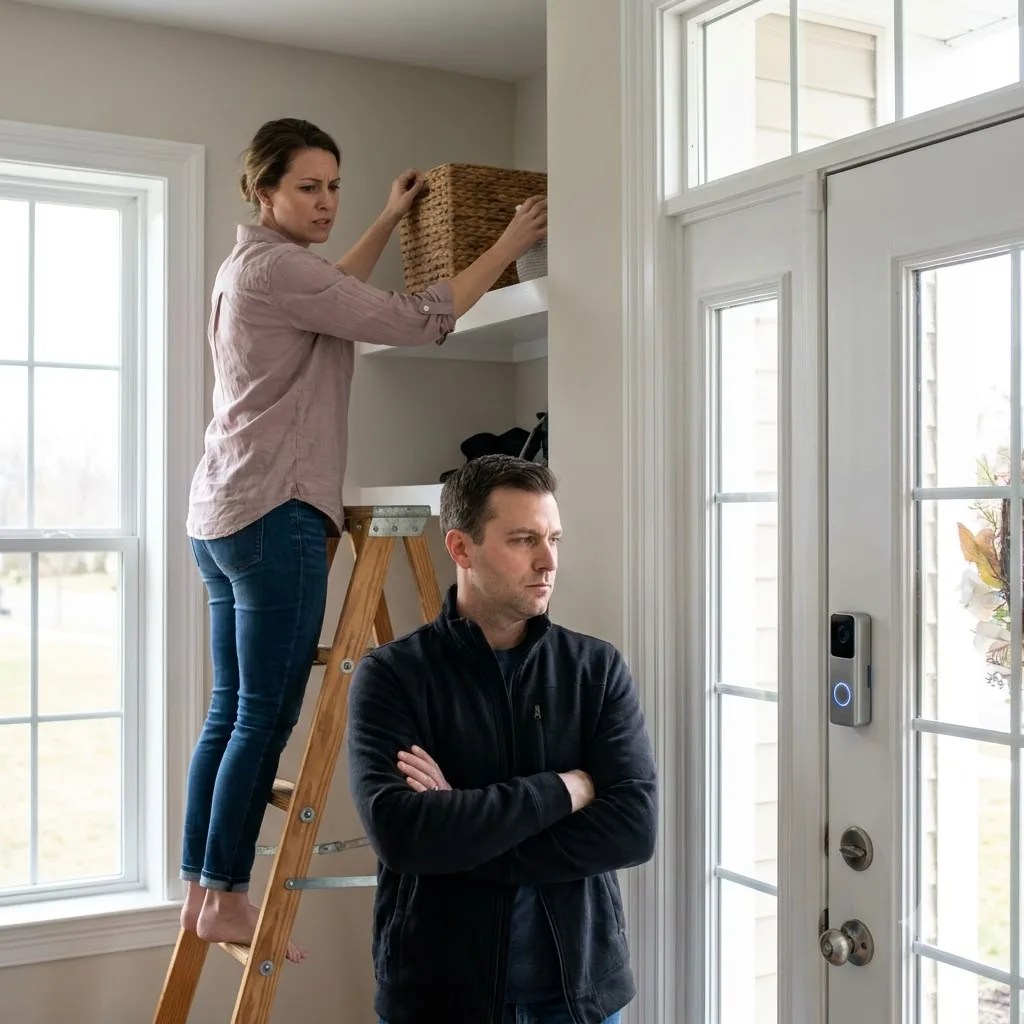
I was standing on a stepladder in Clara’s New Jersey foyer, adjusting custom storage baskets, when the sleek, metallic smart doorbell camera by the front door chimed and its glowing blue lens swiveled to track my exact movements. Through the unit’s high-definition speaker, Greg’s voice boomed down from his upstairs home office, demanding to know why I had shifted a container three inches to the left. It was the third time in an hour Clara’s husband had used his remote surveillance system to interrupt my organizing work, micro-managing the threshold of his home while Clara stood below me, frantically spinning her wedding ring.
“Leo is just sorting the seasonal bin, Greg,” Clara said, her voice dropping as she looked up at the camera dome mounted just outside the glass sidelight. “We discussed this. He needs space to work.”
The camera lens clicked, rotating five degrees to focus directly on Clara. “The entryway is the primary security perimeter, Clara,” Greg’s voice replied, flat and digital through the speaker. “Any adjustment to the physical layout alters the motion-tracking grid. Put the bin back where it was.”
Clara’s shoulders tensed. She reached toward the cabinet, but her hand hovered in the air before she pulled it back, tucking her arms against her chest. I stepped down from the ladder, holding my clipboard, and watched her face. Her lips were pressed into a thin line, her eyes darting between the camera lens and the smart lock screen mounted on the wall.
The entry system was state-of-the-art, boasting real-time audio feeds, face recognition, and remote locking controls. But as I worked, it became clear the system was not configured to protect the house from strangers; it was configured to monitor Clara. Every time she approached the front door, the blue ring on the doorbell camera illuminated, signaling that a live stream had been initiated upstairs.
“I’m leaving the bin here for now, Greg,” Clara said, her voice rising slightly. “It makes sense for guest coats.”
“I will decide what makes sense for the entryway,” Greg’s voice cut in.
Before Clara could answer, a shadow crossed the front porch window. Through the sidelight, I saw Clara’s sister, Sarah, carrying a large ceramic casserole dish wrapped in a kitchen towel. She stepped up to the door and reached for the handle.
Clack.
The heavy deadbolt of the smart lock slid into place with a sharp, mechanical snap. Sarah pulled at the handle, but the door remained firmly shut. She frowned, tapping her knuckles against the glass pane.
Clara lunged for the manual latch on the inside of the door. She twisted it, but the metal lever resisted her grip, locked in place by an active override. She tapped the wall console, trying to enter her user bypass code.
A red light flashed across the screen. The speaker chimed again, and Greg’s voice filled the foyer. “Access denied. Clara, your guest profile does not have administrative override permissions during scheduled lock intervals.”
Clara stared at the screen, her finger trembling as she tapped the glass again. I looked closer at the interface. The administrative log on the screen showed a single active device controlling the entire entryway lock cycle-an IP address labeled “Greg_Office_Master.” The access path pointed directly upstairs, completely bypassing Clara’s phone.
I was standing on a stepladder in Clara’s New Jersey foyer, adjusting custom storage baskets, when the sleek, metallic smart doorbell camera by the front door chimed and its glowing blue lens swiveled to track my exact movements. Through the unit’s high-definition speaker, Greg’s voice boomed down from his upstairs home office, demanding to know why I had shifted a container three inches to the left. It was the third time in an hour Clara’s husband had used his remote surveillance system to interrupt my organizing work, micro-managing the threshold of his home while Clara stood below me, frantically spinning her wedding ring.
“Leo is just sorting the seasonal bin, Greg,” Clara said, her voice dropping as she looked up at the camera dome mounted just outside the glass sidelight. “We discussed this. He needs space to work.”
The camera lens clicked, rotating five degrees to focus directly on Clara. “The entryway is the primary security perimeter, Clara,” Greg’s voice replied, flat and digital through the speaker. “Any adjustment to the physical layout alters the motion-tracking grid. Put the bin back where it was.”
Clara’s shoulders tensed. She reached toward the cabinet, but her hand hovered in the air before she pulled it back, tucking her arms against her chest. I stepped down from the ladder, holding my clipboard, and watched her face. Her lips were pressed into a thin line, her eyes darting between the camera lens and the smart lock screen mounted on the wall.
The entry system was state-of-the-art, boasting real-time audio feeds, face recognition, and remote locking controls. But as I worked, it became clear the system was not configured to protect the house from strangers; it was configured to monitor Clara. Every time she approached the front door, the blue ring on the doorbell camera illuminated, signaling that a live stream had been initiated upstairs.
“I’m leaving the bin here for now, Greg,” Clara said, her voice rising slightly. “It makes sense for guest coats.”
“I will decide what makes sense for the entryway,” Greg’s voice cut in.
Before Clara could answer, a shadow crossed the front porch window. Through the sidelight, I saw Clara’s sister, Sarah, carrying a large ceramic casserole dish wrapped in a kitchen towel. She stepped up to the door and reached for the handle.
Clack.
The heavy deadbolt of the smart lock slid into place with a sharp, mechanical snap. Sarah pulled at the handle, but the door remained firmly shut. She frowned, tapping her knuckles against the glass pane.
Clara lunged for the manual latch on the inside of the door. She twisted it, but the metal lever resisted her grip, locked in place by an active override. She tapped the wall console, trying to enter her user bypass code.
A red light flashed across the screen. The speaker chimed again, and Greg’s voice filled the foyer. “Access denied. Clara, your guest profile does not have administrative override permissions during scheduled lock intervals.”
Clara stared at the screen, her finger trembling as she tapped the glass again. I looked closer at the interface. The administrative log on the screen showed a single active device controlling the entire entryway lock cycle-an IP address labeled “Greg_Office_Master.” The access path pointed directly upstairs, completely bypassing Clara’s phone.