Story code: ST-000996
Part 1: He Kept Handing Me His Mistakes
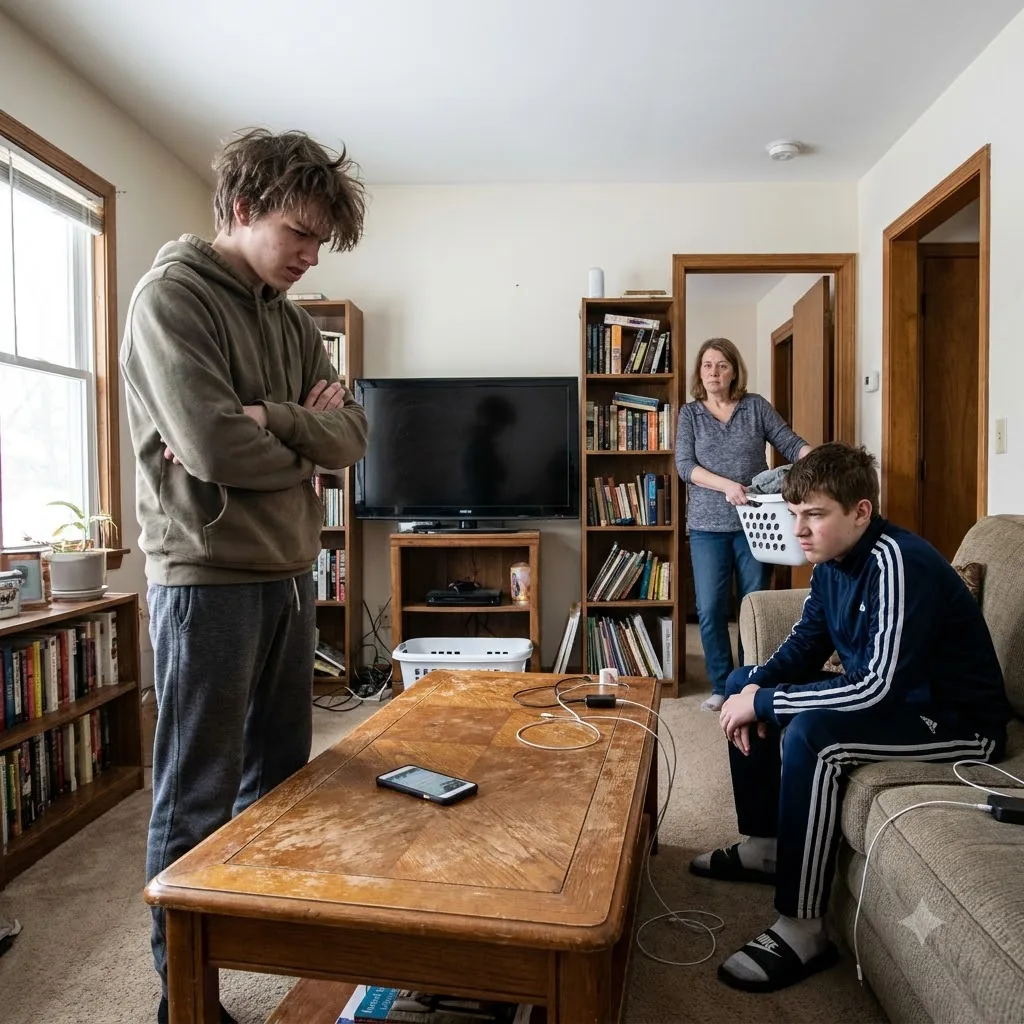
My brother ruined the easiest part of our TikTok dance clip three times in a row, dropped the phone on the coffee table in our living room, and said, “You do it, because now the draft looks stupid.” Ten minutes later, he was telling our mom I was the reason we still did not have a finished video, even though every bad take, missed button, and chopped-off intro was sitting right there in the draft with his hands all over it. The worst part was that he kept acting like he could not understand one simple recording step, but something about the way he moved over the screen did not match the helpless act.
The ring light was on, the speaker by the TV was looping the same count-in, and Tia was standing near the side chair with the charging cable wrapped around her hand while I kept resetting the phone on the stand. We were trying to do one of those clean sibling challenge clips where the camera stays fixed and the last beat lands on a freeze.
Dylan had volunteered first. That lasted about thirty seconds.
He started the music too late on take one, stepped back in frame, then reached for the phone before the clip finished and cut off the ending. On take two, he somehow switched the camera angle and caught half the couch and none of our feet. On take three, he recorded the whole thing, stared at the screen, tapped around, and deleted the cleanest start by trimming from the wrong side.
He gave a casual shrug after each one like the phone had done something to him.
“I told you I don’t know this app like that,” he said, already holding the phone out toward me. “Just fix it.”
I stayed by the coffee table and took the phone because if I did not, we were going to keep replaying the same twenty seconds of music until midnight.
“You hit record, let the clip finish, then trim the end,” I said.
“Right, which is what I just said I can’t do,” he answered.
Tia looked from him to the screen. “You trimmed the start, though.”
“By accident,” Dylan said fast.
So I put the draft back in order, lined the phone up on the stand again, checked the battery, restarted the track, and got us through two usable takes. Every time we needed the timing fixed, I fixed it. Every time the music started from the wrong place, I fixed that too. Dylan kept stepping away from the phone like it might burn him, but he stayed close enough to comment on everything.
“That angle makes my shoulders look weird.”
“The beat lands early there.”
“You should smooth that cut because it looks obvious.”
Each note came while I was the one doing the work he had just claimed was too confusing.
Mom, Marisol, was on the couch edge at first, then in the doorway when she heard us going in circles. She watched the room the way she always does when people start blaming each other before a chore is finished.
“Why is this still not done?” she asked.
Dylan did not miss a beat. He pointed at me with an open hand, not even looking embarrassed. “Because she keeps redoing everything instead of just posting one.”
I held up the phone. “I’m redoing what he ruins.”
“You always have to control it,” he said.
That landed exactly how he wanted it to land, because I was the one with the phone in my hand, the draft open, and the clip still unfinished. The visible mess belonged to me now, even though he had created it step by step in front of us.
Mom held out her hand for the phone, and I passed it over. She did not ask for speeches. She looked at the stack of takes, the short clips, the half-second dead space at the front of one attempt, then gave it back.
“Get one clean draft and stop restarting the argument,” she said.
That meant the job stayed with me.
Dylan leaned against the arm of the couch and watched while I cleaned up the timeline again. He kept making those little confused sounds every time I named a basic step.
“Wait, where do you even trim from?”
“What tab is that?”
“How did you pull the sound back without deleting the clip?”
But while he was saying that, he reached over once when I paused, tapped the speaker icon without looking for it, and adjusted the volume mix in one quick motion before pulling his hand back.
It was fast enough that Mom kept talking and almost missed it. I only caught it because I was holding the lower edge of the phone and felt the screen shift under his thumb.
Tia caught it too. She looked straight at his hand, then at me.
“I thought you said you didn’t know where anything was,” she said.
Dylan gave another shrug. “That one is obvious.”
Then he stepped into the open floor space for the next take and hit the count perfectly on the first beat, like he had been following the draft timing the whole time.
He still wanted everyone to believe he could not manage one simple edit, but he had just found a buried control without searching for it, and Tia had seen the same thing I saw. By the time Mom told us to reset and do it again, the question in the room was no longer whether the clip was late. It was why Dylan only looked lost when the cleanup work could be dropped on me.
My brother ruined the easiest part of our TikTok dance clip three times in a row, dropped the phone on the coffee table in our living room, and said, “You do it, because now the draft looks stupid.” Ten minutes later, he was telling our mom I was the reason we still did not have a finished video, even though every bad take, missed button, and chopped-off intro was sitting right there in the draft with his hands all over it. The worst part was that he kept acting like he could not understand one simple recording step, but something about the way he moved over the screen did not match the helpless act.
The ring light was on, the speaker by the TV was looping the same count-in, and Tia was standing near the side chair with the charging cable wrapped around her hand while I kept resetting the phone on the stand. We were trying to do one of those clean sibling challenge clips where the camera stays fixed and the last beat lands on a freeze.
Dylan had volunteered first. That lasted about thirty seconds.
He started the music too late on take one, stepped back in frame, then reached for the phone before the clip finished and cut off the ending. On take two, he somehow switched the camera angle and caught half the couch and none of our feet. On take three, he recorded the whole thing, stared at the screen, tapped around, and deleted the cleanest start by trimming from the wrong side.
He gave a casual shrug after each one like the phone had done something to him.
“I told you I don’t know this app like that,” he said, already holding the phone out toward me. “Just fix it.”
I stayed by the coffee table and took the phone because if I did not, we were going to keep replaying the same twenty seconds of music until midnight.
“You hit record, let the clip finish, then trim the end,” I said.
“Right, which is what I just said I can’t do,” he answered.
Tia looked from him to the screen. “You trimmed the start, though.”
“By accident,” Dylan said fast.
So I put the draft back in order, lined the phone up on the stand again, checked the battery, restarted the track, and got us through two usable takes. Every time we needed the timing fixed, I fixed it. Every time the music started from the wrong place, I fixed that too. Dylan kept stepping away from the phone like it might burn him, but he stayed close enough to comment on everything.
“That angle makes my shoulders look weird.”
“The beat lands early there.”
“You should smooth that cut because it looks obvious.”
Each note came while I was the one doing the work he had just claimed was too confusing.
Mom, Marisol, was on the couch edge at first, then in the doorway when she heard us going in circles. She watched the room the way she always does when people start blaming each other before a chore is finished.
“Why is this still not done?” she asked.
Dylan did not miss a beat. He pointed at me with an open hand, not even looking embarrassed. “Because she keeps redoing everything instead of just posting one.”
I held up the phone. “I’m redoing what he ruins.”
“You always have to control it,” he said.
That landed exactly how he wanted it to land, because I was the one with the phone in my hand, the draft open, and the clip still unfinished. The visible mess belonged to me now, even though he had created it step by step in front of us.
Mom held out her hand for the phone, and I passed it over. She did not ask for speeches. She looked at the stack of takes, the short clips, the half-second dead space at the front of one attempt, then gave it back.
“Get one clean draft and stop restarting the argument,” she said.
That meant the job stayed with me.
Dylan leaned against the arm of the couch and watched while I cleaned up the timeline again. He kept making those little confused sounds every time I named a basic step.
“Wait, where do you even trim from?”
“What tab is that?”
“How did you pull the sound back without deleting the clip?”
But while he was saying that, he reached over once when I paused, tapped the speaker icon without looking for it, and adjusted the volume mix in one quick motion before pulling his hand back.
It was fast enough that Mom kept talking and almost missed it. I only caught it because I was holding the lower edge of the phone and felt the screen shift under his thumb.
Tia caught it too. She looked straight at his hand, then at me.
“I thought you said you didn’t know where anything was,” she said.
Dylan gave another shrug. “That one is obvious.”
Then he stepped into the open floor space for the next take and hit the count perfectly on the first beat, like he had been following the draft timing the whole time.
He still wanted everyone to believe he could not manage one simple edit, but he had just found a buried control without searching for it, and Tia had seen the same thing I saw. By the time Mom told us to reset and do it again, the question in the room was no longer whether the clip was late. It was why Dylan only looked lost when the cleanup work could be dropped on me.