Story code: ST-000680
Part 1: He Said My Kitchen Debt Started as a Favor
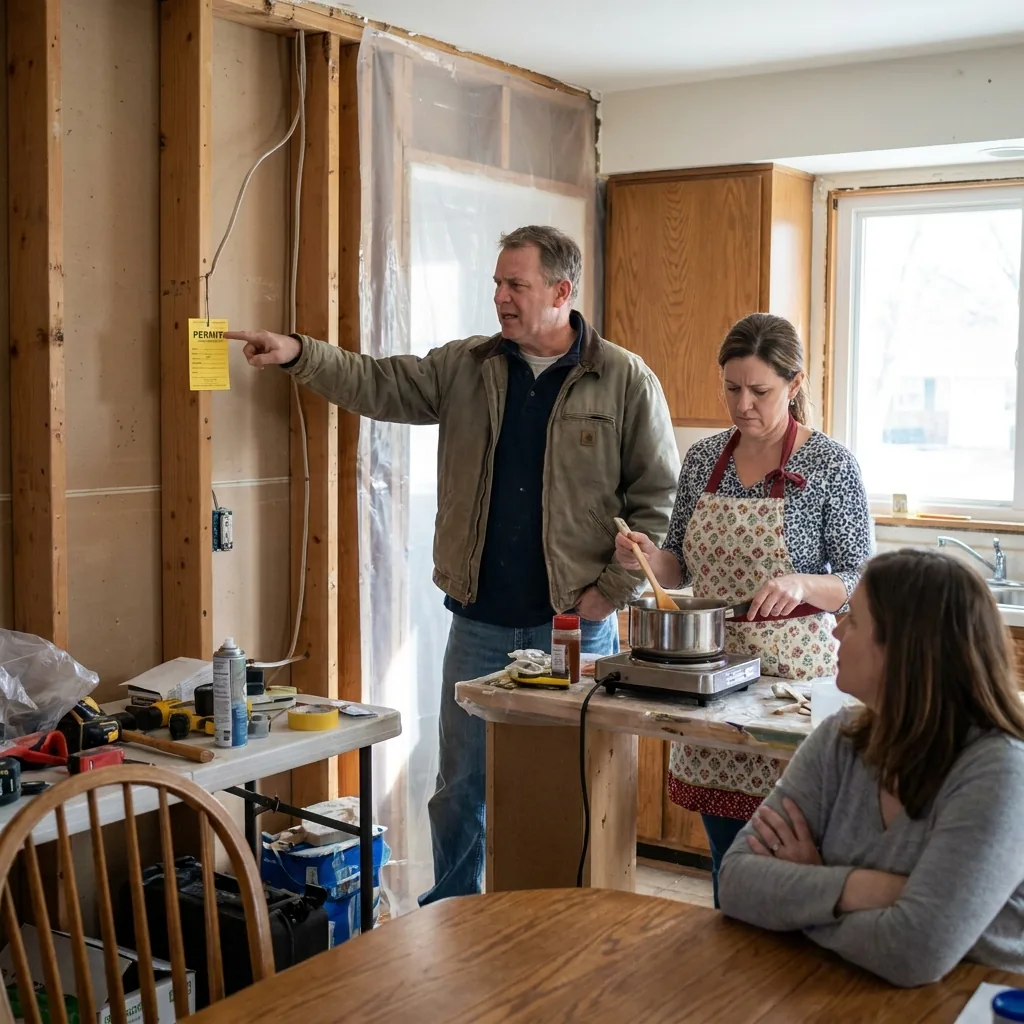
My brother stood in my unfinished kitchen, pointed at the permit tag hanging off the wall by the breakfast nook, and started listing everything he had “done for me” while I was trying to stir boxed mac and cheese on a hot plate. Then he said, right in front of our mother, “You need to stop acting confused and just admit you owe me.” My cabinets still had no doors, my sink base was open to the studs, and somehow I was the one being treated like I had trapped him.
I set the spoon down because the cheap burner wobbled every time I touched the counter. That was normal now. Nothing in my kitchen felt solid anymore.
Derek had one hand braced on the edge of the island that still had no countertop on one side. He was wearing work boots like he had just stepped off a job, even though this job had been sitting half-done in my house for weeks. The permit tag swung a little every time the back door opened. It was bright enough that nobody could pretend not to see it.
“I got the demo done,” he said, counting on his fingers. “I brought in guys to reroute the electrical. I handled the inspection issue. I kept this project moving when you were overwhelmed. You think any contractor does that for free?”
I looked at him. “I never hired your guys. I never approved a bill from you.”
He gave me that flat, tired look he uses when he wants everyone else to feel childish. “You asked for help.”
“I asked you to look at one water stain under the old sink. That was it.”
Our mother, Linda, was standing in the doorway between the dining room and kitchen with both hands around her purse strap like she was about to leave but didn’t want to be the first one to move. “Can we not do this like this?” she said. “He has helped you, Megan. That part is true.”
That was how he kept getting room to talk. He would start with one thing that sounded true, then stack five more things on top of it until the whole pile looked official.
The problem was, my kitchen did not look like help. It looked like I had been punished. There were two cabinet doors leaning against my laundry room wall because nobody had put them back. The dishwasher sat disconnected. My dishes were in plastic bins on the floor of the den. Every ordinary thing took twice as long. I had to boil water in an electric kettle to wash forks.
And every time family came over, the first thing they saw was that permit tag.
Derek tapped the paper hanging from the wall. “That alone should tell you I cleaned up a mess for you.”
I stared at the tag because I had stared at it so many mornings that the print layout was burned into my head. Red block letters. Date stamp. Reinspection noted in pen. It had become part of the room, like the exposed plywood and the extension cord running along the baseboard.
“That tag tells me my kitchen is still not done,” I said.
“Because you keep dragging your feet on paying what’s owed,” he said.
The unfairness of that landed so hard I had to grip the edge of the temporary folding table I was using as prep space. He said it calmly, like this was a settled fact and I was the only one behind.
“You do not get to tear apart my kitchen and then hand me a debt I never agreed to,” I said.
He laughed once through his nose, not loud, just enough to make me sound unreasonable. “You think licensed work, labor, material runs, permit handling, and patch fixes happen because we’re family?”
The word permit handling stuck out. He had started using little work phrases around Mom because they made everything sound more complicated than it looked. If he said enough trade language, I was supposed to accept that the number he said next had to be real.
“What number?” I asked.
He named it like he had been waiting all week to hear himself say it. “Six thousand eight hundred. And honestly that’s me being generous.”
My mother inhaled softly. She looked at the floor, then at the open cabinets, then back at me. I could see her trying to turn visible damage into a reason to compromise.
“Megan,” she said carefully, “if you owe part of it, maybe you can work something out.”
“I don’t owe part of something I never approved,” I said.
Derek spread his hands toward the room like the room itself was his witness. “Then why is all this here? Why would I put my crew in your house, pull permits, and spend my time if I wasn’t fixing your problem?”
That was the sentence that stopped me.
Not because I believed him. Because of the way he said your problem.
I looked from his face to the permit tag, then to the patch of wall by the sink where the drywall texture changed halfway up like somebody had opened it fast and closed it faster. I had been so busy living around the mess that I had only been counting damage by inconvenience. No dishwasher. No cabinet doors. No stove. No end date.
But standing there with him reciting his generosity like a bill collector, I heard something I had missed before.
He kept talking about what he had “handled” and what he had “cleaned up,” but not one part of his story explained why so much of the work in my kitchen looked like it had been done in a hurry to answer that tag on the wall.
If Derek was really the one who saved me, why did it suddenly sound like my unfinished kitchen had saved him from something first?
My brother stood in my unfinished kitchen, pointed at the permit tag hanging off the wall by the breakfast nook, and started listing everything he had “done for me” while I was trying to stir boxed mac and cheese on a hot plate. Then he said, right in front of our mother, “You need to stop acting confused and just admit you owe me.” My cabinets still had no doors, my sink base was open to the studs, and somehow I was the one being treated like I had trapped him.
I set the spoon down because the cheap burner wobbled every time I touched the counter. That was normal now. Nothing in my kitchen felt solid anymore.
Derek had one hand braced on the edge of the island that still had no countertop on one side. He was wearing work boots like he had just stepped off a job, even though this job had been sitting half-done in my house for weeks. The permit tag swung a little every time the back door opened. It was bright enough that nobody could pretend not to see it.
“I got the demo done,” he said, counting on his fingers. “I brought in guys to reroute the electrical. I handled the inspection issue. I kept this project moving when you were overwhelmed. You think any contractor does that for free?”
I looked at him. “I never hired your guys. I never approved a bill from you.”
He gave me that flat, tired look he uses when he wants everyone else to feel childish. “You asked for help.”
“I asked you to look at one water stain under the old sink. That was it.”
Our mother, Linda, was standing in the doorway between the dining room and kitchen with both hands around her purse strap like she was about to leave but didn’t want to be the first one to move. “Can we not do this like this?” she said. “He has helped you, Megan. That part is true.”
That was how he kept getting room to talk. He would start with one thing that sounded true, then stack five more things on top of it until the whole pile looked official.
The problem was, my kitchen did not look like help. It looked like I had been punished. There were two cabinet doors leaning against my laundry room wall because nobody had put them back. The dishwasher sat disconnected. My dishes were in plastic bins on the floor of the den. Every ordinary thing took twice as long. I had to boil water in an electric kettle to wash forks.
And every time family came over, the first thing they saw was that permit tag.
Derek tapped the paper hanging from the wall. “That alone should tell you I cleaned up a mess for you.”
I stared at the tag because I had stared at it so many mornings that the print layout was burned into my head. Red block letters. Date stamp. Reinspection noted in pen. It had become part of the room, like the exposed plywood and the extension cord running along the baseboard.
“That tag tells me my kitchen is still not done,” I said.
“Because you keep dragging your feet on paying what’s owed,” he said.
The unfairness of that landed so hard I had to grip the edge of the temporary folding table I was using as prep space. He said it calmly, like this was a settled fact and I was the only one behind.
“You do not get to tear apart my kitchen and then hand me a debt I never agreed to,” I said.
He laughed once through his nose, not loud, just enough to make me sound unreasonable. “You think licensed work, labor, material runs, permit handling, and patch fixes happen because we’re family?”
The word permit handling stuck out. He had started using little work phrases around Mom because they made everything sound more complicated than it looked. If he said enough trade language, I was supposed to accept that the number he said next had to be real.
“What number?” I asked.
He named it like he had been waiting all week to hear himself say it. “Six thousand eight hundred. And honestly that’s me being generous.”
My mother inhaled softly. She looked at the floor, then at the open cabinets, then back at me. I could see her trying to turn visible damage into a reason to compromise.
“Megan,” she said carefully, “if you owe part of it, maybe you can work something out.”
“I don’t owe part of something I never approved,” I said.
Derek spread his hands toward the room like the room itself was his witness. “Then why is all this here? Why would I put my crew in your house, pull permits, and spend my time if I wasn’t fixing your problem?”
That was the sentence that stopped me.
Not because I believed him. Because of the way he said your problem.
I looked from his face to the permit tag, then to the patch of wall by the sink where the drywall texture changed halfway up like somebody had opened it fast and closed it faster. I had been so busy living around the mess that I had only been counting damage by inconvenience. No dishwasher. No cabinet doors. No stove. No end date.
But standing there with him reciting his generosity like a bill collector, I heard something I had missed before.
He kept talking about what he had “handled” and what he had “cleaned up,” but not one part of his story explained why so much of the work in my kitchen looked like it had been done in a hurry to answer that tag on the wall.
If Derek was really the one who saved me, why did it suddenly sound like my unfinished kitchen had saved him from something first?