Story code: ST-000067
Part 1: He Said She Was Abandoning Their Mom
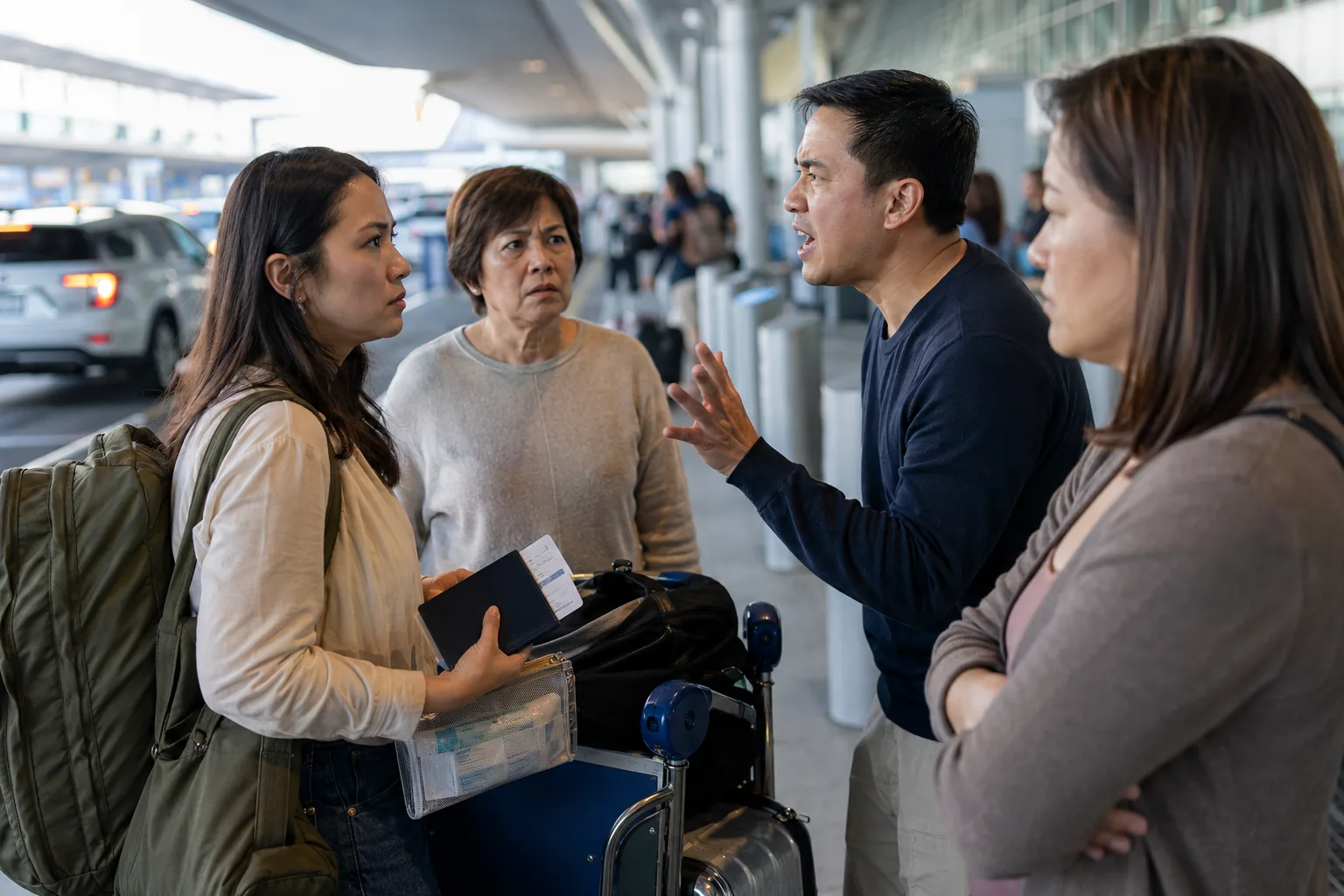
The brother started shouting that his sister was abandoning their mother while she was still holding the passport sleeve, the medication pouch, and the luggage cart at our departure curb. Cars were stacked behind their SUV, a shuttle driver was leaning on his horn, and he kept pointing at her like she was the danger even though every time their mother asked a real question, he looked right back at the sister. I see family scenes every week, but this one had a proof gap in plain sight, because the woman he called selfish was the only one with her hands on anything that could get their mother onto the flight.
I work curbside support outside Terminal C. My job is not therapy. I keep the loading zone moving, get wheelchairs where they need to go, and make sure nobody gets clipped by a rideshare trying to cut in. That morning I was three stops deep when the Morgans rolled up in a dark crossover with one rear door hanging open and a rolling suitcase half out on the curb.
The daughter, Tessa Morgan, got out first. Practical travel clothes, flat shoes, phone tucked against one wrist, one hand on a tan passport sleeve, the other steadying the luggage cart she had just pulled from our rack. She set the sleeve on top of the suitcase for two seconds, turned, and helped her mother pivot both feet onto the curb. Elaine Morgan moved carefully. She had a light jacket over one arm and a tote pinched close to her side.
Before Tessa could even straighten up, the brother came around the back of the car loud enough to turn heads all the way down the lane.
“You really picked today to make this all about you?” he said.
Tessa didn’t answer him right away. She checked the older woman’s footing, then reached back for the passport sleeve.
He got louder. “You’re leaving her at an airport curb like a piece of luggage. Unbelievable. Mom, do you see this? She cares more about her little travel life than about you.”
I stepped closer because once voices hit that level at the curb, the whole lane jams up. “I need you folks to keep the unload tight,” I said. “If you need a wheelchair or extra time, I can help, but I need the vehicle cleared.”
Tessa looked at me, nodded once, and said, “Wheelchair assist to check-in, please. Her meds are in here, boarding printout is in the sleeve, and we need to keep moving.”
Ryan Morgan had empty hands except for a coffee cup. He pointed at the passport sleeve like it was evidence. “Listen to her. ‘Her meds are in here.’ ‘Her boarding pass is in here.’ She controls everything and now she’s acting like she’s some saint because she bothered to show up.”
Elaine said, very plainly, “Tessa, did you pack the 2 p.m. dose separate?”
Tessa unzipped the medication pouch without looking away from her mother. “Front pocket, labeled in the pill case. Water bottle goes through empty. I packed a new one after security.”
Ryan cut in again. “This is what she does. She rehearses. She makes it sound organized so nobody notices she’s ditching our mother.”
That got a few more people staring. A man loading golf clubs into a pickup stopped halfway through. One of the skycaps beside me raised his eyebrows at the noise.
I asked the question I always ask when families start fighting at the curb. “Who’s traveling with Ms. Morgan today?”
“I am,” Tessa said.
“She is because she insisted,” Ryan said at the same time.
Elaine shifted her tote from one hand to the other and looked at Tessa again. “Where do you want me to stand?”
“Right by the cart, away from the lane,” Tessa said.
Elaine moved when Tessa said it. Not fast, but without argument.
Ryan followed them two steps and kept talking to the crowd more than to either of them. “I live here. I’m the one here. She drops in, makes a production out of everything, and now she’s dragging our mother through an airport for what? Content? Convenience? So she can keep doing whatever she does from hotels?”
Tessa set the brake on the cart with her foot. “Ryan, if you want to help, get the blue carry-on from the trunk and hand Maya the folded walker tag.”
He didn’t move to the trunk. He took one step closer to Tessa instead. “Don’t order me around like you’re in charge.”
The trunk was still open. The blue carry-on was visible. The folded walker tag was hanging from the handle exactly where she said it was.
Tessa looked at him for one second, then reached into the trunk herself, balanced the passport sleeve under one arm, pulled out the carry-on, and handed me the walker tag. She was moving the whole time. He was still talking.
Then he said the line that froze the lane again.
“You want everyone here to think you take care of her? Ask her who missed meds last month. Ask her who had to fix everything after Tessa ran off again.”
That was the first time Tessa stopped moving. She didn’t raise her voice. She set the passport sleeve flat on top of the suitcase, unlocked her phone, and turned the screen toward herself like she was checking a time stamp.
I could only see rows of dated notes and short entries as she scrolled with her thumb.
Ryan was still talking, but his voice had changed. Tessa lifted her eyes, then looked at her mother, then back at the phone. She slid it into the passport sleeve instead of reading it out there on the curb.
And right then I knew Part 2 of that scene was going to be whatever was in that log, because the man making the biggest accusation had just gone quiet at the sight of a screen he never even touched.
The brother started shouting that his sister was abandoning their mother while she was still holding the passport sleeve, the medication pouch, and the luggage cart at our departure curb. Cars were stacked behind their SUV, a shuttle driver was leaning on his horn, and he kept pointing at her like she was the danger even though every time their mother asked a real question, he looked right back at the sister. I see family scenes every week, but this one had a proof gap in plain sight, because the woman he called selfish was the only one with her hands on anything that could get their mother onto the flight.
I work curbside support outside Terminal C. My job is not therapy. I keep the loading zone moving, get wheelchairs where they need to go, and make sure nobody gets clipped by a rideshare trying to cut in. That morning I was three stops deep when the Morgans rolled up in a dark crossover with one rear door hanging open and a rolling suitcase half out on the curb.
The daughter, Tessa Morgan, got out first. Practical travel clothes, flat shoes, phone tucked against one wrist, one hand on a tan passport sleeve, the other steadying the luggage cart she had just pulled from our rack. She set the sleeve on top of the suitcase for two seconds, turned, and helped her mother pivot both feet onto the curb. Elaine Morgan moved carefully. She had a light jacket over one arm and a tote pinched close to her side.
Before Tessa could even straighten up, the brother came around the back of the car loud enough to turn heads all the way down the lane.
“You really picked today to make this all about you?” he said.
Tessa didn’t answer him right away. She checked the older woman’s footing, then reached back for the passport sleeve.
He got louder. “You’re leaving her at an airport curb like a piece of luggage. Unbelievable. Mom, do you see this? She cares more about her little travel life than about you.”
I stepped closer because once voices hit that level at the curb, the whole lane jams up. “I need you folks to keep the unload tight,” I said. “If you need a wheelchair or extra time, I can help, but I need the vehicle cleared.”
Tessa looked at me, nodded once, and said, “Wheelchair assist to check-in, please. Her meds are in here, boarding printout is in the sleeve, and we need to keep moving.”
Ryan Morgan had empty hands except for a coffee cup. He pointed at the passport sleeve like it was evidence. “Listen to her. ‘Her meds are in here.’ ‘Her boarding pass is in here.’ She controls everything and now she’s acting like she’s some saint because she bothered to show up.”
Elaine said, very plainly, “Tessa, did you pack the 2 p.m. dose separate?”
Tessa unzipped the medication pouch without looking away from her mother. “Front pocket, labeled in the pill case. Water bottle goes through empty. I packed a new one after security.”
Ryan cut in again. “This is what she does. She rehearses. She makes it sound organized so nobody notices she’s ditching our mother.”
That got a few more people staring. A man loading golf clubs into a pickup stopped halfway through. One of the skycaps beside me raised his eyebrows at the noise.
I asked the question I always ask when families start fighting at the curb. “Who’s traveling with Ms. Morgan today?”
“I am,” Tessa said.
“She is because she insisted,” Ryan said at the same time.
Elaine shifted her tote from one hand to the other and looked at Tessa again. “Where do you want me to stand?”
“Right by the cart, away from the lane,” Tessa said.
Elaine moved when Tessa said it. Not fast, but without argument.
Ryan followed them two steps and kept talking to the crowd more than to either of them. “I live here. I’m the one here. She drops in, makes a production out of everything, and now she’s dragging our mother through an airport for what? Content? Convenience? So she can keep doing whatever she does from hotels?”
Tessa set the brake on the cart with her foot. “Ryan, if you want to help, get the blue carry-on from the trunk and hand Maya the folded walker tag.”
He didn’t move to the trunk. He took one step closer to Tessa instead. “Don’t order me around like you’re in charge.”
The trunk was still open. The blue carry-on was visible. The folded walker tag was hanging from the handle exactly where she said it was.
Tessa looked at him for one second, then reached into the trunk herself, balanced the passport sleeve under one arm, pulled out the carry-on, and handed me the walker tag. She was moving the whole time. He was still talking.
Then he said the line that froze the lane again.
“You want everyone here to think you take care of her? Ask her who missed meds last month. Ask her who had to fix everything after Tessa ran off again.”
That was the first time Tessa stopped moving. She didn’t raise her voice. She set the passport sleeve flat on top of the suitcase, unlocked her phone, and turned the screen toward herself like she was checking a time stamp.
I could only see rows of dated notes and short entries as she scrolled with her thumb.
Ryan was still talking, but his voice had changed. Tessa lifted her eyes, then looked at her mother, then back at the phone. She slid it into the passport sleeve instead of reading it out there on the curb.
And right then I knew Part 2 of that scene was going to be whatever was in that log, because the man making the biggest accusation had just gone quiet at the sight of a screen he never even touched.