Story code: ST-000526
Part 1: He Used the Clock Against Her
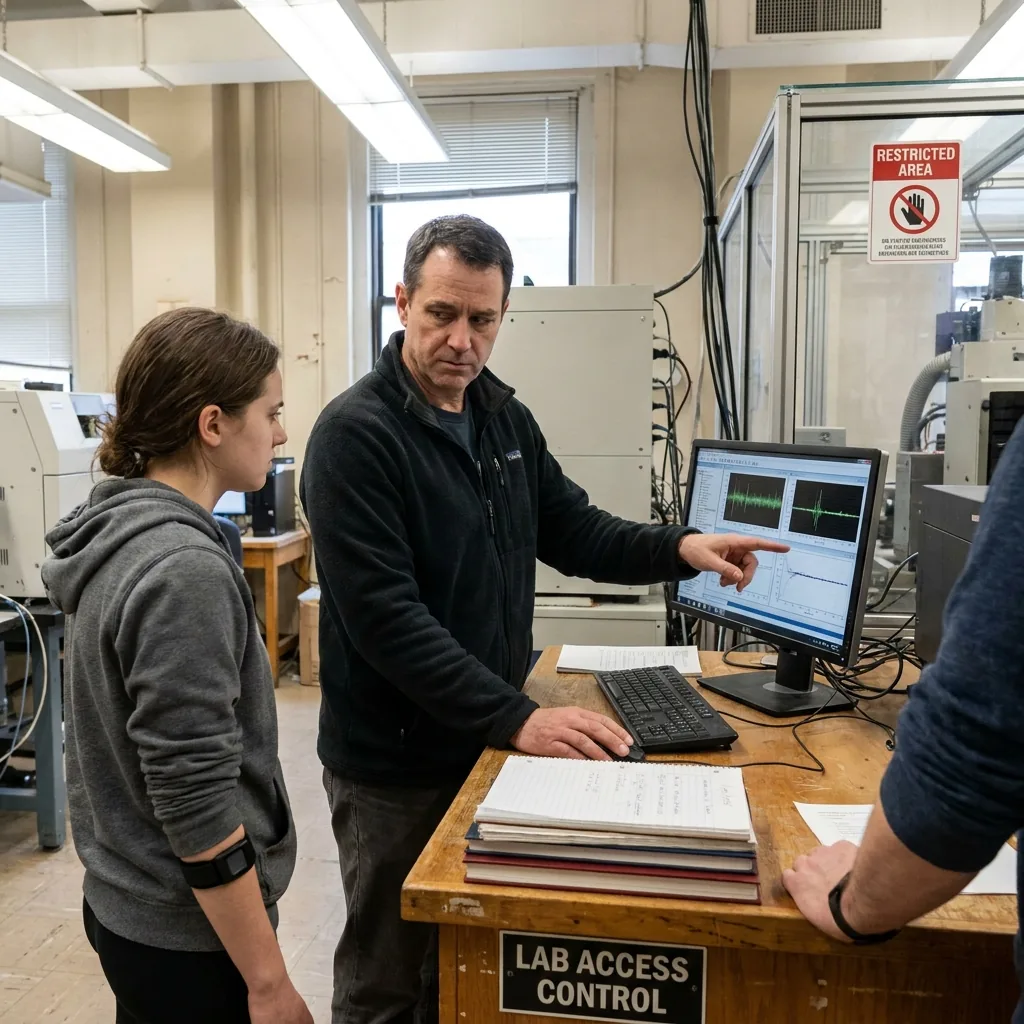
Eli Chen blocked his own sister at the front office counter like the lab belonged to him, one hand near my terminal and the other pointed at the run sequence dashboard while Mara stood there with a sensor bracelet still lit on her wrist. In the middle of an ordinary afternoon of sample drop-offs, badge checks, and undergrads carrying labeled trays past the glass-walled bay, he told her the timestamps made her claim impossible, so no correction would be entered and no action would be taken.
Tessa Moreno had heard people argue at the Halberg Quantum Systems Lab before, but most of them came in low and careful because the counter sat between the access-controlled corridor and everything that could be locked. This one arrived already sharpened.
Mara came in fast enough that the bracelet dock on her wrist knocked the edge of the counter. The display strip on it flashed a participant ID and a recent run window. She pushed her sleeve back farther as if that mattered more than anything she could say.
“The sequence is wrong,” she said. “It skipped the interruption. If you leave it like that, it locks my side of the run into the failure state.”
Eli did not raise his voice. That made the whole thing harder to interrupt.
“There is no interruption in the official record,” he said. “And there cannot be one where you’re trying to put it. Your bracelet was still outside the run room threshold when the stabilization mark posted. Tessa can’t amend an active sequence based on a contradiction that the timestamps already resolve.”
He said Tessa’s name without looking at her, the way senior researchers did when they wanted the counter to sound like a rule instead of a person.
Tessa kept the access tablet flat on the desk. “I can flag a discrepancy,” she said. “I can’t change a protected run state without authorization.”
“Then flag this,” Mara said, holding out her wrist. “I was already inside the bay before the mark he’s quoting.”
Eli turned the run dashboard a few degrees toward Tessa. The screen showed the entanglement run in its neat colored blocks: initiation, isolation, stabilization, fault branch, lockout. A timestamp sat beside each one with a precision that usually ended arguments before they grew legs.
“Stabilization posted at 2:14:08,” he said. “Her bracelet threshold entry reads 2:14:31. The claim fails on order alone.”
Behind him, a vacuum pump kicked on in the instrumentation bay. Two students at the copier looked over and then looked away. Tessa glanced at the queue panel, then at Mara’s bracelet. The tiny scrolling line on the bracelet face was too small to read from where she stood, but the device was active, not checked back in, and still carrying the run icon.
Mara planted both hands on the counter. “The threshold entry isn’t the whole movement path and you know it.”
“That’s not how sequence review works,” Eli said.
“It’s exactly how sequence review works if someone blocked the path and made the direct route impossible.”
That drew Tessa’s eyes up from the dashboard. Eli answered too fast.
“No one blocked anything.”
Mara’s mouth closed for a second. When she spoke again, each word came clipped and even. “Then print the bracelet quick-log strip.”
That request was simple enough to sting. The dock printer sat behind Tessa’s left elbow, used all the time for routine participation records. Eli shifted a half step, enough to put more of his shoulder between Mara and the terminal.
“A partial strip proves nothing without context,” he said. “And we are not doing piecemeal evidence at an intake counter. If she wants review, she can submit the challenge after the fault branch closes.”
“After the fault branch closes, the sequence hardens,” Mara said. “That’s the point.”
Tessa looked from one of them to the other. Eli’s badge level gave him authority in the system, but not over the printer. Mara’s bracelet was still active, which meant the run had not fully shed all attached artifacts. The ordinary rule was to avoid producing fragments that would confuse people. The other ordinary rule was that if someone was still wearing a live sensor bracelet, the window had not really become ordinary yet.
“I can print the participant movement log,” Tessa said. “It won’t alter the run.”
Eli finally looked at her. “You can, but you shouldn’t. Not while she’s making claims that contradict the protected sequence.”
The wording landed with the smoothness of something practiced. Protected sequence. Contradict. Shouldn’t. Tessa had heard versions of that before from people who wanted the system to stop being examined and start being obeyed.
She tapped open the queue overlay instead. The intake record showed Mara arriving at the counter at 2:28. Eli had checked in from the inner corridor less than a minute later. The run had faulted at 2:16 and frozen into limited review state. If Mara had gone straight from the run room to the counter, that was normal. If Eli had come from deeper inside after her, that was also normal.
What did not sit cleanly was the way he kept anchoring everything on the threshold entry at 2:14:31, as if that single line ended the matter.
Tessa asked the plainest question she had. “If her bracelet didn’t cross the run room threshold until 2:14:31, where was she when the bracelet started its interruption marker?”
Mara’s head came up at once. Eli’s hand, still resting on the counter edge, tightened hard enough for the knuckles to sharpen.
Tessa had not printed anything yet. She had only opened the visible bracelet status pane attached to the run, and there it was: a brief interruption marker beginning at 2:13:52, thirty-nine seconds before the stabilization mark Eli kept calling impossible.
Eli Chen blocked his own sister at the front office counter like the lab belonged to him, one hand near my terminal and the other pointed at the run sequence dashboard while Mara stood there with a sensor bracelet still lit on her wrist. In the middle of an ordinary afternoon of sample drop-offs, badge checks, and undergrads carrying labeled trays past the glass-walled bay, he told her the timestamps made her claim impossible, so no correction would be entered and no action would be taken.
Tessa Moreno had heard people argue at the Halberg Quantum Systems Lab before, but most of them came in low and careful because the counter sat between the access-controlled corridor and everything that could be locked. This one arrived already sharpened.
Mara came in fast enough that the bracelet dock on her wrist knocked the edge of the counter. The display strip on it flashed a participant ID and a recent run window. She pushed her sleeve back farther as if that mattered more than anything she could say.
“The sequence is wrong,” she said. “It skipped the interruption. If you leave it like that, it locks my side of the run into the failure state.”
Eli did not raise his voice. That made the whole thing harder to interrupt.
“There is no interruption in the official record,” he said. “And there cannot be one where you’re trying to put it. Your bracelet was still outside the run room threshold when the stabilization mark posted. Tessa can’t amend an active sequence based on a contradiction that the timestamps already resolve.”
He said Tessa’s name without looking at her, the way senior researchers did when they wanted the counter to sound like a rule instead of a person.
Tessa kept the access tablet flat on the desk. “I can flag a discrepancy,” she said. “I can’t change a protected run state without authorization.”
“Then flag this,” Mara said, holding out her wrist. “I was already inside the bay before the mark he’s quoting.”
Eli turned the run dashboard a few degrees toward Tessa. The screen showed the entanglement run in its neat colored blocks: initiation, isolation, stabilization, fault branch, lockout. A timestamp sat beside each one with a precision that usually ended arguments before they grew legs.
“Stabilization posted at 2:14:08,” he said. “Her bracelet threshold entry reads 2:14:31. The claim fails on order alone.”
Behind him, a vacuum pump kicked on in the instrumentation bay. Two students at the copier looked over and then looked away. Tessa glanced at the queue panel, then at Mara’s bracelet. The tiny scrolling line on the bracelet face was too small to read from where she stood, but the device was active, not checked back in, and still carrying the run icon.
Mara planted both hands on the counter. “The threshold entry isn’t the whole movement path and you know it.”
“That’s not how sequence review works,” Eli said.
“It’s exactly how sequence review works if someone blocked the path and made the direct route impossible.”
That drew Tessa’s eyes up from the dashboard. Eli answered too fast.
“No one blocked anything.”
Mara’s mouth closed for a second. When she spoke again, each word came clipped and even. “Then print the bracelet quick-log strip.”
That request was simple enough to sting. The dock printer sat behind Tessa’s left elbow, used all the time for routine participation records. Eli shifted a half step, enough to put more of his shoulder between Mara and the terminal.
“A partial strip proves nothing without context,” he said. “And we are not doing piecemeal evidence at an intake counter. If she wants review, she can submit the challenge after the fault branch closes.”
“After the fault branch closes, the sequence hardens,” Mara said. “That’s the point.”
Tessa looked from one of them to the other. Eli’s badge level gave him authority in the system, but not over the printer. Mara’s bracelet was still active, which meant the run had not fully shed all attached artifacts. The ordinary rule was to avoid producing fragments that would confuse people. The other ordinary rule was that if someone was still wearing a live sensor bracelet, the window had not really become ordinary yet.
“I can print the participant movement log,” Tessa said. “It won’t alter the run.”
Eli finally looked at her. “You can, but you shouldn’t. Not while she’s making claims that contradict the protected sequence.”
The wording landed with the smoothness of something practiced. Protected sequence. Contradict. Shouldn’t. Tessa had heard versions of that before from people who wanted the system to stop being examined and start being obeyed.
She tapped open the queue overlay instead. The intake record showed Mara arriving at the counter at 2:28. Eli had checked in from the inner corridor less than a minute later. The run had faulted at 2:16 and frozen into limited review state. If Mara had gone straight from the run room to the counter, that was normal. If Eli had come from deeper inside after her, that was also normal.
What did not sit cleanly was the way he kept anchoring everything on the threshold entry at 2:14:31, as if that single line ended the matter.
Tessa asked the plainest question she had. “If her bracelet didn’t cross the run room threshold until 2:14:31, where was she when the bracelet started its interruption marker?”
Mara’s head came up at once. Eli’s hand, still resting on the counter edge, tightened hard enough for the knuckles to sharpen.
Tessa had not printed anything yet. She had only opened the visible bracelet status pane attached to the run, and there it was: a brief interruption marker beginning at 2:13:52, thirty-nine seconds before the stabilization mark Eli kept calling impossible.