Story code: ST-000633
Part 1: He Said She Imagined It
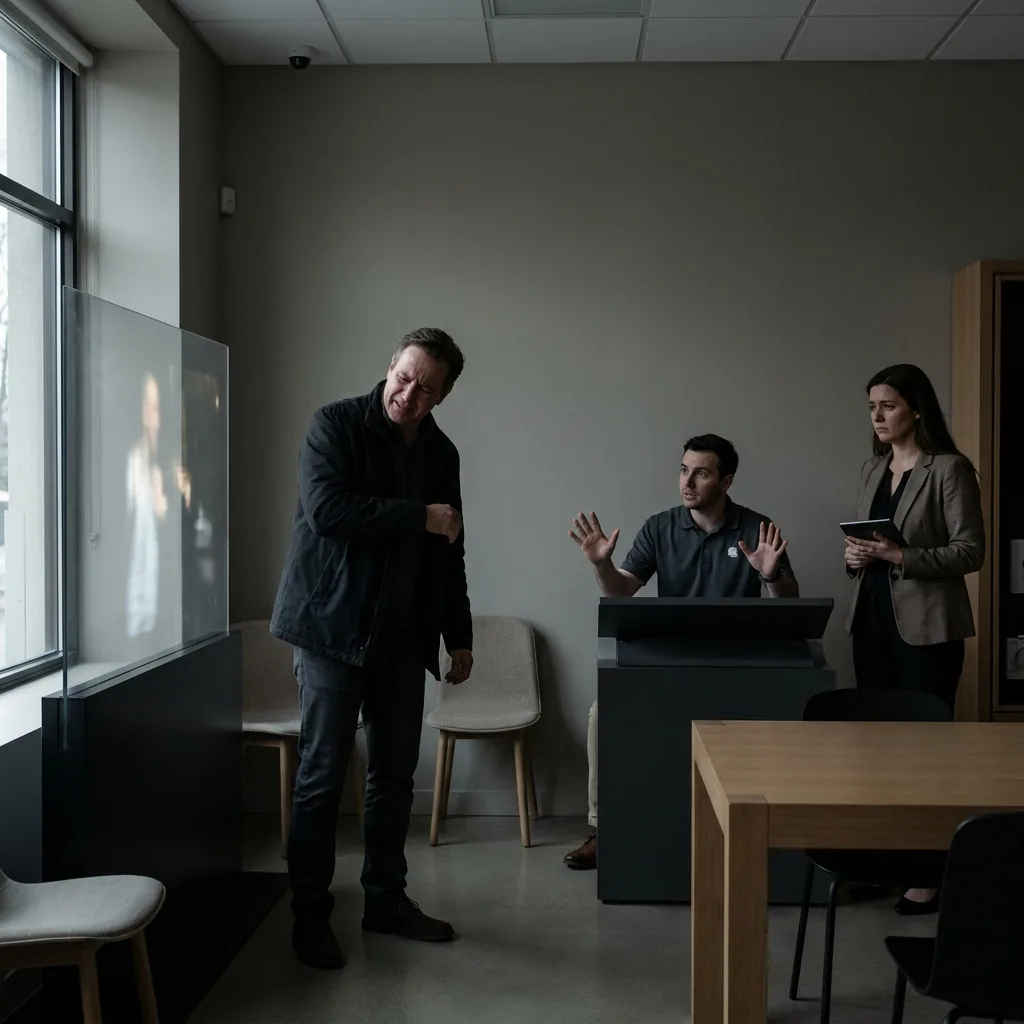
Evan Mercer denied the promise in front of everyone before the hologram even finished loading. In the small presentation bay at Mercy Echo Memorial Showroom, with a coffee grinder buzzing out at reception and the voice model drive sitting on the console beside his hand, he told his sister Dana that nobody had ever said their dead mother would speak in her real reconstructed voice, and three people in the room immediately looked at Dana like she had made the whole thing up.
Marisol Reed was standing near the aisle with her host tablet against her palm when the projection platform brightened. The soft outline of Ruth Mercer formed in the usual way, first shoulders, then face, then the polished stillness the showroom used before playback. Thomas Hale, seated near the aisle, straightened in his chair and folded his hands. Dana stayed standing. She had come in wearing a plain black sweater and carrying nothing but her phone and a folded tissue. Her eyes did not stay on the projection. They kept moving back to the console and the drive docked into it.
Evan spoke in the same low showroom voice he used with all the families. “What we promised was a memorial rendering,” he said. “Not a literal custom voice performance. I think there may have been some confusion.”
Dana answered him at once, but she did not raise her voice. “No. You said her voice. You said it would include the way she signed off to me.”
Evan gave a small breath through his nose and touched the edge of the operator console with two fingers, as if he were settling the room instead of contradicting her. “Dana, I said the system could approximate familiar cadence. That’s different.”
The projection of Ruth turned slightly and delivered a smooth line about love continuing in memory. The voice was warm in the manufactured way Mercy Echo preferred for demos, rounded at the ends of sentences, careful, general. Dana did not look up at it.
“That is not what you told us,” she said. “You said you could build from the clips and that she would say, ‘Birds before breakfast, baby.’ That was the test phrase.”
Thomas glanced from Dana to Evan, then toward the hologram, as if the image itself might settle the point. Marisol looked down at the appointment note screen mirrored on her tablet. The session label showed Ruth Mercer, family memorial preview, voice model active. Below that were standard prep fields and an operator status line with Evan’s initials. She could not see anything on the tablet that resolved the argument, only that the voice session had been set up as more than a silent visual preview.
Evan smiled without showing teeth. “That phrase was never guaranteed. We don’t script private family sayings on demand in a first-room demonstration.”
Dana blinked once and kept her hands flat at her sides. “You said it twice on the phone and once here. Mom always said it when she put breakfast on the table before school. You used it because you knew I’d recognize whether it was really built from her clips.”
Marisol noticed the room shift then, the way it sometimes did when a customer challenged a staff explanation in a calm space. The waiting area beyond the bay stayed visible through the open divider. A printer at reception started feeding paper. Somewhere behind the front desk, a drawer opened and shut. Inside the bay, though, all the motion seemed to pull toward Evan because he was nearest the controls.
He gave a patient tilt of his head that made Dana sound abrupt by comparison. “I understand this is emotional.”
Dana cut across him before the sentence could finish. “Don’t do that. I am asking one thing. If that phrase was never part of the build, why is the voice model drive here for this session at all?”
That changed the room more than the argument about memory had. Thomas looked at the small silver drive for the first time as an object instead of equipment. Marisol did too. The drive sat in its slot beside the console screen, tagged with Ruth Mercer’s session barcode. Mercy Echo used those drives for voice model transfers, updates, and family-specific sessions. Silent image loops did not need one docked live during a preview.
Evan answered quickly. “Standard session authentication.”
Marisol’s thumb stopped on her tablet. Standard authentication for a visual walk-through did not usually require a family-coded voice drive to stay mounted through playback. It could be scanned and removed. She looked at the appointment notes again, then at the display labels near the console. The active panel on Evan’s screen was angled away, but the top edge was still visible enough to show a waveform monitor moving while Ruth’s projected mouth finished another line.
Dana saw it too. “Then why is a waveform running?” she asked. “If there’s no custom voice session in here, why is her drive active while your screen is tracking audio?”
Evan turned one shoulder, blocking more of the display. “Because all memorial renderings route through the same interface.”
Dana did not move. “Then take it out.”
No one spoke for a beat. The coffee grinder out at reception shut off. The projection of Ruth held its pleasant showroom posture beside them.
Dana kept her eyes on the console. “If there was never a promised voice build, remove the drive and run the same demonstration without it. If you can’t, then explain why you told us there was nothing in that drive that mattered.”
Evan Mercer denied the promise in front of everyone before the hologram even finished loading. In the small presentation bay at Mercy Echo Memorial Showroom, with a coffee grinder buzzing out at reception and the voice model drive sitting on the console beside his hand, he told his sister Dana that nobody had ever said their dead mother would speak in her real reconstructed voice, and three people in the room immediately looked at Dana like she had made the whole thing up.
Marisol Reed was standing near the aisle with her host tablet against her palm when the projection platform brightened. The soft outline of Ruth Mercer formed in the usual way, first shoulders, then face, then the polished stillness the showroom used before playback. Thomas Hale, seated near the aisle, straightened in his chair and folded his hands. Dana stayed standing. She had come in wearing a plain black sweater and carrying nothing but her phone and a folded tissue. Her eyes did not stay on the projection. They kept moving back to the console and the drive docked into it.
Evan spoke in the same low showroom voice he used with all the families. “What we promised was a memorial rendering,” he said. “Not a literal custom voice performance. I think there may have been some confusion.”
Dana answered him at once, but she did not raise her voice. “No. You said her voice. You said it would include the way she signed off to me.”
Evan gave a small breath through his nose and touched the edge of the operator console with two fingers, as if he were settling the room instead of contradicting her. “Dana, I said the system could approximate familiar cadence. That’s different.”
The projection of Ruth turned slightly and delivered a smooth line about love continuing in memory. The voice was warm in the manufactured way Mercy Echo preferred for demos, rounded at the ends of sentences, careful, general. Dana did not look up at it.
“That is not what you told us,” she said. “You said you could build from the clips and that she would say, ‘Birds before breakfast, baby.’ That was the test phrase.”
Thomas glanced from Dana to Evan, then toward the hologram, as if the image itself might settle the point. Marisol looked down at the appointment note screen mirrored on her tablet. The session label showed Ruth Mercer, family memorial preview, voice model active. Below that were standard prep fields and an operator status line with Evan’s initials. She could not see anything on the tablet that resolved the argument, only that the voice session had been set up as more than a silent visual preview.
Evan smiled without showing teeth. “That phrase was never guaranteed. We don’t script private family sayings on demand in a first-room demonstration.”
Dana blinked once and kept her hands flat at her sides. “You said it twice on the phone and once here. Mom always said it when she put breakfast on the table before school. You used it because you knew I’d recognize whether it was really built from her clips.”
Marisol noticed the room shift then, the way it sometimes did when a customer challenged a staff explanation in a calm space. The waiting area beyond the bay stayed visible through the open divider. A printer at reception started feeding paper. Somewhere behind the front desk, a drawer opened and shut. Inside the bay, though, all the motion seemed to pull toward Evan because he was nearest the controls.
He gave a patient tilt of his head that made Dana sound abrupt by comparison. “I understand this is emotional.”
Dana cut across him before the sentence could finish. “Don’t do that. I am asking one thing. If that phrase was never part of the build, why is the voice model drive here for this session at all?”
That changed the room more than the argument about memory had. Thomas looked at the small silver drive for the first time as an object instead of equipment. Marisol did too. The drive sat in its slot beside the console screen, tagged with Ruth Mercer’s session barcode. Mercy Echo used those drives for voice model transfers, updates, and family-specific sessions. Silent image loops did not need one docked live during a preview.
Evan answered quickly. “Standard session authentication.”
Marisol’s thumb stopped on her tablet. Standard authentication for a visual walk-through did not usually require a family-coded voice drive to stay mounted through playback. It could be scanned and removed. She looked at the appointment notes again, then at the display labels near the console. The active panel on Evan’s screen was angled away, but the top edge was still visible enough to show a waveform monitor moving while Ruth’s projected mouth finished another line.
Dana saw it too. “Then why is a waveform running?” she asked. “If there’s no custom voice session in here, why is her drive active while your screen is tracking audio?”
Evan turned one shoulder, blocking more of the display. “Because all memorial renderings route through the same interface.”
Dana did not move. “Then take it out.”
No one spoke for a beat. The coffee grinder out at reception shut off. The projection of Ruth held its pleasant showroom posture beside them.
Dana kept her eyes on the console. “If there was never a promised voice build, remove the drive and run the same demonstration without it. If you can’t, then explain why you told us there was nothing in that drive that mattered.”