Story code: ST-000018
Part 1: The Term He Used Like a Weapon
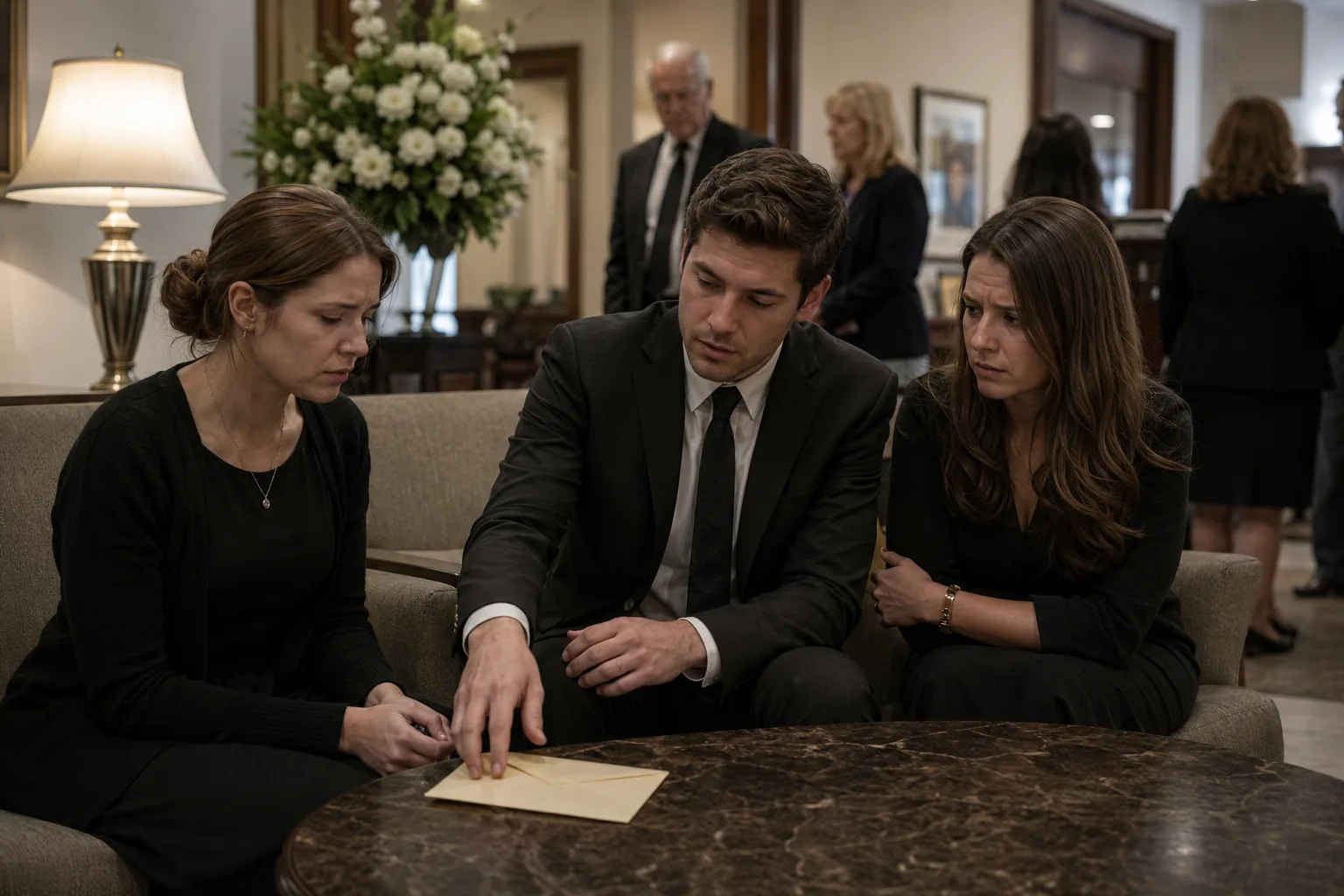
My brother Ethan tried to take our mother’s cream keepsake envelope right there in the funeral home lobby, then used funeral-home jargon to make Lena look too ignorant to stop him. He did it beside the seating cluster under the memorial display while I was restocking memorial folders and straightening guest-book table pens, and the worst part was how calm he sounded saying something I had never once heard in that building. By the time Lena said, “That’s Mom’s envelope,” Ethan had already turned the room into a place where plain language sounded childish.
I work the front lobby at Jensen & Hale Funeral Home. Most days I carry coffee sleeves, tissues, floral cards, and whatever small thing keeps a family from having to ask twice. That afternoon I was at the refreshment credenza pouring hot water into the urn when Ethan Jensen crossed from the arrangement-room doorway with the envelope in his hand and stopped near the chairs like he was stepping into a familiar role.
The envelope was cream, thick, and old enough at the corners to show a little shine. I had seen it ten minutes earlier on the low table beside a stack of memorial folders Mr. Calder had set out for the family to review. He had said, in plain terms, “This stays with your personal keepsakes until you all decide who wants to carry what home today.” Then he got called into the arrangement room.
Lena had stayed near the armchair by the lamp. She was still except for one hand opening and closing against her skirt. When Ethan lifted the envelope, she said, “Leave that there.”
He didn’t hand it back. He gave her a patient smile people use when they want an audience to notice how patient they are.
“Lena, don’t start,” he said. “Mom designated this under family dispersal priority. It isn’t first-touch personal property anymore.”
I had worked there six years. I knew our checklists, our keepsake boxes, our ash jewelry release cards, our flag cases, our photo returns, and the careful boring language that kept families from fighting in front of strangers. I had never heard “family dispersal priority.”
Lena looked at him, then at the envelope. “That is not a thing.”
Ethan shifted the envelope to one hand and flattened the other palm in the air like he was smoothing a document nobody else could see. “It is in memorial handling. You just never dealt with the logistics. There is a sequence for sentimental items attached to final disposition events. The sibling who coordinates receives first stewardship.”
He said it in the same voice people use when correcting a flight delay or an insurance code. Low. Clean. A little too ready.
Their aunt, seated near the guest-book table, stopped uncapping a pen. A cousin holding a paper cup looked down into it. Nobody backed Lena up right away, and Ethan seemed to get taller from that silence alone.
Lena stepped forward once. “Mom gave that to me.”
“No,” Ethan said, quick as a switch snapping. “Mom discussed keepsake routing. That’s different from gifting. Please don’t confuse everybody in a funeral home lobby because you don’t know the terminology.”
That landed exactly the way he wanted. Not loud. Worse than loud. His words made her sound like someone interrupting a professional with a rumor.
I set the coffee pot down harder than I meant to. The lid clicked. Ethan glanced at me, then back to Lena, and I saw the small adjustment in his posture when he realized staff could hear him. He didn’t lower his voice. He polished it.
“Ask Mr. Calder if you need confirmation,” he said. “He’ll tell you the envelope has to follow continuity protocol before any emotional claims are made.”
That one was new too. Continuity protocol.
Lena’s mouth opened, but Ethan stepped over her words before they got fully out.
“This is why I handled everything,” he said. “Somebody had to understand the process.”
He tucked the envelope under his forearm without opening it, keeping his hand near the flap like proximity itself proved authority. Lena didn’t reach for it. She just repeated, softer this time, “Mom gave that to me,” and looked not at Ethan but at the envelope itself.
I moved from the coffee urn to the memorial table because standing still would have looked stranger. As I stacked folders, I said the only thing I could verify.
“Mr. Calder uses plain names for keepsake items,” I said. “If there’s a handling step, he’ll explain it when he comes back.”
Ethan turned to me with that same controlled patience. “Of course he uses plain names with families. Internal terms are different.”
Internal terms.
He said it so smoothly that Lena’s aunt lowered her eyes to her lap, as if she had already decided the room contained knowledge she was not supposed to interrupt. That was the part that got under my skin. Not his volume. Not even the envelope. It was how quickly one invented layer of language could make everybody else act like they were trespassing.
From the arrangement-room doorway, I heard Mr. Calder’s voice finishing with another family. Ethan heard it too. He straightened his jacket, shifted the envelope higher, and said, almost kindly, “When Mr. Calder confirms family dispersal priority, I want this to be over.”
Then he looked directly at Lena and added, “Please don’t embarrass yourself if you don’t know how memorial custody works.”
Mr. Calder stepped into the lobby just as Ethan lifted the envelope slightly, ready to have his fake term blessed out loud, and I found myself watching for one thing only: whether Ethan could say it a second time in front of the one man in that building who would know if it was real.
My brother Ethan tried to take our mother’s cream keepsake envelope right there in the funeral home lobby, then used funeral-home jargon to make Lena look too ignorant to stop him. He did it beside the seating cluster under the memorial display while I was restocking memorial folders and straightening guest-book table pens, and the worst part was how calm he sounded saying something I had never once heard in that building. By the time Lena said, “That’s Mom’s envelope,” Ethan had already turned the room into a place where plain language sounded childish.
I work the front lobby at Jensen & Hale Funeral Home. Most days I carry coffee sleeves, tissues, floral cards, and whatever small thing keeps a family from having to ask twice. That afternoon I was at the refreshment credenza pouring hot water into the urn when Ethan Jensen crossed from the arrangement-room doorway with the envelope in his hand and stopped near the chairs like he was stepping into a familiar role.
The envelope was cream, thick, and old enough at the corners to show a little shine. I had seen it ten minutes earlier on the low table beside a stack of memorial folders Mr. Calder had set out for the family to review. He had said, in plain terms, “This stays with your personal keepsakes until you all decide who wants to carry what home today.” Then he got called into the arrangement room.
Lena had stayed near the armchair by the lamp. She was still except for one hand opening and closing against her skirt. When Ethan lifted the envelope, she said, “Leave that there.”
He didn’t hand it back. He gave her a patient smile people use when they want an audience to notice how patient they are.
“Lena, don’t start,” he said. “Mom designated this under family dispersal priority. It isn’t first-touch personal property anymore.”
I had worked there six years. I knew our checklists, our keepsake boxes, our ash jewelry release cards, our flag cases, our photo returns, and the careful boring language that kept families from fighting in front of strangers. I had never heard “family dispersal priority.”
Lena looked at him, then at the envelope. “That is not a thing.”
Ethan shifted the envelope to one hand and flattened the other palm in the air like he was smoothing a document nobody else could see. “It is in memorial handling. You just never dealt with the logistics. There is a sequence for sentimental items attached to final disposition events. The sibling who coordinates receives first stewardship.”
He said it in the same voice people use when correcting a flight delay or an insurance code. Low. Clean. A little too ready.
Their aunt, seated near the guest-book table, stopped uncapping a pen. A cousin holding a paper cup looked down into it. Nobody backed Lena up right away, and Ethan seemed to get taller from that silence alone.
Lena stepped forward once. “Mom gave that to me.”
“No,” Ethan said, quick as a switch snapping. “Mom discussed keepsake routing. That’s different from gifting. Please don’t confuse everybody in a funeral home lobby because you don’t know the terminology.”
That landed exactly the way he wanted. Not loud. Worse than loud. His words made her sound like someone interrupting a professional with a rumor.
I set the coffee pot down harder than I meant to. The lid clicked. Ethan glanced at me, then back to Lena, and I saw the small adjustment in his posture when he realized staff could hear him. He didn’t lower his voice. He polished it.
“Ask Mr. Calder if you need confirmation,” he said. “He’ll tell you the envelope has to follow continuity protocol before any emotional claims are made.”
That one was new too. Continuity protocol.
Lena’s mouth opened, but Ethan stepped over her words before they got fully out.
“This is why I handled everything,” he said. “Somebody had to understand the process.”
He tucked the envelope under his forearm without opening it, keeping his hand near the flap like proximity itself proved authority. Lena didn’t reach for it. She just repeated, softer this time, “Mom gave that to me,” and looked not at Ethan but at the envelope itself.
I moved from the coffee urn to the memorial table because standing still would have looked stranger. As I stacked folders, I said the only thing I could verify.
“Mr. Calder uses plain names for keepsake items,” I said. “If there’s a handling step, he’ll explain it when he comes back.”
Ethan turned to me with that same controlled patience. “Of course he uses plain names with families. Internal terms are different.”
Internal terms.
He said it so smoothly that Lena’s aunt lowered her eyes to her lap, as if she had already decided the room contained knowledge she was not supposed to interrupt. That was the part that got under my skin. Not his volume. Not even the envelope. It was how quickly one invented layer of language could make everybody else act like they were trespassing.
From the arrangement-room doorway, I heard Mr. Calder’s voice finishing with another family. Ethan heard it too. He straightened his jacket, shifted the envelope higher, and said, almost kindly, “When Mr. Calder confirms family dispersal priority, I want this to be over.”
Then he looked directly at Lena and added, “Please don’t embarrass yourself if you don’t know how memorial custody works.”
Mr. Calder stepped into the lobby just as Ethan lifted the envelope slightly, ready to have his fake term blessed out loud, and I found myself watching for one thing only: whether Ethan could say it a second time in front of the one man in that building who would know if it was real.