Story code: ST-000338
Part 1: He Said Her Profile Was Already Damaged
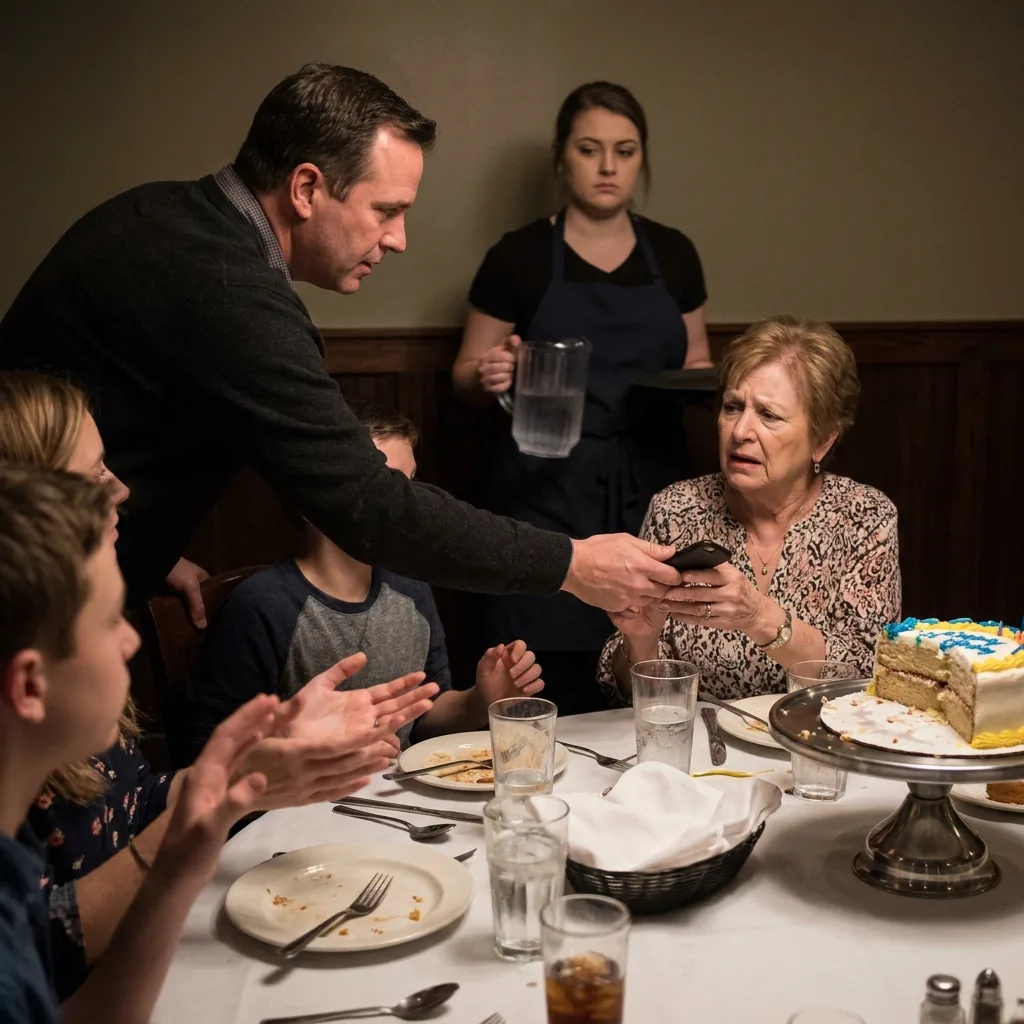
My mother’s birthday cake was still sitting on the side plate stand when her son took her phone out of her hand and told a whole table she was “too new to understand profile decay.” He said it in the private dining room like he was teaching a seminar, while she was only trying to ask one plain question about her dating app bio, and the worst part was how fast everybody got quiet and let him do it.
I was the server assigned to the room, moving between water refills and dinner plates, so I was close enough to hear exact words without being part of it. Diane Mercer had her phone unlocked beside her salad plate, profile open, glasses low on her nose. She had one finger on the screen and asked, very normally, “Should I say I like road trips, or is that too broad?”
That should have been the whole conversation.
Instead her older son Evan leaned across the table before anyone else answered. He reached with one hand, palm up, and Diane handed him the phone after half a second, like she had already learned resistance would cost more time than surrender. He angled the screen toward himself and said, “Mom, this is exactly how you tank your discoverability. You’re stacking generic interest tags on top of an already decaying profile.”
Lena, sitting near the cake knife, gave a small laugh that didn’t land anywhere. “Okay, Evan, don’t make it sound like a hostage negotiation.”
He barely looked at her. “I’m serious. Dating apps run on momentum. Once your profile enters decay, every weak edit makes it worse.”
Diane opened her mouth, closed it, then smoothed the folded napkin in her lap. “I just asked about one sentence.”
Evan tapped the phone with two fingers like he was proving a point on a whiteboard. “Because one sentence changes your signal. If you don’t understand profile decay, you can’t really judge what helps and what hurts.”
That line changed the table. Until then it had still been a birthday dinner with half-finished pasta, iced tea sweating on coasters, and candles waiting in the box. After that, it became a room where one person got to define what counted as informed.
Marcus Hale was on Diane’s other side. He had been quiet through appetizers, just answering when people spoke to him. He looked at the phone once, then back at his plate. He didn’t interrupt.
Diane tried again. “Is that an actual setting? Something I can fix?”
Evan gave a quick breath through his nose and leaned back enough for the whole table to see his face. “It’s not a setting, Mom. That’s the point. It’s platform-side behavior. You can’t keep looking for a button for everything.”
There was nothing loud about the way he said it. That made it hit harder. It was the tone people use when they want an audience to notice how patient they are being.
I stepped in to clear appetizer plates, and Diane moved her water glass for me without taking her eyes off her son. “So what am I supposed to do?” she asked.
“First,” Evan said, still holding the phone, “stop editing in reaction to low-response windows. Second, don’t load your bio with broad hobby terms. Third, don’t trigger another decay cycle by changing photos tonight.”
Lena glanced at Diane and said, softer, “Maybe just let him clean it up for you.”
Diane’s hand stayed on the tablecloth. “I don’t want him cleaning it up. I wanted help wording it.”
Evan spoke over her before the sentence fully cleared. “That is help. But if you want to ignore platform logic, go ahead.”
He turned the phone slightly so Lena could see. “See this? Her engagement is already soft. That’s what happens when a profile slips.”
I couldn’t see numbers from where I stood, just blocks of text and a row of photos, but the performance mattered more than the screen right then. He had the phone, the vocabulary, and the timing. Diane had a practical question and was now being made to defend the fact that she had asked it.
I set down fresh bread plates, and Diane thanked me too quickly, like she needed some other sentence in the room.
Marcus finally spoke, calm and short. “When you say profile decay, what are you pointing to on the app?”
Evan answered without pause. “It doesn’t label it. You see it in pattern behavior if you know what to look for.”
Marcus nodded once, not agreeing, just taking in the words. “Got it.”
Diane held out her hand for the phone. Evan didn’t give it back right away. He scrolled once more and said, “Honestly, the bigger issue is that you’re trying to edit without understanding your visibility band.”
That got the table to stop moving altogether.
Lena blinked. “Her what?”
Evan set the phone beside Diane’s bread plate, like he had just concluded a briefing. “Visibility band. If she pushes the wrong changes while she’s in a low band, the app reads instability. That’s basic.”
Diane stared at the phone for a beat, then at him. “I have never heard that in my life.”
Evan spread one hand toward her profile. “That’s because you’re using the app like a user instead of understanding how it ranks you.”
Nobody answered. Not Diane. Not Lena. Not Marcus. I was still standing there with an empty appetizer tray in my hand, and even from the service side of the room I could feel the shape of what had just happened: he had turned a normal birthday-dinner question into a test she was supposedly too ignorant to pass.
And the only thing on the table that could prove whether “visibility band” meant anything at all was still glowing on her phone beside the cake candles.
My mother’s birthday cake was still sitting on the side plate stand when her son took her phone out of her hand and told a whole table she was “too new to understand profile decay.” He said it in the private dining room like he was teaching a seminar, while she was only trying to ask one plain question about her dating app bio, and the worst part was how fast everybody got quiet and let him do it.
I was the server assigned to the room, moving between water refills and dinner plates, so I was close enough to hear exact words without being part of it. Diane Mercer had her phone unlocked beside her salad plate, profile open, glasses low on her nose. She had one finger on the screen and asked, very normally, “Should I say I like road trips, or is that too broad?”
That should have been the whole conversation.
Instead her older son Evan leaned across the table before anyone else answered. He reached with one hand, palm up, and Diane handed him the phone after half a second, like she had already learned resistance would cost more time than surrender. He angled the screen toward himself and said, “Mom, this is exactly how you tank your discoverability. You’re stacking generic interest tags on top of an already decaying profile.”
Lena, sitting near the cake knife, gave a small laugh that didn’t land anywhere. “Okay, Evan, don’t make it sound like a hostage negotiation.”
He barely looked at her. “I’m serious. Dating apps run on momentum. Once your profile enters decay, every weak edit makes it worse.”
Diane opened her mouth, closed it, then smoothed the folded napkin in her lap. “I just asked about one sentence.”
Evan tapped the phone with two fingers like he was proving a point on a whiteboard. “Because one sentence changes your signal. If you don’t understand profile decay, you can’t really judge what helps and what hurts.”
That line changed the table. Until then it had still been a birthday dinner with half-finished pasta, iced tea sweating on coasters, and candles waiting in the box. After that, it became a room where one person got to define what counted as informed.
Marcus Hale was on Diane’s other side. He had been quiet through appetizers, just answering when people spoke to him. He looked at the phone once, then back at his plate. He didn’t interrupt.
Diane tried again. “Is that an actual setting? Something I can fix?”
Evan gave a quick breath through his nose and leaned back enough for the whole table to see his face. “It’s not a setting, Mom. That’s the point. It’s platform-side behavior. You can’t keep looking for a button for everything.”
There was nothing loud about the way he said it. That made it hit harder. It was the tone people use when they want an audience to notice how patient they are being.
I stepped in to clear appetizer plates, and Diane moved her water glass for me without taking her eyes off her son. “So what am I supposed to do?” she asked.
“First,” Evan said, still holding the phone, “stop editing in reaction to low-response windows. Second, don’t load your bio with broad hobby terms. Third, don’t trigger another decay cycle by changing photos tonight.”
Lena glanced at Diane and said, softer, “Maybe just let him clean it up for you.”
Diane’s hand stayed on the tablecloth. “I don’t want him cleaning it up. I wanted help wording it.”
Evan spoke over her before the sentence fully cleared. “That is help. But if you want to ignore platform logic, go ahead.”
He turned the phone slightly so Lena could see. “See this? Her engagement is already soft. That’s what happens when a profile slips.”
I couldn’t see numbers from where I stood, just blocks of text and a row of photos, but the performance mattered more than the screen right then. He had the phone, the vocabulary, and the timing. Diane had a practical question and was now being made to defend the fact that she had asked it.
I set down fresh bread plates, and Diane thanked me too quickly, like she needed some other sentence in the room.
Marcus finally spoke, calm and short. “When you say profile decay, what are you pointing to on the app?”
Evan answered without pause. “It doesn’t label it. You see it in pattern behavior if you know what to look for.”
Marcus nodded once, not agreeing, just taking in the words. “Got it.”
Diane held out her hand for the phone. Evan didn’t give it back right away. He scrolled once more and said, “Honestly, the bigger issue is that you’re trying to edit without understanding your visibility band.”
That got the table to stop moving altogether.
Lena blinked. “Her what?”
Evan set the phone beside Diane’s bread plate, like he had just concluded a briefing. “Visibility band. If she pushes the wrong changes while she’s in a low band, the app reads instability. That’s basic.”
Diane stared at the phone for a beat, then at him. “I have never heard that in my life.”
Evan spread one hand toward her profile. “That’s because you’re using the app like a user instead of understanding how it ranks you.”
Nobody answered. Not Diane. Not Lena. Not Marcus. I was still standing there with an empty appetizer tray in my hand, and even from the service side of the room I could feel the shape of what had just happened: he had turned a normal birthday-dinner question into a test she was supposedly too ignorant to pass.
And the only thing on the table that could prove whether “visibility band” meant anything at all was still glowing on her phone beside the cake candles.