Story code: ST-000309
Part 1: The Scarf At The Aisle
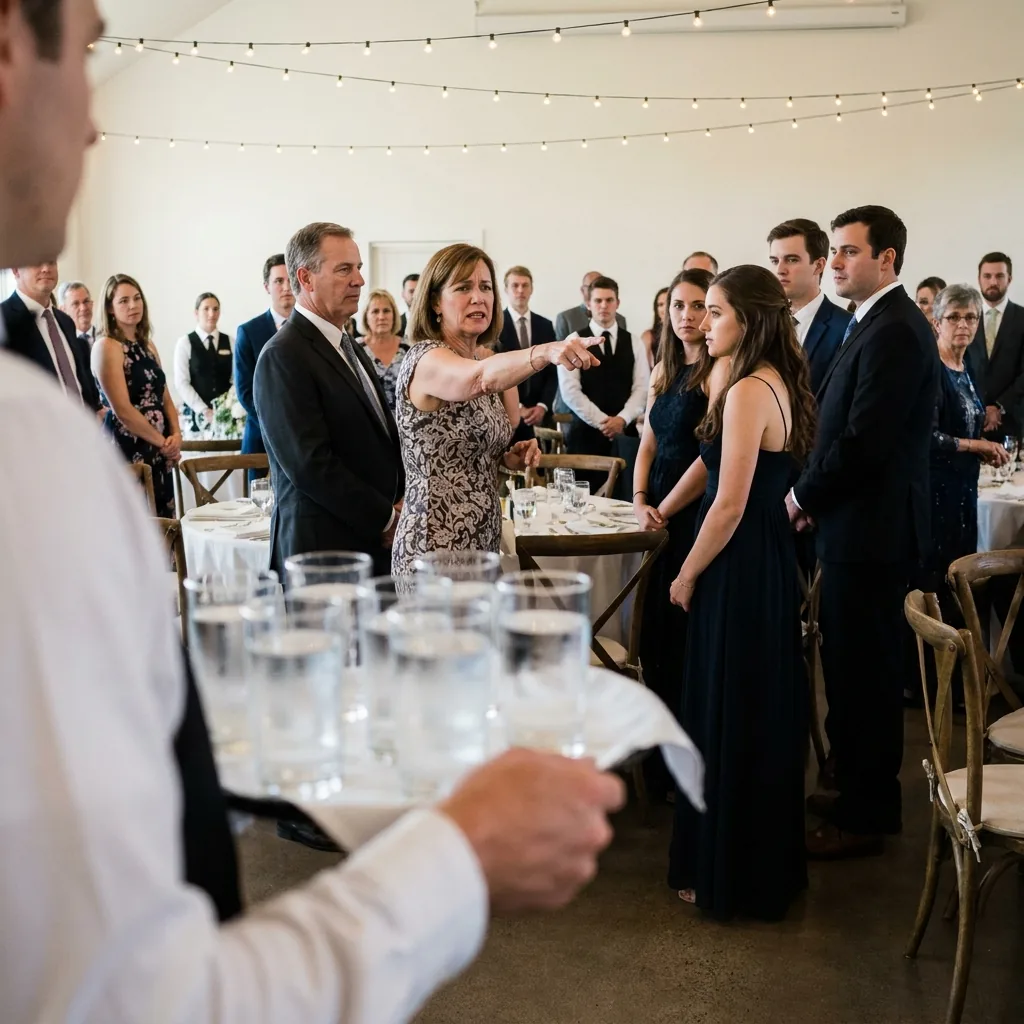
I was carrying a tray of water glasses past the family staging area beside the main aisle when Aunt Linda pointed at Maya Reed and said, loud enough for the head table to hear, that Maya did not count as real family for this wedding. The music was still playing from the speakers, guests were still finding their seats, and Maya had already been stripped of the place card that had been set out for her in the first row. The ceremony scarf, folded in a neat cream bundle with dark stitching, was in Aunt Linda’s hand for one second and then behind her arm, out of reach, like it belonged to her alone.
I stopped at the doorway between the kitchen swing doors and the ceremony floor because everybody in that room had turned to look. A server in a black apron does not usually get to stand still for long, but nobody was moving except Aunt Linda, who kept one finger aimed at Maya’s chest while she spoke over her. Maya was dressed for the wedding, shoulders square, hands open at her sides, looking from Aunt Linda to Daniel Reed at the front of the room. Daniel had one hand on the microphone stand, then let it drop. Rosa Reed was not speaking yet. She was at the edge of the dance floor, watching the scarf and watching Aunt Linda’s mouth.
Aunt Linda said the family line was for people who counted. She said it like she was reading rules off a card, not talking about a woman standing in front of half the guest list. Then she reached past Maya and took the scarf from the chair where it had been laid with the reserved family seating markers. She did it fast, with the same quick pinch she used when she took napkins off a table before a toast. Maya’s fingers moved once toward the fabric, but Aunt Linda pulled it back against her own side and kept talking.
That was the first real harm I saw. It was not just the words. It was the way Aunt Linda took the visible piece of family space away in front of everybody. Maya had been set beside the aisle with the rest of the family line, and then she was not. One minute she was part of the wedding picture, and the next minute she was being told to stand back where staff and cousins and guests could all see the difference.
A woman near the bar made a sound under her breath. Somebody at the head table stopped reaching for a napkin. A little boy in a bow tie turned around completely in his chair. Nobody laughed. Nobody filled the silence either. The room held on that one sentence: you do not count.
Maya did not raise her voice. She just said, plain as anything, “Put the scarf down.” Aunt Linda cut her off before the second word finished. She said Maya had no place touching family ceremony pieces. She said the scarf belonged with the people who knew what it meant. Then she looked straight at Daniel, not Maya, and added, “You are not going to let her stand there and pretend.”
That was when I saw the odd part. Daniel’s hand moved toward the scarf. Not all the way. Just enough that I saw him start. Then he stopped, looked at Rosa, and looked back at Aunt Linda. Rosa’s mouth tightened, but she still had not spoken. Maya reached into the small clutch at her side, and Aunt Linda saw the motion and snapped, “Don’t you dare bring out anything you think can change this room.”
I was close enough to hear the whole exchange, close enough to see that Maya’s hand did not come back empty. It came back holding a thin strip of cream fabric, folded small enough to fit in her palm. I could not see the full pattern yet. I could see only the edge of the stitching, and I could see Aunt Linda notice it at the same time I did.
Aunt Linda reached for it. Maya closed her fingers around the fold before Aunt Linda could take it.
That is where the room froze. Aunt Linda had the scarf. Maya had something else. And Rosa, who had been silent the whole time, took one step forward and said, “Where did you get that piece?”
I was carrying a tray of water glasses past the family staging area beside the main aisle when Aunt Linda pointed at Maya Reed and said, loud enough for the head table to hear, that Maya did not count as real family for this wedding. The music was still playing from the speakers, guests were still finding their seats, and Maya had already been stripped of the place card that had been set out for her in the first row. The ceremony scarf, folded in a neat cream bundle with dark stitching, was in Aunt Linda’s hand for one second and then behind her arm, out of reach, like it belonged to her alone.
I stopped at the doorway between the kitchen swing doors and the ceremony floor because everybody in that room had turned to look. A server in a black apron does not usually get to stand still for long, but nobody was moving except Aunt Linda, who kept one finger aimed at Maya’s chest while she spoke over her. Maya was dressed for the wedding, shoulders square, hands open at her sides, looking from Aunt Linda to Daniel Reed at the front of the room. Daniel had one hand on the microphone stand, then let it drop. Rosa Reed was not speaking yet. She was at the edge of the dance floor, watching the scarf and watching Aunt Linda’s mouth.
Aunt Linda said the family line was for people who counted. She said it like she was reading rules off a card, not talking about a woman standing in front of half the guest list. Then she reached past Maya and took the scarf from the chair where it had been laid with the reserved family seating markers. She did it fast, with the same quick pinch she used when she took napkins off a table before a toast. Maya’s fingers moved once toward the fabric, but Aunt Linda pulled it back against her own side and kept talking.
That was the first real harm I saw. It was not just the words. It was the way Aunt Linda took the visible piece of family space away in front of everybody. Maya had been set beside the aisle with the rest of the family line, and then she was not. One minute she was part of the wedding picture, and the next minute she was being told to stand back where staff and cousins and guests could all see the difference.
A woman near the bar made a sound under her breath. Somebody at the head table stopped reaching for a napkin. A little boy in a bow tie turned around completely in his chair. Nobody laughed. Nobody filled the silence either. The room held on that one sentence: you do not count.
Maya did not raise her voice. She just said, plain as anything, “Put the scarf down.” Aunt Linda cut her off before the second word finished. She said Maya had no place touching family ceremony pieces. She said the scarf belonged with the people who knew what it meant. Then she looked straight at Daniel, not Maya, and added, “You are not going to let her stand there and pretend.”
That was when I saw the odd part. Daniel’s hand moved toward the scarf. Not all the way. Just enough that I saw him start. Then he stopped, looked at Rosa, and looked back at Aunt Linda. Rosa’s mouth tightened, but she still had not spoken. Maya reached into the small clutch at her side, and Aunt Linda saw the motion and snapped, “Don’t you dare bring out anything you think can change this room.”
I was close enough to hear the whole exchange, close enough to see that Maya’s hand did not come back empty. It came back holding a thin strip of cream fabric, folded small enough to fit in her palm. I could not see the full pattern yet. I could see only the edge of the stitching, and I could see Aunt Linda notice it at the same time I did.
Aunt Linda reached for it. Maya closed her fingers around the fold before Aunt Linda could take it.
That is where the room froze. Aunt Linda had the scarf. Maya had something else. And Rosa, who had been silent the whole time, took one step forward and said, “Where did you get that piece?”