Story code: ST-000854
Part 1: He Brought the Box Like It Was a Bill
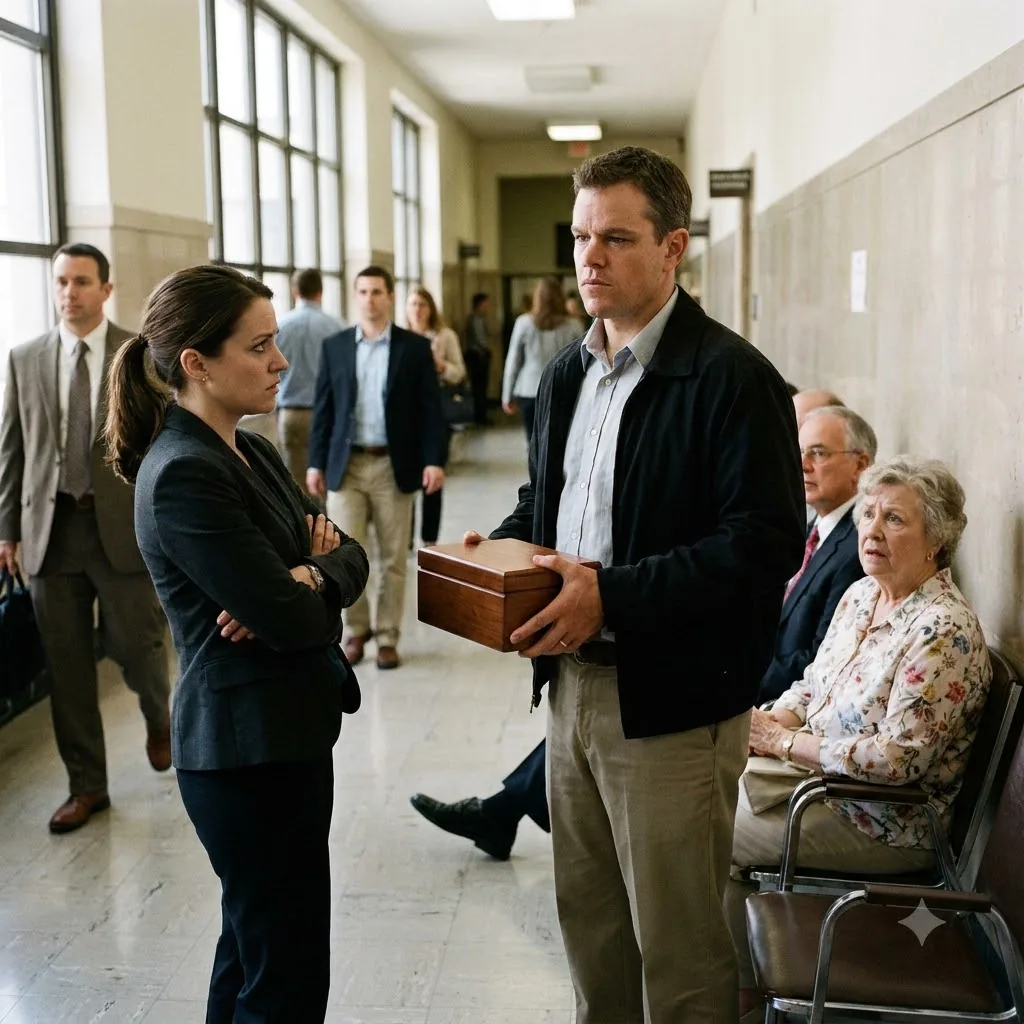
My cousin stopped me in the probate hallway with Aunt Carol’s keepsake box in both hands and said, loud enough for people in the plastic chairs to hear, that after everything he had sacrificed for this family, I was not going to start acting independent now. I had come expecting signatures at a front desk and a quiet handoff, not Derek using my dead aunt’s box like a leash outside the probate office door while a clerk called names and strangers kept walking past. The first thing he did was turn my thank-you into a debt.
He stepped right into the flow of people coming out of the security-adjacent corridor, forcing me to stop unless I wanted to brush past him and the box. It was one of Aunt Carol’s old cedar keepsake boxes, the kind with brass corners rubbed pale from years of use. I knew it on sight because she used to keep holiday cards in it until she got more deliberate about what went where.
“You could at least show some appreciation,” Derek said, shifting the box higher against his chest. “I have handled every call, every form, every visit, every piece of this mess. You think you just walk in here and collect?”
I kept my voice level. “I’m here because this is the day the probate office gave me. Move, Derek.”
That only made him speak louder. “See? This is exactly what I mean. I carried this family when Carol got sick. I drove her to appointments. I cleaned out the condo. I took off work. Nobody helped me. And now you want to show up for the sentimental stuff and act like you don’t owe anybody anything?”
A woman two chairs down looked up from her phone. Mr. Alvarez, who had been checking a clipboard near the probate office door, glanced over and then back to the people he was calling forward. Nina came around the corner from the vending machines with a paper cup in her hand and slowed as soon as she saw Derek planted in front of me.
“Derek,” she said quietly, “not here.”
He didn’t look at her. He kept his eyes on me and tightened his hold on the box. “No, actually, here is perfect. She needs to hear it. In front of people. Maybe then it’ll sink in that gratitude means something.”
There it was. Not grief. Not stress. Not even a request. He said gratitude like it came with monthly payments.
“Thanking you for handling executor work is not the same thing as handing you control over me,” I said.
His laugh came fast and flat. “Control? Listen to yourself. I’m asking for basic respect. I’m asking you not to make things harder after I gave up months of my life.”
He started listing things again, each one bigger than the last. Lost weekends. Gas money. Time off. Favors for Aunt Carol. Favors for Nina. Favors for everybody. It wasn’t a conversation. It was an invoice performed at full volume.
The box stayed in the center of it. Every time I looked down, he nudged it higher, as if it proved his version by itself.
I said, “If the box is mine to receive, hand it to me. If it isn’t, stop using it to make a speech.”
Nina’s eyes went to the box before they came back to my face. “Lauren,” she said in that careful family voice that means keep things smooth no matter who started it, “he’s just saying he’s done a lot.”
“I heard him,” I said.
Derek leaned forward. “Done a lot for you too, by the way. You think Aunt Carol wanted you getting these things and then cutting me off? After all the pressure I took? After everything I swallowed?”
I noticed the wording because he wanted it to blur together. Aunt Carol. Executor work. Family pressure. My future. As if one gave him rights over the rest.
“What exactly are you asking for?” I said.
He blinked once, like he hadn’t expected me to make him say it plainly.
“I’m asking you not to disappear after today,” he said. “I’m asking you to remember who stood up when nobody else did. I’m asking you to stop acting like you can take what Carol wanted you to have and then shut the door on family.”
That answer landed harder because it still wasn’t exact. He wanted something indefinite. Access. Ongoing say-so. The right to collect later.
Mr. Alvarez called another name. A side door opened. Two men in work boots came out talking softly, then slowed when they hit the knot our family had made in the hallway. Derek did not lower his voice.
“You don’t get to benefit from my sacrifices and then decide you owe me nothing,” he said.
I said, “Benefit? It’s my aunt’s keepsake box. Not your bargaining chip.”
His jaw shifted. He looked at Nina, then back at me, and put one hand over the lid like I might lunge for it.
That tiny move told me more than the speech had. He wasn’t protecting the box from damage. He was protecting the performance around it.
I took one step back so he could not pretend I was grabbing at anything. “If carrying it is such a burden,” I said, “you can give it to me now and be done.”
For the first time, he didn’t answer right away.
He held the box tighter and said, very carefully, “That’s not the point.”
And that was the problem sitting in the middle of the hallway. If all his sacrifice talk was about how much he wanted this burden off his hands, why did he refuse the one simple way to put it down?
My cousin stopped me in the probate hallway with Aunt Carol’s keepsake box in both hands and said, loud enough for people in the plastic chairs to hear, that after everything he had sacrificed for this family, I was not going to start acting independent now. I had come expecting signatures at a front desk and a quiet handoff, not Derek using my dead aunt’s box like a leash outside the probate office door while a clerk called names and strangers kept walking past. The first thing he did was turn my thank-you into a debt.
He stepped right into the flow of people coming out of the security-adjacent corridor, forcing me to stop unless I wanted to brush past him and the box. It was one of Aunt Carol’s old cedar keepsake boxes, the kind with brass corners rubbed pale from years of use. I knew it on sight because she used to keep holiday cards in it until she got more deliberate about what went where.
“You could at least show some appreciation,” Derek said, shifting the box higher against his chest. “I have handled every call, every form, every visit, every piece of this mess. You think you just walk in here and collect?”
I kept my voice level. “I’m here because this is the day the probate office gave me. Move, Derek.”
That only made him speak louder. “See? This is exactly what I mean. I carried this family when Carol got sick. I drove her to appointments. I cleaned out the condo. I took off work. Nobody helped me. And now you want to show up for the sentimental stuff and act like you don’t owe anybody anything?”
A woman two chairs down looked up from her phone. Mr. Alvarez, who had been checking a clipboard near the probate office door, glanced over and then back to the people he was calling forward. Nina came around the corner from the vending machines with a paper cup in her hand and slowed as soon as she saw Derek planted in front of me.
“Derek,” she said quietly, “not here.”
He didn’t look at her. He kept his eyes on me and tightened his hold on the box. “No, actually, here is perfect. She needs to hear it. In front of people. Maybe then it’ll sink in that gratitude means something.”
There it was. Not grief. Not stress. Not even a request. He said gratitude like it came with monthly payments.
“Thanking you for handling executor work is not the same thing as handing you control over me,” I said.
His laugh came fast and flat. “Control? Listen to yourself. I’m asking for basic respect. I’m asking you not to make things harder after I gave up months of my life.”
He started listing things again, each one bigger than the last. Lost weekends. Gas money. Time off. Favors for Aunt Carol. Favors for Nina. Favors for everybody. It wasn’t a conversation. It was an invoice performed at full volume.
The box stayed in the center of it. Every time I looked down, he nudged it higher, as if it proved his version by itself.
I said, “If the box is mine to receive, hand it to me. If it isn’t, stop using it to make a speech.”
Nina’s eyes went to the box before they came back to my face. “Lauren,” she said in that careful family voice that means keep things smooth no matter who started it, “he’s just saying he’s done a lot.”
“I heard him,” I said.
Derek leaned forward. “Done a lot for you too, by the way. You think Aunt Carol wanted you getting these things and then cutting me off? After all the pressure I took? After everything I swallowed?”
I noticed the wording because he wanted it to blur together. Aunt Carol. Executor work. Family pressure. My future. As if one gave him rights over the rest.
“What exactly are you asking for?” I said.
He blinked once, like he hadn’t expected me to make him say it plainly.
“I’m asking you not to disappear after today,” he said. “I’m asking you to remember who stood up when nobody else did. I’m asking you to stop acting like you can take what Carol wanted you to have and then shut the door on family.”
That answer landed harder because it still wasn’t exact. He wanted something indefinite. Access. Ongoing say-so. The right to collect later.
Mr. Alvarez called another name. A side door opened. Two men in work boots came out talking softly, then slowed when they hit the knot our family had made in the hallway. Derek did not lower his voice.
“You don’t get to benefit from my sacrifices and then decide you owe me nothing,” he said.
I said, “Benefit? It’s my aunt’s keepsake box. Not your bargaining chip.”
His jaw shifted. He looked at Nina, then back at me, and put one hand over the lid like I might lunge for it.
That tiny move told me more than the speech had. He wasn’t protecting the box from damage. He was protecting the performance around it.
I took one step back so he could not pretend I was grabbing at anything. “If carrying it is such a burden,” I said, “you can give it to me now and be done.”
For the first time, he didn’t answer right away.
He held the box tighter and said, very carefully, “That’s not the point.”
And that was the problem sitting in the middle of the hallway. If all his sacrifice talk was about how much he wanted this burden off his hands, why did he refuse the one simple way to put it down?