Story code: ST-000620
Part 1: He Pointed at My Badge Like It Belonged to Him
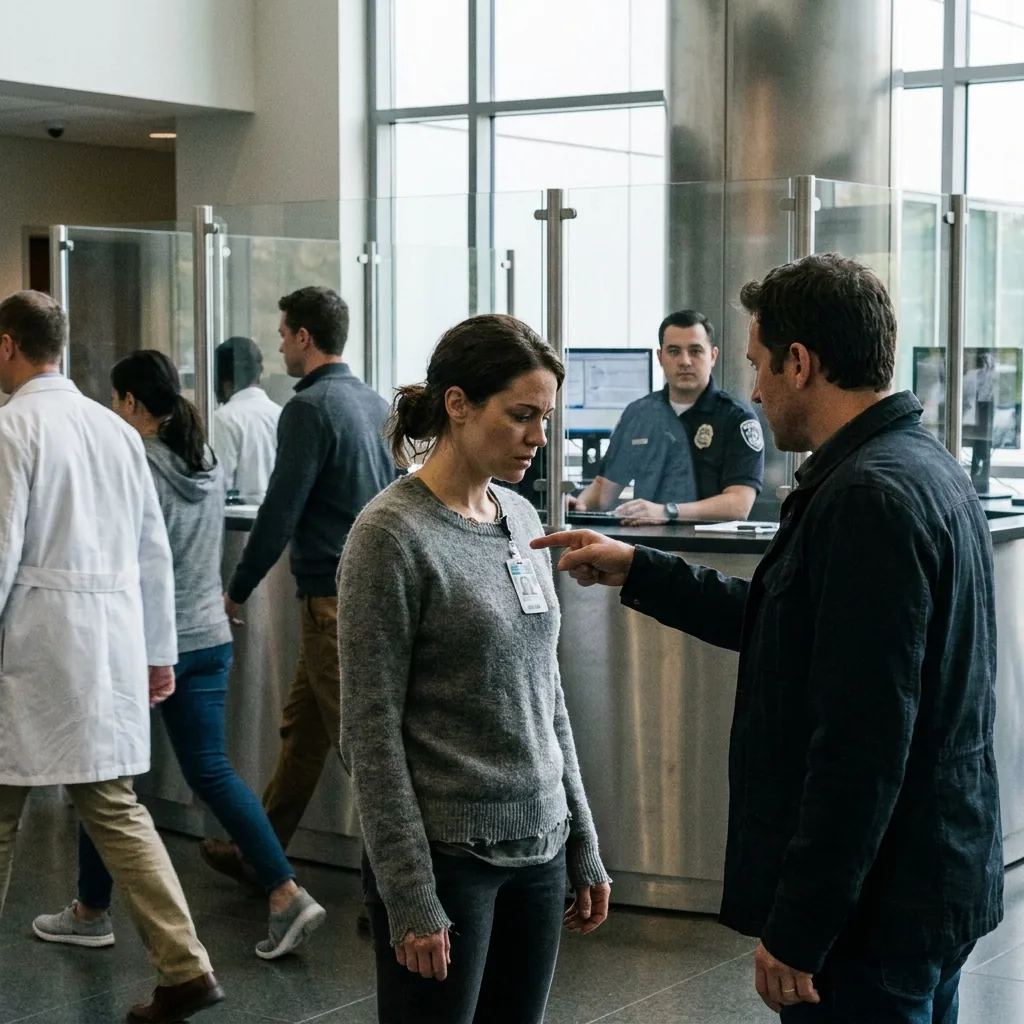
My cousin stopped me in the lobby at Halcyon Q Systems, pointed straight at the access token clipped to my sweater, and said, loud enough for the front security desk to hear, “You keep walking around like you earned that by yourself when you still owe me for getting you in this building.” People were moving through the visitor seating area near the lobby windows, a courier was signing the tablet, and I was suddenly standing there with Darren Pike listing family favors like he was reading charges against me. The worst part was that if anyone caught only the first thirty seconds, it sounded plausible. I had just come down from the lab floor to pick up a package and clear a visitor question with security. My token was on the retractable clip I always wore. Darren stepped into my path before I reached the desk, not enough to touch me, just enough to make me stop or brush past him in front of everyone. “I drove your dad to appointments,” he said, counting off on his fingers. “I let you use my couch when your apartment fell through. I put in a good word when you were trying to get your foot in somewhere real. And now you act like I should stand outside like a stranger.” His voice had that careful, public volume people use when they want to sound reasonable. Not shouting. Not whispering either. I said, “This is my workplace, Darren. Move.” Instead, he glanced at my badge clip again. “Your workplace because of me. That’s the part you keep skipping.” Behind him, Marlene Cho at the security desk looked up from her monitor. She did not come over. She watched the way she always watched the badge readers and entrance lanes, like she was sorting whether this was a disruption or just bad family timing. I kept my own voice flat. “You do not get to come here and talk like I owe you access.” “Who said access first?” he asked, lifting both hands a little. “See, this is what you do. You make everything sound ugly. I’m talking about respect. I’m talking about remembering who helped you before all this badge-and-glass-door stuff made you too important to answer a text.” That landed where he meant it to. I had ignored two of his messages that week because they were vague and had that familiar shape to them: Can you do me a small favor, Can you just help me get in touch with the right person, Can you meet me outside for one minute. Nothing clean enough to answer yes or no to without opening a bigger problem. He took my silence as room to continue. “When Eli was down, who showed up?” he said. “Me. When you needed somewhere to land, who made space? Me. When you started trying to break into this field, who told people you were solid and smart and worth taking seriously? Me. So don’t stand there with that thing on your chest and pretend it has nothing to do with me.” He pointed again at my token, and that was the first real spike of panic. Not because he could use it. He could not. Everyone in this lobby knew badge permissions were tied to identity. But because he was using it as a visible prop. To anyone half listening, that clip on my sweater became his evidence. A shiny little receipt for a debt I had never agreed to carry. “You are not getting my badge, my login, a door opened for you, or money,” I said. His mouth tightened for a second, then smoothed back out. “Funny you jumped right to money.” “Because that’s why you’re here.” He gave a soft laugh through his nose and leaned closer without actually lowering his voice. “You know what I’m here for? A little fairness. You’ve been benefiting from what I started, and now you want to act like I should clap from the parking lot.” Marlene stood from the desk then, not hurrying, just making her presence visible. Darren noticed. He shifted his body a few inches, angling himself so he looked less like he was blocking me and more like we were deep in a tense family conversation I should have solved privately. That was what made it hard. Some of what he was saying connected to real events. When my dad, Eli, was having a rough stretch, Darren did drive him places. When my lease collapsed years ago, I did sleep on Darren’s couch for twelve days. He had said my name to somebody once when I was scrambling for entry-level work after a contract job ended. Those things were true. What he was doing now was stacking them into a shape that made every next thing mine look borrowed from him. I said, “You helped when it suited you, and none of that bought you rights over me.” His eyes sharpened. “Suited me? That’s cute. Nina, I carried your family when nobody else did.” The words came out big enough that a man by the visitor chairs turned his head. I could feel the lobby shrinking around me, glass doors at my back, front desk to my left, Darren between me and the side exit to the parking lot. Then he said the part that made my stomach drop. “You think I don’t remember whose address you put on your resume when you needed to look stable?” he said. “You think I don’t remember who vouched for you when that first lab contact wanted to know whether you were reliable? If I hadn’t stepped in then, you wouldn’t be standing here with that access token now.” That was not just him reciting generosity anymore. That was him trying to draw a straight line from his couch to my job to the badge on my chest, like my whole career was interest accruing on a family loan. And the ugly part was this: I suddenly.
My cousin stopped me in the lobby at Halcyon Q Systems, pointed straight at the access token clipped to my sweater, and said, loud enough for the front security desk to hear, “You keep walking around like you earned that by yourself when you still owe me for getting you in this building.” People were moving through the visitor seating area near the lobby windows, a courier was signing the tablet, and I was suddenly standing there with Darren Pike listing family favors like he was reading charges against me. The worst part was that if anyone caught only the first thirty seconds, it sounded plausible. I had just come down from the lab floor to pick up a package and clear a visitor question with security. My token was on the retractable clip I always wore. Darren stepped into my path before I reached the desk, not enough to touch me, just enough to make me stop or brush past him in front of everyone. “I drove your dad to appointments,” he said, counting off on his fingers. “I let you use my couch when your apartment fell through. I put in a good word when you were trying to get your foot in somewhere real. And now you act like I should stand outside like a stranger.” His voice had that careful, public volume people use when they want to sound reasonable. Not shouting. Not whispering either. I said, “This is my workplace, Darren. Move.” Instead, he glanced at my badge clip again. “Your workplace because of me. That’s the part you keep skipping.” Behind him, Marlene Cho at the security desk looked up from her monitor. She did not come over. She watched the way she always watched the badge readers and entrance lanes, like she was sorting whether this was a disruption or just bad family timing. I kept my own voice flat. “You do not get to come here and talk like I owe you access.” “Who said access first?” he asked, lifting both hands a little. “See, this is what you do. You make everything sound ugly. I’m talking about respect. I’m talking about remembering who helped you before all this badge-and-glass-door stuff made you too important to answer a text.” That landed where he meant it to. I had ignored two of his messages that week because they were vague and had that familiar shape to them: Can you do me a small favor, Can you just help me get in touch with the right person, Can you meet me outside for one minute. Nothing clean enough to answer yes or no to without opening a bigger problem. He took my silence as room to continue. “When Eli was down, who showed up?” he said. “Me. When you needed somewhere to land, who made space? Me. When you started trying to break into this field, who told people you were solid and smart and worth taking seriously? Me. So don’t stand there with that thing on your chest and pretend it has nothing to do with me.” He pointed again at my token, and that was the first real spike of panic. Not because he could use it. He could not. Everyone in this lobby knew badge permissions were tied to identity. But because he was using it as a visible prop. To anyone half listening, that clip on my sweater became his evidence. A shiny little receipt for a debt I had never agreed to carry. “You are not getting my badge, my login, a door opened for you, or money,” I said. His mouth tightened for a second, then smoothed back out. “Funny you jumped right to money.” “Because that’s why you’re here.” He gave a soft laugh through his nose and leaned closer without actually lowering his voice. “You know what I’m here for? A little fairness. You’ve been benefiting from what I started, and now you want to act like I should clap from the parking lot.” Marlene stood from the desk then, not hurrying, just making her presence visible. Darren noticed. He shifted his body a few inches, angling himself so he looked less like he was blocking me and more like we were deep in a tense family conversation I should have solved privately. That was what made it hard. Some of what he was saying connected to real events. When my dad, Eli, was having a rough stretch, Darren did drive him places. When my lease collapsed years ago, I did sleep on Darren’s couch for twelve days. He had said my name to somebody once when I was scrambling for entry-level work after a contract job ended. Those things were true. What he was doing now was stacking them into a shape that made every next thing mine look borrowed from him. I said, “You helped when it suited you, and none of that bought you rights over me.” His eyes sharpened. “Suited me? That’s cute. Nina, I carried your family when nobody else did.” The words came out big enough that a man by the visitor chairs turned his head. I could feel the lobby shrinking around me, glass doors at my back, front desk to my left, Darren between me and the side exit to the parking lot. Then he said the part that made my stomach drop. “You think I don’t remember whose address you put on your resume when you needed to look stable?” he said. “You think I don’t remember who vouched for you when that first lab contact wanted to know whether you were reliable? If I hadn’t stepped in then, you wouldn’t be standing here with that access token now.” That was not just him reciting generosity anymore. That was him trying to draw a straight line from his couch to my job to the badge on my chest, like my whole career was interest accruing on a family loan. And the ugly part was this: I suddenly.