Story code: ST-000788
Part 1: She Said Family Doesn’t Send Invoices
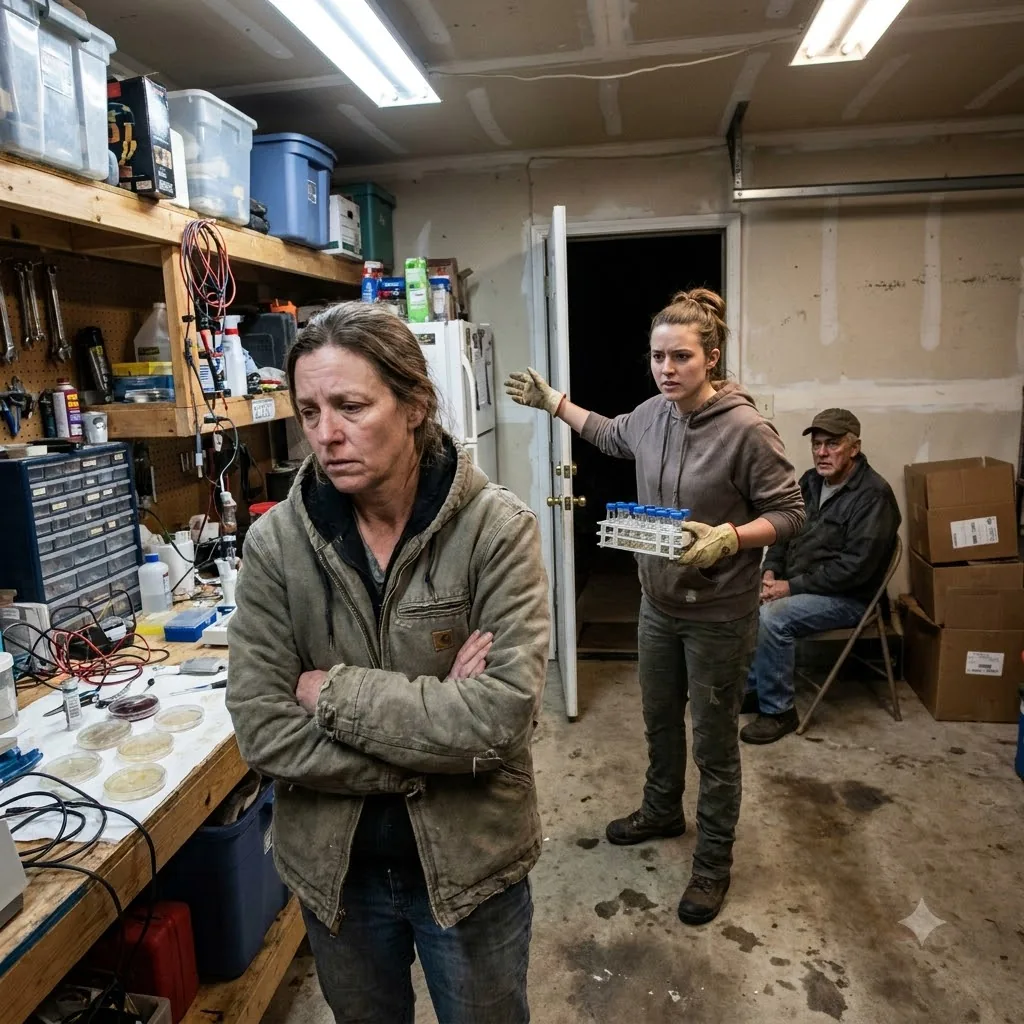
My cousin blocked the garage doorway with a rack of test vials in one hand and told me if I really loved this family, I would send her three hundred dollars before dinner. When I said I needed to know what it was for, Tessa looked over at the workbench like I had insulted God himself and said, “Wow. So that’s where we are. You need proof before you’ll help your own blood.” Aunt Denise kept sorting receipts by the mini fridge and did not look up.
I had come over to drop off a casserole dish and the extension cord Eli had left at my apartment. That was it. I was still holding my keys when Tessa stepped sideways in front of me and started talking fast about a time-sensitive supply problem, contamination risk, how one missed window could ruin weeks of work. She had that clipped, excited voice she used when she wanted everything to sound bigger than the room it was happening in.
The garage lab sat exactly the way I had seen it a dozen times before: folding table, labeled test vials in a plastic rack, mini fridge humming under the counter, paper towels, gloves, a little digital scale, stacks of grocery receipts pushed off to one side to make space for lab stuff that somehow always spread wider than the rest of the house. The problem was not that she needed money. Everybody in our family needed money for something.
The problem was that she was already talking like my answer had been yes.
“I’ll pay you back next week,” she said, not waiting for me to agree. “This is literally for the family anyway. Mom’s letting me use the space, Eli said the utility bill is already insane, and I’m trying to make this actually turn into something. You benefit too if this works.”
I said, “What exactly needs to be bought today?”
Tessa let out a short laugh through her nose. “The fact that you’re grilling me right now is kind of gross, Maya.”
That got Aunt Denise to glance up for half a second. She pinched two receipts together, straightened them, and said, “Let’s not make this ugly.”
Ugly. Not sudden. Not unfair. Ugly, like I was the one changing the tone.
I put the casserole dish on the edge of the workbench. “I’m asking because three hundred dollars isn’t gas money. What is it for?”
“Replacement materials,” Tessa said. “A batch got compromised.”
She said it quickly, but she gestured toward the vials like the answer lived there. I looked where she pointed. The vials were lined up in neat rows, blue marker labels facing out. Beside them sat a small sealed box with a glossy photo printed on the side. It was new enough that the corners were still sharp, no dust on it, no tape peeled halfway off like everything else around there.
I did not know what it was at first. Then I saw the brand name and the picture: a compact mini centrifuge, one of those little spin machines made for benchtops. Not huge. Not cheap-cheap either.
Tessa shifted the box slightly with her wrist, almost casual, but enough to turn the picture away from me.
I asked, “When did you buy that?”
She did not answer right away. “That has nothing to do with this.”
“It kind of does if your batch was supposedly compromised and you need emergency money today.”
“Supposedly?” Her whole face changed on that one word. The warmth dropped out so fast it was almost mechanical. “I am standing here trying to do something serious, and you’re acting like I’m running a scam.”
Aunt Denise started stacking receipts louder than necessary. Paper snapped under her fingers. “Maya, if you can help, help. It doesn’t always have to become a whole thing.”
That landed exactly where Tessa wanted it to. Not whether the story made sense. Not why the emergency had a brand-new machine sitting next to it. Just whether I was willing to be the difficult one.
I opened my payment app anyway, mostly because I knew they were both watching my hands. My balance sat there in plain view, already thinner than I liked. Rent in four days. Car insurance due Monday. My phone still on the cracked case I’d promised myself I would replace after tax season. Tessa leaned in enough to see the screen glow.
“See?” she said to her mother, like the money was already halfway transferred. “She has it.”
I locked my phone. “Having it and giving it are not the same thing.”
Tessa set the vial rack down too hard. Plastic clicked against the table. “You know what, that’s fine. Just say you don’t care if I lose the work. Say that part with your chest. Don’t hide behind questions.”
I said, very carefully, “I’m not sending money until you tell me why there’s a new centrifuge on the bench if this is supposed to be for replacement materials.”
For one second, nobody moved. Even the fridge hum sounded louder.
Then Tessa crossed her arms and said, “You don’t know what you’re looking at.”
Maybe I didn’t. But the box was still there, tucked beside the labeled vials like something that had arrived recently, and her story had just gone from urgent to slippery. If the emergency was real, I could not figure out why the newest thing in the room looked like it had already been bought.
My cousin blocked the garage doorway with a rack of test vials in one hand and told me if I really loved this family, I would send her three hundred dollars before dinner. When I said I needed to know what it was for, Tessa looked over at the workbench like I had insulted God himself and said, “Wow. So that’s where we are. You need proof before you’ll help your own blood.” Aunt Denise kept sorting receipts by the mini fridge and did not look up.
I had come over to drop off a casserole dish and the extension cord Eli had left at my apartment. That was it. I was still holding my keys when Tessa stepped sideways in front of me and started talking fast about a time-sensitive supply problem, contamination risk, how one missed window could ruin weeks of work. She had that clipped, excited voice she used when she wanted everything to sound bigger than the room it was happening in.
The garage lab sat exactly the way I had seen it a dozen times before: folding table, labeled test vials in a plastic rack, mini fridge humming under the counter, paper towels, gloves, a little digital scale, stacks of grocery receipts pushed off to one side to make space for lab stuff that somehow always spread wider than the rest of the house. The problem was not that she needed money. Everybody in our family needed money for something.
The problem was that she was already talking like my answer had been yes.
“I’ll pay you back next week,” she said, not waiting for me to agree. “This is literally for the family anyway. Mom’s letting me use the space, Eli said the utility bill is already insane, and I’m trying to make this actually turn into something. You benefit too if this works.”
I said, “What exactly needs to be bought today?”
Tessa let out a short laugh through her nose. “The fact that you’re grilling me right now is kind of gross, Maya.”
That got Aunt Denise to glance up for half a second. She pinched two receipts together, straightened them, and said, “Let’s not make this ugly.”
Ugly. Not sudden. Not unfair. Ugly, like I was the one changing the tone.
I put the casserole dish on the edge of the workbench. “I’m asking because three hundred dollars isn’t gas money. What is it for?”
“Replacement materials,” Tessa said. “A batch got compromised.”
She said it quickly, but she gestured toward the vials like the answer lived there. I looked where she pointed. The vials were lined up in neat rows, blue marker labels facing out. Beside them sat a small sealed box with a glossy photo printed on the side. It was new enough that the corners were still sharp, no dust on it, no tape peeled halfway off like everything else around there.
I did not know what it was at first. Then I saw the brand name and the picture: a compact mini centrifuge, one of those little spin machines made for benchtops. Not huge. Not cheap-cheap either.
Tessa shifted the box slightly with her wrist, almost casual, but enough to turn the picture away from me.
I asked, “When did you buy that?”
She did not answer right away. “That has nothing to do with this.”
“It kind of does if your batch was supposedly compromised and you need emergency money today.”
“Supposedly?” Her whole face changed on that one word. The warmth dropped out so fast it was almost mechanical. “I am standing here trying to do something serious, and you’re acting like I’m running a scam.”
Aunt Denise started stacking receipts louder than necessary. Paper snapped under her fingers. “Maya, if you can help, help. It doesn’t always have to become a whole thing.”
That landed exactly where Tessa wanted it to. Not whether the story made sense. Not why the emergency had a brand-new machine sitting next to it. Just whether I was willing to be the difficult one.
I opened my payment app anyway, mostly because I knew they were both watching my hands. My balance sat there in plain view, already thinner than I liked. Rent in four days. Car insurance due Monday. My phone still on the cracked case I’d promised myself I would replace after tax season. Tessa leaned in enough to see the screen glow.
“See?” she said to her mother, like the money was already halfway transferred. “She has it.”
I locked my phone. “Having it and giving it are not the same thing.”
Tessa set the vial rack down too hard. Plastic clicked against the table. “You know what, that’s fine. Just say you don’t care if I lose the work. Say that part with your chest. Don’t hide behind questions.”
I said, very carefully, “I’m not sending money until you tell me why there’s a new centrifuge on the bench if this is supposed to be for replacement materials.”
For one second, nobody moved. Even the fridge hum sounded louder.
Then Tessa crossed her arms and said, “You don’t know what you’re looking at.”
Maybe I didn’t. But the box was still there, tucked beside the labeled vials like something that had arrived recently, and her story had just gone from urgent to slippery. If the emergency was real, I could not figure out why the newest thing in the room looked like it had already been bought.