Story code: ST-000021
Part 1: He Said It Loud Enough for the Whole Hallway
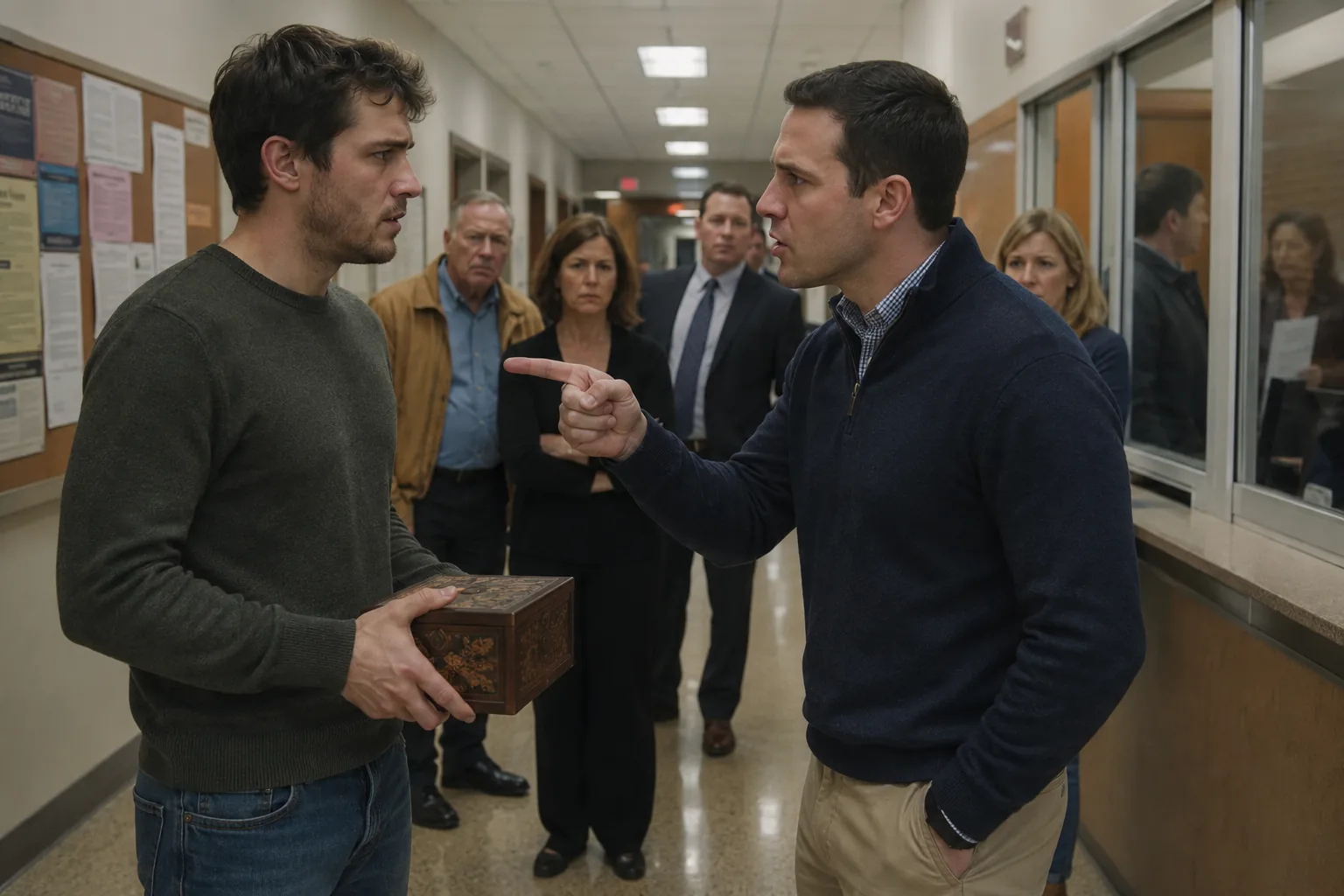
My cousin stopped me in the middle of a probate hallway handoff, pointed at the keepsake box in my hands, and said, loud enough for everyone by the bulletin board and check-in window to hear, “Don’t you walk off with estate property.” In about three seconds, I went from a granddaughter carrying my grandmother’s box to a woman getting stared at like I had just tried to steal from a dead relative in a county courthouse.
I had come for what was supposed to be simple. Derek had texted me that he would bring over the small box our grandmother Lenora always kept on her bedroom shelf, the one with her old sewing things and a few personal keepsakes nobody had fought over before. We were outside the hearing rooms, near the wall seating area where people waited with clipboards on their laps. Tina Alvarez, one of the courthouse clerks, was crossing the hallway with a stack of folders when Derek cut in front of me.
He did not lower his voice.
“Set that down,” he said. “Right now. That box hasn’t been cleared. You don’t get to take things because you think they should be yours.”
For a second I honestly thought he was talking to somebody behind me.
I had one hand under the box and one on the lid because it was older than it looked. It was square, covered in faded blue fabric, with a little brass latch at the front and one rubbed corner where the fabric had worn thin. I was holding it carefully, the same way I had seen my grandmother hold it, because the hinge had always been touchy.
“Derek,” I said, keeping my voice even, “you handed this to me.”
He gave a short laugh through his nose and turned outward, not toward me, the way people do when they want an audience more than an answer.
“I said she could look at family items later,” he said. “Not remove them from the estate in the hallway. I’m the executor. This is exactly the kind of thing I was trying to prevent.”
The word executor did what he wanted it to do.
A man in a tan jacket near the bulletin board leaned over to another man and murmured something I couldn’t catch. A woman sitting under the posted court calendar looked up from her phone. Tina stopped walking. Nobody knew us, but they all knew the shape of the scene now: one person sounding official, one person holding the object.
“I am not removing anything,” I said. “You told me to take Grandma’s keepsake box.”
“No, I did not,” he said, fast enough to step over me. “I said we’d inventory sentimental items later. You picked it up and started heading for the elevator.”
That part wasn’t even true. I was still ten feet from the wall seating area, nowhere near the elevator bank. But once he said it, I watched people glance down the corridor anyway, like the distance might prove something.
Ron Bell, though I didn’t know his name yet, shifted in his chair and said to nobody in particular, “Happens all the time with estates. Everybody gets greedy.”
That landed harder than Derek’s voice did. Derek was family. A stranger saying it made it feel stamped.
I looked at Derek and saw the way he had placed himself half a step in front of me, angled toward the far end of the hallway, as if he was physically blocking me from leaving with what he had just put into my hands.
“If you think I’m stealing,” I said, “then say exactly what you think is in this box.”
He didn’t answer that. He pointed instead.
“Put it on the chair,” he said. “Now. Before this becomes a bigger problem.”
The way he said bigger problem carried down the hall. Tina set her folders against her hip and came a little closer, not all the way to us, but enough to make it official that this wasn’t private anymore.
“Ma’am, sir, keep your voices down,” she said. “If there’s a dispute over property, don’t handle it in the middle of the corridor.”
“Exactly,” Derek said, seizing that too. “That’s what I’m trying to do. She was taking estate property.”
I felt every eye move back to me.
I could have put the box down and let him keep talking over me. I could have tried to leave and made his version look better. Instead I looked at the box itself, because it was the only thing in this whole mess that wasn’t changing shape every time Derek opened his mouth.
That was when the first wrong detail hit me.
The brass latch was already threaded with a narrow strip of cream ribbon, tied in a flat double knot under the clasp. Not loosely draped. Threaded through. Tied tight. My grandmother always did that when she packed the box for storage, because the latch popped if you lifted it wrong. If Derek had opened it recently the way he was implying, he would have had to untie it first.
I raised the box a little, just enough to see it clearly.
“Derek,” I said, and now Tina was looking at the latch too, “when exactly did you open Grandma’s box if the ribbon is still tied the way she tied it?”
My cousin stopped me in the middle of a probate hallway handoff, pointed at the keepsake box in my hands, and said, loud enough for everyone by the bulletin board and check-in window to hear, “Don’t you walk off with estate property.” In about three seconds, I went from a granddaughter carrying my grandmother’s box to a woman getting stared at like I had just tried to steal from a dead relative in a county courthouse.
I had come for what was supposed to be simple. Derek had texted me that he would bring over the small box our grandmother Lenora always kept on her bedroom shelf, the one with her old sewing things and a few personal keepsakes nobody had fought over before. We were outside the hearing rooms, near the wall seating area where people waited with clipboards on their laps. Tina Alvarez, one of the courthouse clerks, was crossing the hallway with a stack of folders when Derek cut in front of me.
He did not lower his voice.
“Set that down,” he said. “Right now. That box hasn’t been cleared. You don’t get to take things because you think they should be yours.”
For a second I honestly thought he was talking to somebody behind me.
I had one hand under the box and one on the lid because it was older than it looked. It was square, covered in faded blue fabric, with a little brass latch at the front and one rubbed corner where the fabric had worn thin. I was holding it carefully, the same way I had seen my grandmother hold it, because the hinge had always been touchy.
“Derek,” I said, keeping my voice even, “you handed this to me.”
He gave a short laugh through his nose and turned outward, not toward me, the way people do when they want an audience more than an answer.
“I said she could look at family items later,” he said. “Not remove them from the estate in the hallway. I’m the executor. This is exactly the kind of thing I was trying to prevent.”
The word executor did what he wanted it to do.
A man in a tan jacket near the bulletin board leaned over to another man and murmured something I couldn’t catch. A woman sitting under the posted court calendar looked up from her phone. Tina stopped walking. Nobody knew us, but they all knew the shape of the scene now: one person sounding official, one person holding the object.
“I am not removing anything,” I said. “You told me to take Grandma’s keepsake box.”
“No, I did not,” he said, fast enough to step over me. “I said we’d inventory sentimental items later. You picked it up and started heading for the elevator.”
That part wasn’t even true. I was still ten feet from the wall seating area, nowhere near the elevator bank. But once he said it, I watched people glance down the corridor anyway, like the distance might prove something.
Ron Bell, though I didn’t know his name yet, shifted in his chair and said to nobody in particular, “Happens all the time with estates. Everybody gets greedy.”
That landed harder than Derek’s voice did. Derek was family. A stranger saying it made it feel stamped.
I looked at Derek and saw the way he had placed himself half a step in front of me, angled toward the far end of the hallway, as if he was physically blocking me from leaving with what he had just put into my hands.
“If you think I’m stealing,” I said, “then say exactly what you think is in this box.”
He didn’t answer that. He pointed instead.
“Put it on the chair,” he said. “Now. Before this becomes a bigger problem.”
The way he said bigger problem carried down the hall. Tina set her folders against her hip and came a little closer, not all the way to us, but enough to make it official that this wasn’t private anymore.
“Ma’am, sir, keep your voices down,” she said. “If there’s a dispute over property, don’t handle it in the middle of the corridor.”
“Exactly,” Derek said, seizing that too. “That’s what I’m trying to do. She was taking estate property.”
I felt every eye move back to me.
I could have put the box down and let him keep talking over me. I could have tried to leave and made his version look better. Instead I looked at the box itself, because it was the only thing in this whole mess that wasn’t changing shape every time Derek opened his mouth.
That was when the first wrong detail hit me.
The brass latch was already threaded with a narrow strip of cream ribbon, tied in a flat double knot under the clasp. Not loosely draped. Threaded through. Tied tight. My grandmother always did that when she packed the box for storage, because the latch popped if you lifted it wrong. If Derek had opened it recently the way he was implying, he would have had to untie it first.
I raised the box a little, just enough to see it clearly.
“Derek,” I said, and now Tina was looking at the latch too, “when exactly did you open Grandma’s box if the ribbon is still tied the way she tied it?”