Story code: ST-001041
Part 1: She Said It Loud Enough for the Whole Clinic
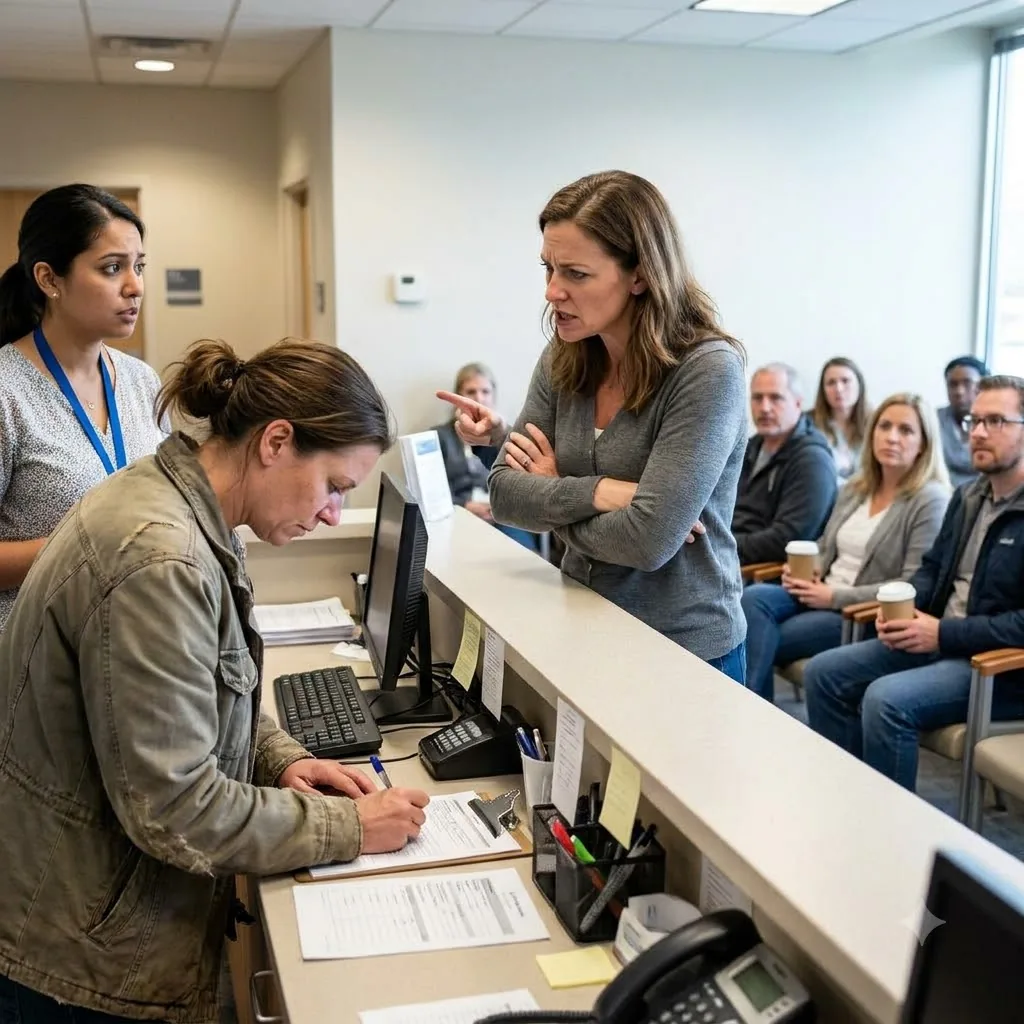
My cousin accused me of hiding an unethical gene-editing decision in the middle of a genetics clinic while I was signing Noah in, and she did it loud enough that people stopped sipping from paper water cups to stare at me. I was standing beside the check-in counter with a tablet in my hand and Noah’s printed lab report half out of a blue clinic folder when Sienna said, clear as a fire alarm, “Tell them what you did. Tell them why his report looks like that.”
Every head in that waiting area snapped our way.
The public side of the clinic was one of those bright, careful places that tried to look calm even when people were there for life-changing conversations. A little seating cluster sat within earshot of reception and the counseling hall. A mother with a diaper bag froze halfway into her chair. An older man lowered a magazine. A woman I would later hear called Denise leaned forward so fast her purse slid off her lap.
I still had the stylus in my hand.
“Sienna,” I said, keeping my voice even because I could already feel how fast this could get away from me, “lower your voice.”
“No,” she shot back. “You don’t get to do that and then act like this is a normal appointment.”
The receptionist looked up hard at that. So did Marisol Vega, the genetic counselor who had just come through the side door with a clipboard tucked to her ribs. She stopped three steps short of us.
“I’m going to ask everyone to keep this private,” Marisol said, careful and firm. “If there’s a concern, we can move to a counseling room.”
But Sienna had already figured out the power of saying everything in public first.
“She helped push an edit decision and hid it from family,” Sienna said, pointing at me, then at Noah, then at the report. “And now she’s standing here acting like it’s just intake paperwork.”
There are moments when you can feel your reputation leave your body before you can catch it. That was one of them.
Noah was beside the seating cluster with his coat over one arm, close enough to hear every word, far enough that it looked like even standing near me might make things worse for him. He said my name once, low, but Sienna plowed right over it.
“She knows exactly what I’m talking about,” Sienna said. “Look at the report. Look at the markers. She thinks nobody else can read this.”
The worst part was how convincing she sounded. Sienna worked around biotech people. She used terms fast and without hesitation, the way somebody does when they know most of the room won’t stop them for definitions. I heard phrases like “edited line,” “ethics violation,” and “concealed intervention,” and I watched strangers decide I was the person in the room who had done something ugly.
Denise whispered to the man beside her without taking her eyes off me. The mother with the diaper bag shifted her child closer. A staff member behind the counter stopped typing.
I set the tablet down before my hand squeezed it hard enough to crack the case.
“You are saying something serious in a public waiting area,” I told Sienna. “If you’re going to point to that report, then let people read the whole thing.”
“I already did,” she said.
That was the first time I looked directly at the printed pages instead of at her.
The report was clipped together, black-and-white, ordinary-looking in exactly the way dangerous paperwork often is. Patient name at the top. Collection date. Testing panel. Several columns of results. There was enough specialized wording on the front page to let someone like Sienna build a story around it before anybody slowed down.
Marisol stepped closer and held out a hand. “Let me see the report.”
Sienna grabbed the top page first and turned it outward like she was presenting evidence to a jury. “This section,” she said. “Right here. You don’t need a private room to know what this means.”
Marisol didn’t answer her right away. She looked at the page, then at the header, then lower down with the kind of focus that made the room quiet by inches.
I moved beside her, close enough to read over the edge of the paper. Sienna was talking again, still loud, still confident, still using Noah’s case as if she had the right to turn him into a public lecture.
I ignored her long enough to actually read.
And that was when I saw the problem with her whole accusation.
It wasn’t a hidden code or some dramatic note in red. It was a plain field most people would skim right past: specimen source.
I looked again to make sure I wasn’t forcing it into meaning what I wanted.
Specimen source. Confirmatory cell line.
Not embryonic. Not germline. Not anything that fit what Sienna was saying out loud to the room.
Marisol’s eyes stopped at the same place mine had.
Sienna was still talking when I lifted my finger and touched the line she should never have built her accusation around.
My cousin accused me of hiding an unethical gene-editing decision in the middle of a genetics clinic while I was signing Noah in, and she did it loud enough that people stopped sipping from paper water cups to stare at me. I was standing beside the check-in counter with a tablet in my hand and Noah’s printed lab report half out of a blue clinic folder when Sienna said, clear as a fire alarm, “Tell them what you did. Tell them why his report looks like that.”
Every head in that waiting area snapped our way.
The public side of the clinic was one of those bright, careful places that tried to look calm even when people were there for life-changing conversations. A little seating cluster sat within earshot of reception and the counseling hall. A mother with a diaper bag froze halfway into her chair. An older man lowered a magazine. A woman I would later hear called Denise leaned forward so fast her purse slid off her lap.
I still had the stylus in my hand.
“Sienna,” I said, keeping my voice even because I could already feel how fast this could get away from me, “lower your voice.”
“No,” she shot back. “You don’t get to do that and then act like this is a normal appointment.”
The receptionist looked up hard at that. So did Marisol Vega, the genetic counselor who had just come through the side door with a clipboard tucked to her ribs. She stopped three steps short of us.
“I’m going to ask everyone to keep this private,” Marisol said, careful and firm. “If there’s a concern, we can move to a counseling room.”
But Sienna had already figured out the power of saying everything in public first.
“She helped push an edit decision and hid it from family,” Sienna said, pointing at me, then at Noah, then at the report. “And now she’s standing here acting like it’s just intake paperwork.”
There are moments when you can feel your reputation leave your body before you can catch it. That was one of them.
Noah was beside the seating cluster with his coat over one arm, close enough to hear every word, far enough that it looked like even standing near me might make things worse for him. He said my name once, low, but Sienna plowed right over it.
“She knows exactly what I’m talking about,” Sienna said. “Look at the report. Look at the markers. She thinks nobody else can read this.”
The worst part was how convincing she sounded. Sienna worked around biotech people. She used terms fast and without hesitation, the way somebody does when they know most of the room won’t stop them for definitions. I heard phrases like “edited line,” “ethics violation,” and “concealed intervention,” and I watched strangers decide I was the person in the room who had done something ugly.
Denise whispered to the man beside her without taking her eyes off me. The mother with the diaper bag shifted her child closer. A staff member behind the counter stopped typing.
I set the tablet down before my hand squeezed it hard enough to crack the case.
“You are saying something serious in a public waiting area,” I told Sienna. “If you’re going to point to that report, then let people read the whole thing.”
“I already did,” she said.
That was the first time I looked directly at the printed pages instead of at her.
The report was clipped together, black-and-white, ordinary-looking in exactly the way dangerous paperwork often is. Patient name at the top. Collection date. Testing panel. Several columns of results. There was enough specialized wording on the front page to let someone like Sienna build a story around it before anybody slowed down.
Marisol stepped closer and held out a hand. “Let me see the report.”
Sienna grabbed the top page first and turned it outward like she was presenting evidence to a jury. “This section,” she said. “Right here. You don’t need a private room to know what this means.”
Marisol didn’t answer her right away. She looked at the page, then at the header, then lower down with the kind of focus that made the room quiet by inches.
I moved beside her, close enough to read over the edge of the paper. Sienna was talking again, still loud, still confident, still using Noah’s case as if she had the right to turn him into a public lecture.
I ignored her long enough to actually read.
And that was when I saw the problem with her whole accusation.
It wasn’t a hidden code or some dramatic note in red. It was a plain field most people would skim right past: specimen source.
I looked again to make sure I wasn’t forcing it into meaning what I wanted.
Specimen source. Confirmatory cell line.
Not embryonic. Not germline. Not anything that fit what Sienna was saying out loud to the room.
Marisol’s eyes stopped at the same place mine had.
Sienna was still talking when I lifted my finger and touched the line she should never have built her accusation around.