Story code: ST-001041
Part 3: The Page She Thought I Would Never Name
The label on the last page said FAMILY REPRODUCTIVE HISTORY ADDENDUM.
It was plain clinic language. No red warning box. No dramatic stamp. Just one extra page tucked behind the main report, the kind most people would never notice unless they were already reading for structure instead of scandal.
I knew that page.
I also knew exactly why I had kept my mouth shut until then.
Sienna saw me looking at it and moved fast. “That page isn’t relevant.”
Marisol’s eyes lifted to mine. “Is it attached to the report packet?”
“Yes,” I said.
Sienna held out her hand. “It’s family history. Not findings.”
Marisol did not give it back. She turned the page toward herself and read the header, then the first block under it. Her face did not do much, but she stopped trying to usher us toward privacy. That told me enough.
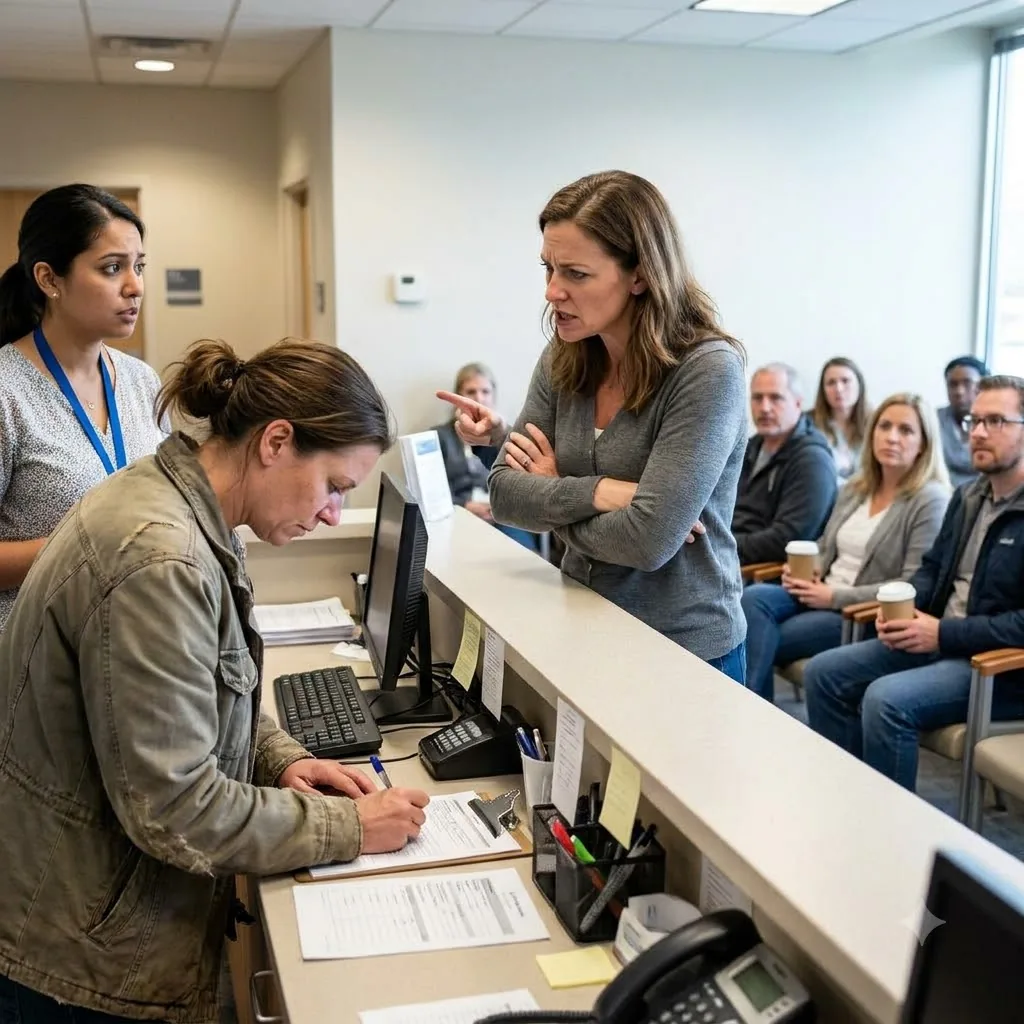
The room had that brittle, waiting stillness again. Reception phones kept ringing in the background. A little kid kicked the leg of a chair twice. Denise stood up without seeming to realize she had done it.
“Aly,” Marisol said carefully, “is this page part of the context your cousin is trying to use?”
That was the line I had been trying not to cross.
Noah was close enough now that I could see his knuckles against the coat draped over his arm. He wasn’t speaking. He was just looking at the paper in Marisol’s hands.
I said, “Yes.”
Sienna cut in immediately. “Then say it. Say why you kept the rest of the family out of it.”
I turned toward her. “You are the one who dragged family history into a waiting room.”
“Because you were letting everyone think this was routine.”
“It is a routine intake for this clinic,” I said. “What you did was take a report about a confirmatory cell line and announce to strangers that I pushed an unethical edit decision. Those are not the same thing.”
She lifted one shoulder. “Then explain the addendum.”
That was the irreversible pressure point. I could feel it sitting there between us more clearly than anything else that had happened all morning. If I said less, she would keep twisting the silence into guilt. If I said more, I would put Noah’s family medical history into a room full of people who had no right to it.
Marisol looked at Noah. “I need to ask whether you want this discussion moved private before anything further is said.”
Before he answered, Sienna said, “If they move it private now, everybody here will know exactly what that means.”
Denise made a face at that. The older man with the magazine muttered, “That’s not how this works,” under his breath, but he said it to the room, not to me.
Noah finally spoke. His voice was flat and tired. “She already said enough.”
It wasn’t permission in any formal sense. It was worse. It was the sound of somebody watching the damage spread and knowing there was no clean version left.
I nodded once.
“Fine,” I said. “Then let’s use the whole packet instead of the chunk she performed with.”
Marisol kept hold of the pages while I pointed. “The addendum is there because this clinic documents inherited reproductive history when a family has already had a prior embryo-screening discussion tied to a known mutation risk. That’s the context. Not a secret edit. Not me signing off on anything. A documented history discussion.”
Sienna opened her mouth.
I didn’t let her get there first this time.
“And the reason the report uses a confirmatory cell line,” I said, louder now, “is because the earlier family issue wasn’t about changing Noah. It was about confirming whether a previously identified lab finding matched a cultured sample used to check risk interpretation. That is why the methods section is narrow. That is why the specimen source matters. That is why your accusation doesn’t fit the paper you waved around.”
A silence hit hard enough that I heard the printer behind reception start feeding a page.
Sienna laughed once, sharp and thin. “You’re packaging it nicely.”
“No,” Marisol said. She looked down at the addendum again, then at the front page, and her tone got more exact. “The packet distinguishes family reproductive history from this patient’s confirmatory testing. Those are separate categories. Publicly merging them into a claim that Ms. Mercer made or hid a completed unethical gene-editing decision is not supported by the report.”
Sienna’s chin lifted. “You don’t know what she said to people outside this clinic.”
“Neither do you from this paper,” I said.
Marisol’s finger moved to a line I had missed in my first panic scan. “There’s also a notation here,” she said, and read it aloud. “Patient-side support person only. No authorization on file for extended family release.”
The words seemed to land in the room one by one.
Noah looked at the floor.
Then Marisol looked up at Sienna and said, with the whole waiting area listening, “Ms. Mercer, based on this report packet, you should not have been handling or publicly interpreting these pages at all.”
That was the moment Sienna’s version stopped sounding bold and started sounding exposed.