Story code: ST-001121
Part 2: The Cryptographic Trail
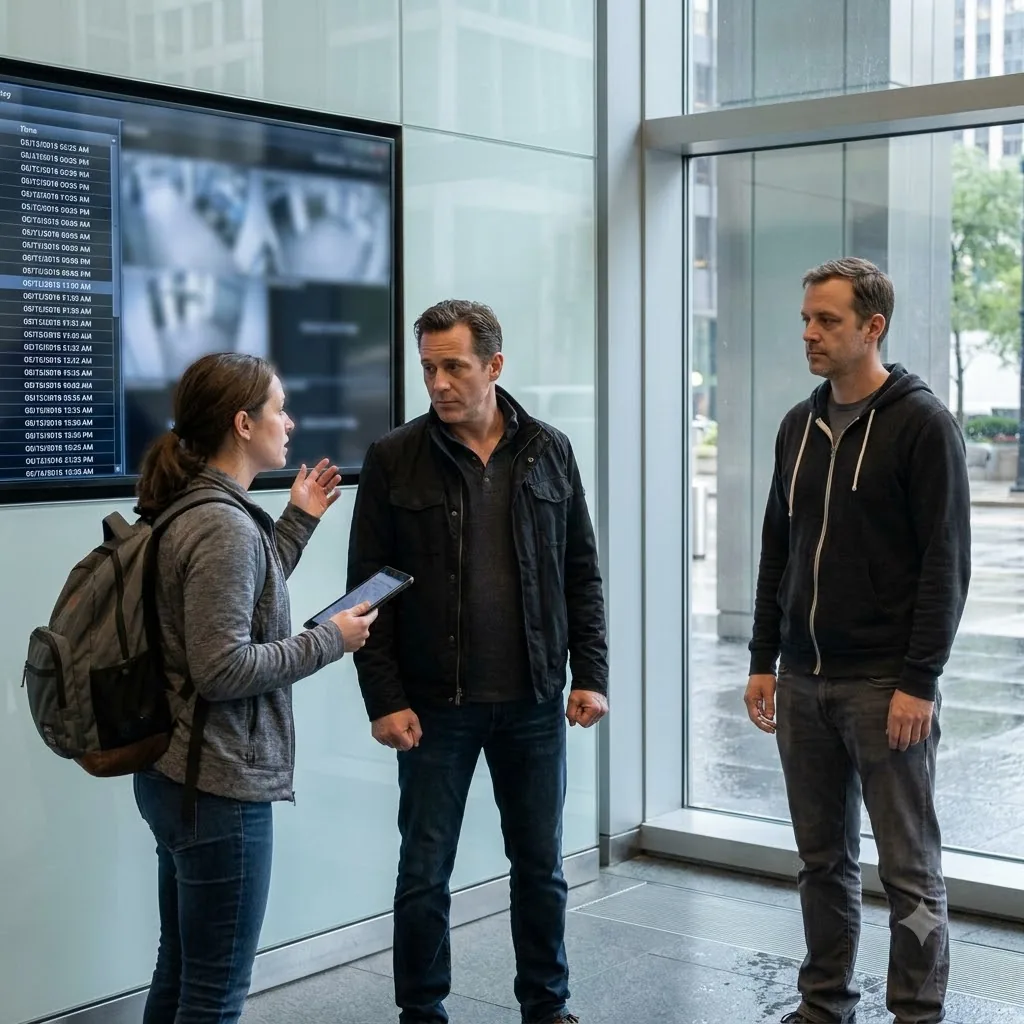
The security footage shows Julian Miller holding his corporate tablet out to Sarah Jenkins, displaying a custom-generated PDF report. According to the document Julian presented, the incoming mail queue had flagged the 08:58 AM message from the university’s academic department chair as originating from an untrusted external IP address, marking it as a suspected spoof. Sarah took the tablet, her eyes scanning the lines of text.
“The headers show it bypassed our standard SPF checks,” Julian said, his voice rising in confidence as he looked at the onlookers in the lobby. “He had a friend set up a temporary SMTP server to send this. It’s a common trick to get past automated HR screenings, and it’s clear he’s trying to scam his way into this engineering team.”
David remained standing by the visitor desk, his posture rigid but calm. “If you look at the raw mail transfer agent logs, Sarah, the inbound firewall applies an immutable, cryptographic receipt to every external message before it hits the internal mail queue. The signature is applied automatically.”
Sarah tapped her screen, switching from Julian’s custom PDF report to the live Vance Tech administration console. Her fingers hovered over the keyboard as she pulled up the direct inbound logs for the 08:58 AM window.
On the screen, the raw log entry for the reference email appeared. The logs did not show the untrusted external IP address Julian had claimed. Instead, they revealed a direct, authenticated relay from the university’s official outbound mail server. More importantly, the system log showed that the cryptographic timestamp, burned into the email header by Vance Tech’s own firewall at exactly 08:58 AM, matched the university’s outbound server record down to the millisecond.
Julian shifted his weight, his fingers twitching against the edge of his employee badge. He glanced at the other candidates who were watching him. “That log can be delayed. It’s possible the server queued it hours ago, or it was manipulated before it hit the gateway.”
“The gateway firewall uses a hardware security module,” David pointed out, pointing at the log detail on the screen. “The timestamp is signed by an internal key. It cannot be delayed or altered after it enters the network.”
Sarah Jenkins looked up from the tablet, her sharp gaze shifting from David’s calm demeanor to Julian’s increasingly agitated movements. She did not call security to escort David out. Instead, she tapped her screen again, querying the system to see exactly when and how Julian had obtained the data for his report.
The query results on Sarah’s screen began to paint a very different picture. The IT audit log showed that Julian had not stumbled upon this message through automated system alerts. Instead, his admin credentials had been used to run a target search on the visitor scheduling database at exactly 08:30 AM, well before David had even walked into the building. The proof lane was starting to open, contradicting the public story of an administrative coincidence, and leaving a digital trail that raised an urgent question: how had an IT administrator known to monitor a random candidate’s reference check?