Story code: ST-000347
Part 1: The Accusation on the Screen
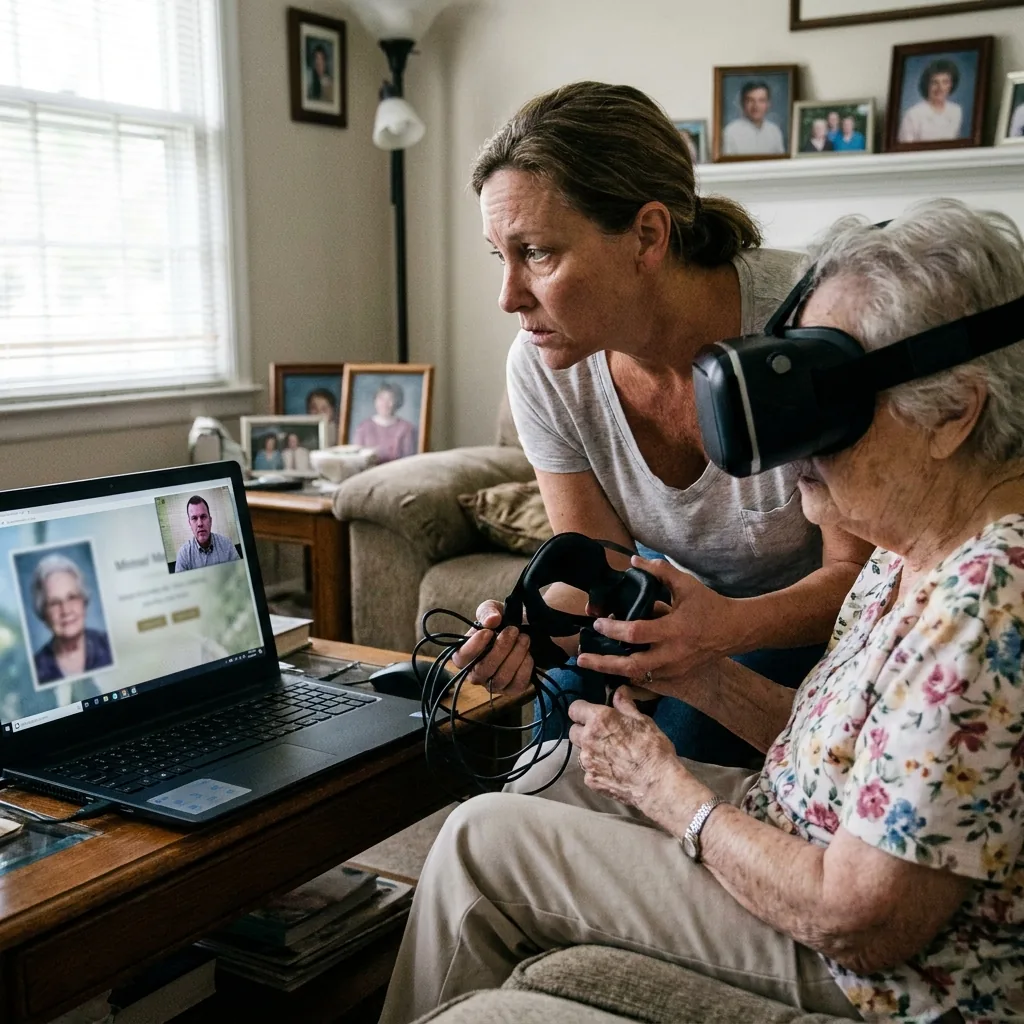
I was adjusting the headset station in our living room, helping my elderly aunt navigate the VR memorial link for my mother Elena’s service, when my cousin Derek’s voice cut through the stream to accuse me of neglect. In front of fifty remote mourners, Derek claimed my months of daily caretaking were actually a selfish bid to isolate my mother and control her final days. The sudden public shaming left me frozen at the stream dashboard, staring at his smug video tile while the chat feed erupted with confused questions from family friends.
Naomi Price, who was sitting next to me helping moderate the stream, stopped typing. She reached over and tapped the edge of the laptop, her eyes darting between me and the participant queue. Across the room, Maya Moreno stood completely still, holding a bottle of water she had been about to hand to Pastor Ben Hargrove.
Pastor Ben cleared his throat, his hand hovering over his tablet. “Derek, we are here to honor Elena’s life. Perhaps we can keep the focus on her memory.”
“I am honoring her,” Derek said, his voice echoing through the living room speakers from his tidy home office tile on the screen. He adjusted his collar, leaning closer to his webcam. “But we can’t pretend everything was perfect. Alyssa shut the family out. She insisted on doing everything herself, reframing her hoarding of my aunt’s time as some kind of heroic sacrifice. She made decisions about medical care and visitors without consulting anyone, and now my aunt is gone. We deserve to know why she was kept from us.”
A message popped up in the chat feed from one of our cousins in Chicago: *Is this true? We tried to call in October.*
My fingers hovered over the keyboard. My mother’s VR memorial room-a digital garden we had spent hours rendering so distant relatives could pay their respects-floated on the second monitor. I had set up the platform specifically to help older family members connect, spending my nights after her death scanning photos and setting up comfort protocols. Now, the very act of hosting this space was being twisted into evidence of my own selfishness.
“I kept the family updated weekly, Derek,” I said, keeping my voice as flat and controlled as possible. “You had the link to the care coordinator system from day one.”
“An automated email system isn’t communication, Alyssa,” Derek countered immediately, cutting in before I could finish. “That was just a shield to keep us from seeing what was actually happening. You wanted total control, and you used her illness to get it.”
Naomi leaned in, her voice a low whisper. “Alyssa, I can mute him. Just say the word.”
I looked down at the printed memorial order sheet in my lap, then back at the stream dashboard. If I muted him, it would look like a confession. The family would think I was hiding the truth. But as I stared at the dashboard, I noticed a small notification blinking at the bottom of the VR memorial link portal. The digital tribute system was built directly on top of the care coordination network we had used during her hospice months, meaning the two databases were still linked. Underneath Derek’s glowing video tile, a dry, time-stamped log sat waiting in the system’s archive-a record that contained the exact history of who had actually logged in, who had accepted care tasks, and who had ignored them.
I was adjusting the headset station in our living room, helping my elderly aunt navigate the VR memorial link for my mother Elena’s service, when my cousin Derek’s voice cut through the stream to accuse me of neglect. In front of fifty remote mourners, Derek claimed my months of daily caretaking were actually a selfish bid to isolate my mother and control her final days. The sudden public shaming left me frozen at the stream dashboard, staring at his smug video tile while the chat feed erupted with confused questions from family friends.
Naomi Price, who was sitting next to me helping moderate the stream, stopped typing. She reached over and tapped the edge of the laptop, her eyes darting between me and the participant queue. Across the room, Maya Moreno stood completely still, holding a bottle of water she had been about to hand to Pastor Ben Hargrove.
Pastor Ben cleared his throat, his hand hovering over his tablet. “Derek, we are here to honor Elena’s life. Perhaps we can keep the focus on her memory.”
“I am honoring her,” Derek said, his voice echoing through the living room speakers from his tidy home office tile on the screen. He adjusted his collar, leaning closer to his webcam. “But we can’t pretend everything was perfect. Alyssa shut the family out. She insisted on doing everything herself, reframing her hoarding of my aunt’s time as some kind of heroic sacrifice. She made decisions about medical care and visitors without consulting anyone, and now my aunt is gone. We deserve to know why she was kept from us.”
A message popped up in the chat feed from one of our cousins in Chicago: *Is this true? We tried to call in October.*
My fingers hovered over the keyboard. My mother’s VR memorial room-a digital garden we had spent hours rendering so distant relatives could pay their respects-floated on the second monitor. I had set up the platform specifically to help older family members connect, spending my nights after her death scanning photos and setting up comfort protocols. Now, the very act of hosting this space was being twisted into evidence of my own selfishness.
“I kept the family updated weekly, Derek,” I said, keeping my voice as flat and controlled as possible. “You had the link to the care coordinator system from day one.”
“An automated email system isn’t communication, Alyssa,” Derek countered immediately, cutting in before I could finish. “That was just a shield to keep us from seeing what was actually happening. You wanted total control, and you used her illness to get it.”
Naomi leaned in, her voice a low whisper. “Alyssa, I can mute him. Just say the word.”
I looked down at the printed memorial order sheet in my lap, then back at the stream dashboard. If I muted him, it would look like a confession. The family would think I was hiding the truth. But as I stared at the dashboard, I noticed a small notification blinking at the bottom of the VR memorial link portal. The digital tribute system was built directly on top of the care coordination network we had used during her hospice months, meaning the two databases were still linked. Underneath Derek’s glowing video tile, a dry, time-stamped log sat waiting in the system’s archive-a record that contained the exact history of who had actually logged in, who had accepted care tasks, and who had ignored them.