Story code: ST-000663
Part 1: He Used My Name Like a Trigger
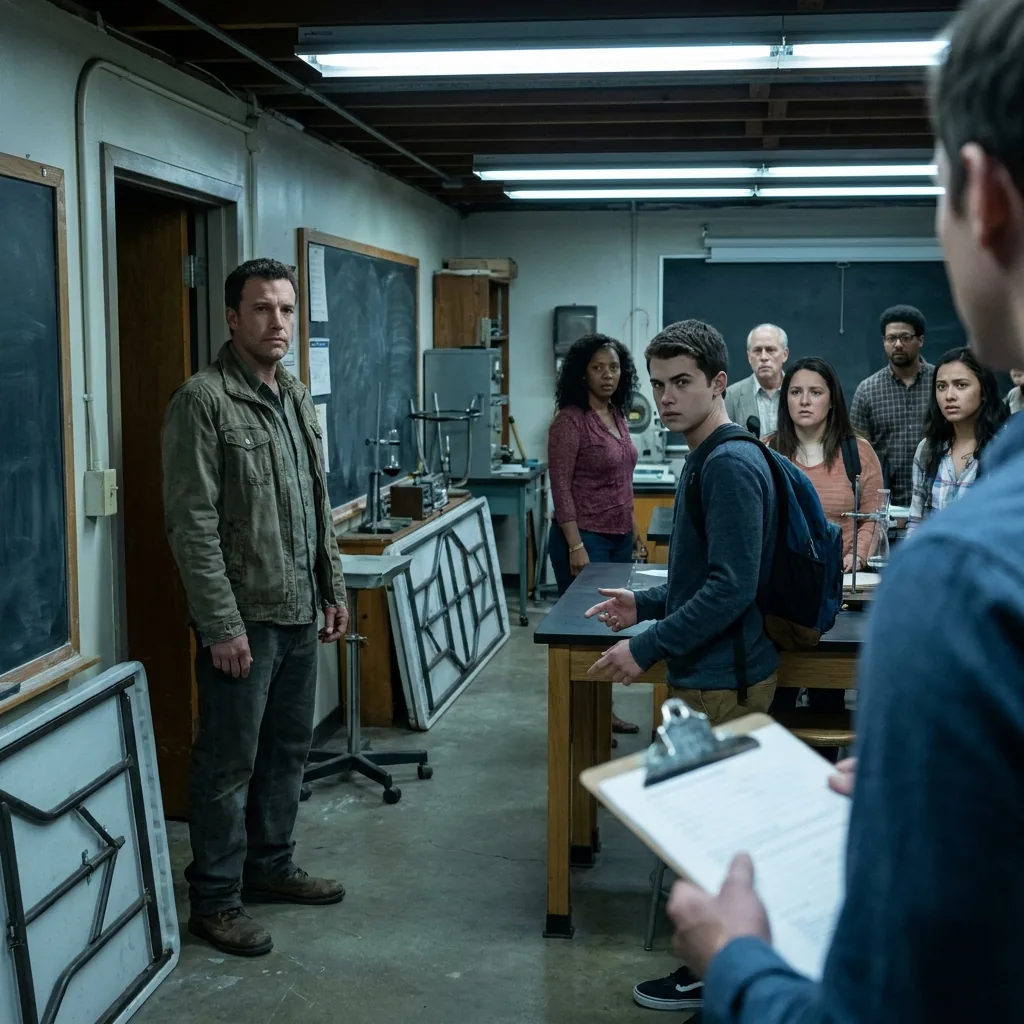
My cousin walked into the physics basement at Roosevelt High, said one sentence, and a student helper used it to turn half the room on me before I could even set down my clipboard. We were in the middle of open lab night, kids winding copper wire at the coil bench, parents pouring lemonade by the old fridge, when Eli Morales stopped me near the clear plastic supply bin and said, very flat, “If anybody asks, don’t lock the north cabinet again.” I stared at him because there is no north cabinet in that basement, and before I could answer, Mason Reed repeated the same line louder and Tasha Bell swung around from the refreshment table like I’d already been caught doing something.
I work those nights. I run sign-ins, hand out goggles, count batteries back into trays, and keep people from wandering into the supply cage. I know who belongs down there. I know where things are. Eli is my cousin, but the man standing by the coil bench that night looked older than the Eli I knew last Thanksgiving. Same mouth, same narrow shoulders, same habit of holding still when everybody else is moving, but older around the eyes and too sure of the room.
He did not look around like a visitor. He stepped past a rolling cart without glancing at it, reached for the side of the clear bin where we keep extra leads, and stopped me with that line like he had practiced where to drop it.
“What north cabinet?” I said.
He only looked at me and tipped his chin toward Mason.
That was the first bad part.
The second bad part was Mason stepping in before I got another word out.
“You heard him,” Mason said. He had a bundle of alligator clips in one hand and kept touching the front pocket of his hoodie with the other. “She did it again. She locked the north cabinet and now everybody’s acting like nobody knows what happened.”
Three middle school boys at the electromagnet table stopped talking. Dr. Laura Kemp looked up from the far counter with her ring of keys hanging from two fingers. Tasha came around the refreshment table with a stack of napkins and said, louder than she needed to, “Nina, if supplies were blocked off from the kids, you need to just say that. We were told this already.”
We were told this already.
That was Tasha using Mason’s words like she had been there for the first version.
I kept my clipboard against my side and said, “There is no north cabinet.”
Mason blinked once, then said, too clean, “The tall gray one by the cage.”
“That’s the west wall,” I said.
He opened his mouth, shut it, then looked toward Eli.
It was quick. Most people would have missed it. I did not.
Eli had one hand in his jacket pocket. The other hand rested on the edge of the coil bench, casual as anything. “Doesn’t matter what wall it’s on,” he said. “What matters is she knows what he means.”
That line landed exactly how he meant it to land. Dr. Kemp started walking toward us. Parents got quiet in pieces instead of all at once. The room kept running, but softer. A boy dropped a washer into a tray and the sound jumped.
“Nina?” Dr. Kemp said.
I said, “Ask him what’s in it.”
Mason answered too fast. “Parts.”
“What parts?”
He shifted the alligator clips from one hand to the other. “Lab parts.”
Tasha gave a short breath through her nose and turned to Dr. Kemp. “See? This is what I mean. Everybody has to do cleanup when someone decides to make a point.”
I said, “Ask him what I locked. Ask him what cabinet he’s talking about. Ask him why he’s using Eli’s words.”
Nobody answered that part. Eli stayed where he was, not close enough to be standing with Mason and not far enough to be separate from him either.
Then he pulled something out of his jacket pocket and set it on the bench beside the bin.
It was a postcard.
Not a note card. A postcard with a glossy picture on the front and bent corners like it had ridden around in somebody’s pocket for a while. The picture side showed the old Roosevelt front steps before they replaced the handrail. On the back, my family nickname was written across the middle in blocky blue ink: Nee. Nobody at school calls me that. Only family does, and not even all of them.
Dr. Kemp reached for it. Eli put two fingers over one corner first, then let go.
“Why do you have that?” I asked.
He said, “Because you kept saying you’d need proof.”
I took one step toward the bench. Tasha leaned in too, neck stretched, ready to read over Dr. Kemp’s hand. Mason had gone very still.
The stamp was real. The postmark was real too, dark and sharp across the top edge.
The year on it was four years from now.
Dr. Kemp read the date out loud because she thought she was correcting herself. She said the month, then the day, then stopped on the year and looked again.
Nobody laughed.
Nobody said prank, not yet.
I looked from the card to Eli, then to Mason, and back to Eli. My cousin did not explain the postcard. He only nodded once toward Mason like there was still a job to finish.
Mason swallowed and tried the line again, weaker this time. “She locked the north cabinet.”
That wrong word hit harder the second time, because now there was a postcard from years ahead sitting on the coil bench and my older cousin was acting like the basement had a direction it has never had.
My cousin walked into the physics basement at Roosevelt High, said one sentence, and a student helper used it to turn half the room on me before I could even set down my clipboard. We were in the middle of open lab night, kids winding copper wire at the coil bench, parents pouring lemonade by the old fridge, when Eli Morales stopped me near the clear plastic supply bin and said, very flat, “If anybody asks, don’t lock the north cabinet again.” I stared at him because there is no north cabinet in that basement, and before I could answer, Mason Reed repeated the same line louder and Tasha Bell swung around from the refreshment table like I’d already been caught doing something.
I work those nights. I run sign-ins, hand out goggles, count batteries back into trays, and keep people from wandering into the supply cage. I know who belongs down there. I know where things are. Eli is my cousin, but the man standing by the coil bench that night looked older than the Eli I knew last Thanksgiving. Same mouth, same narrow shoulders, same habit of holding still when everybody else is moving, but older around the eyes and too sure of the room.
He did not look around like a visitor. He stepped past a rolling cart without glancing at it, reached for the side of the clear bin where we keep extra leads, and stopped me with that line like he had practiced where to drop it.
“What north cabinet?” I said.
He only looked at me and tipped his chin toward Mason.
That was the first bad part.
The second bad part was Mason stepping in before I got another word out.
“You heard him,” Mason said. He had a bundle of alligator clips in one hand and kept touching the front pocket of his hoodie with the other. “She did it again. She locked the north cabinet and now everybody’s acting like nobody knows what happened.”
Three middle school boys at the electromagnet table stopped talking. Dr. Laura Kemp looked up from the far counter with her ring of keys hanging from two fingers. Tasha came around the refreshment table with a stack of napkins and said, louder than she needed to, “Nina, if supplies were blocked off from the kids, you need to just say that. We were told this already.”
We were told this already.
That was Tasha using Mason’s words like she had been there for the first version.
I kept my clipboard against my side and said, “There is no north cabinet.”
Mason blinked once, then said, too clean, “The tall gray one by the cage.”
“That’s the west wall,” I said.
He opened his mouth, shut it, then looked toward Eli.
It was quick. Most people would have missed it. I did not.
Eli had one hand in his jacket pocket. The other hand rested on the edge of the coil bench, casual as anything. “Doesn’t matter what wall it’s on,” he said. “What matters is she knows what he means.”
That line landed exactly how he meant it to land. Dr. Kemp started walking toward us. Parents got quiet in pieces instead of all at once. The room kept running, but softer. A boy dropped a washer into a tray and the sound jumped.
“Nina?” Dr. Kemp said.
I said, “Ask him what’s in it.”
Mason answered too fast. “Parts.”
“What parts?”
He shifted the alligator clips from one hand to the other. “Lab parts.”
Tasha gave a short breath through her nose and turned to Dr. Kemp. “See? This is what I mean. Everybody has to do cleanup when someone decides to make a point.”
I said, “Ask him what I locked. Ask him what cabinet he’s talking about. Ask him why he’s using Eli’s words.”
Nobody answered that part. Eli stayed where he was, not close enough to be standing with Mason and not far enough to be separate from him either.
Then he pulled something out of his jacket pocket and set it on the bench beside the bin.
It was a postcard.
Not a note card. A postcard with a glossy picture on the front and bent corners like it had ridden around in somebody’s pocket for a while. The picture side showed the old Roosevelt front steps before they replaced the handrail. On the back, my family nickname was written across the middle in blocky blue ink: Nee. Nobody at school calls me that. Only family does, and not even all of them.
Dr. Kemp reached for it. Eli put two fingers over one corner first, then let go.
“Why do you have that?” I asked.
He said, “Because you kept saying you’d need proof.”
I took one step toward the bench. Tasha leaned in too, neck stretched, ready to read over Dr. Kemp’s hand. Mason had gone very still.
The stamp was real. The postmark was real too, dark and sharp across the top edge.
The year on it was four years from now.
Dr. Kemp read the date out loud because she thought she was correcting herself. She said the month, then the day, then stopped on the year and looked again.
Nobody laughed.
Nobody said prank, not yet.
I looked from the card to Eli, then to Mason, and back to Eli. My cousin did not explain the postcard. He only nodded once toward Mason like there was still a job to finish.
Mason swallowed and tried the line again, weaker this time. “She locked the north cabinet.”
That wrong word hit harder the second time, because now there was a postcard from years ahead sitting on the coil bench and my older cousin was acting like the basement had a direction it has never had.