Story code: ST-001195
Part 4: The Cold Log
Leo’s hand stayed on the plastic switch, his knuckles tense, but he did not pull it. The digital displays on the incubation tanks behind him flickered; shutting off the main breaker would cut the heating elements for his active cultures, destroying months of his own work. He stood motionless, his arm raised against the wall.
I pressed the enter key.
The analyzer whirred, its internal pistons compressing with a dull, rhythmic thud. The status line on the screen changed from blue to amber as the laser spectrometer fired. Leo slowly lowered his hand from the wall switch. He sat down on a plastic stool by the door, his arms crossed tightly over his chest, his eyes fixed on the concrete floor.
For four minutes, the only sound in the room was the steady hum of the pump and the periodic click of the analyzer’s internal valves. Neither of us spoke.
The screen flashed green. A single file icon appeared in the center of the display, indicating the report had been generated and queued for transmission to the registry. The chemical analysis read: Sodium Chloride 0.9%, Water 99.1%. There were no recombinant proteins, no active vectors, and no biological hazards.
“It is clean,” I said.
Leo did not look up. “I told you it was just dye.”
“You told me it was a leak,” I said. “You wanted to force me to bypass the protocol.”
I printed the log sheet. The small thermal printer attached to the analyzer spat out a narrow strip of paper. I folded it once and placed it in the logbook on the desk.
I walked to the wall hook near the door, took Leo’s spare set of garage keys, and slid them off the ring. I then opened the master lockbox beneath the bench-the one containing the reagents and the startup keys for the incubator-and changed the four-digit combination, spinning the dials until they clicked into a new sequence.
“What are you doing?” Leo asked, his voice flat.
“Your access to the shared materials is suspended,” I said, placing his spare keys on the metal bench between us. “The licensing report went through. I will submit the official amendment tomorrow morning detailing the false alarm.”
Leo stood up, picked up his keys from the bench, and slid them into his pocket. He did not argue. He walked to the side door, opened it, and stepped out into the damp night air, leaving the door slightly ajar.
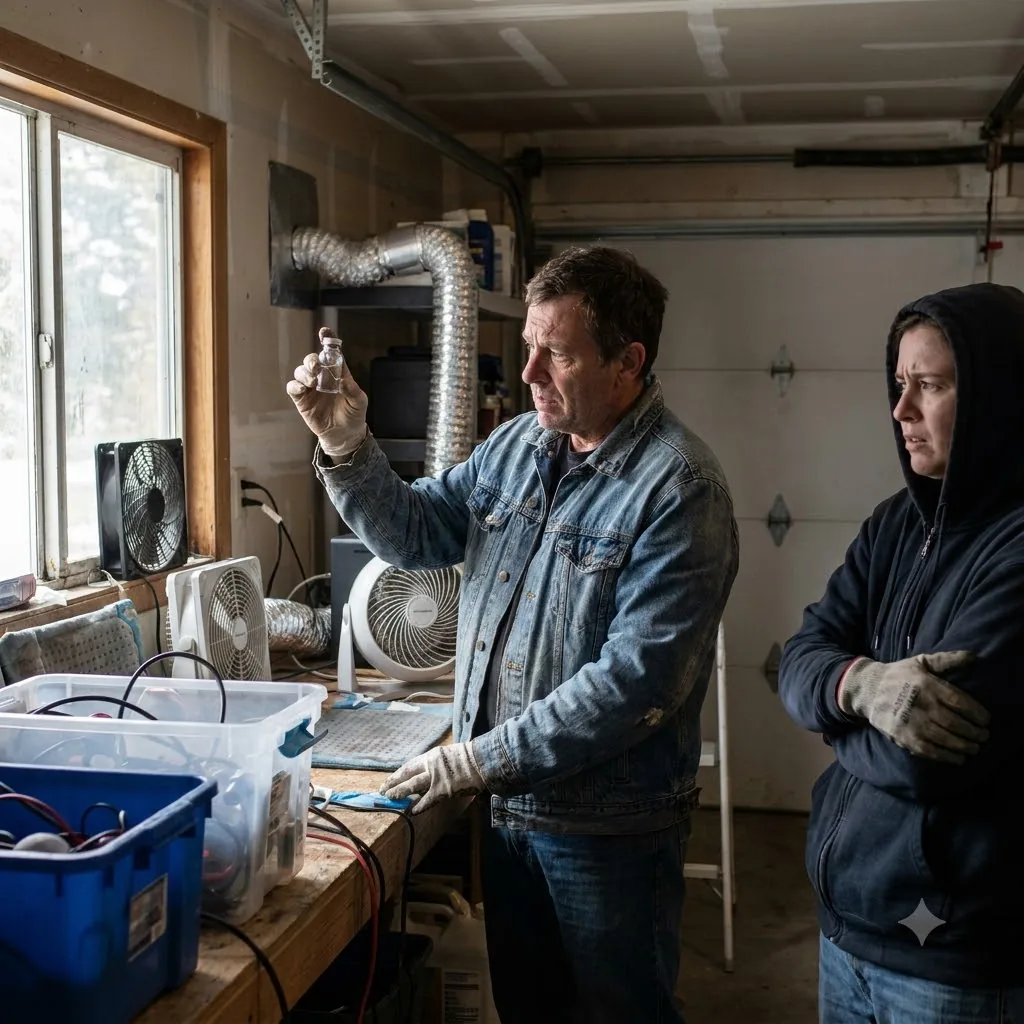
I closed the door, turned the deadbolt, and returned to the workbench. I wiped down the stainless steel surface with a disinfectant cloth, the smell of isopropyl alcohol filling the quiet garage as the ventilation fans continued their steady, monotonous hum.