Story code: ST-000863
Part 1: The Kid at the Welcome Table
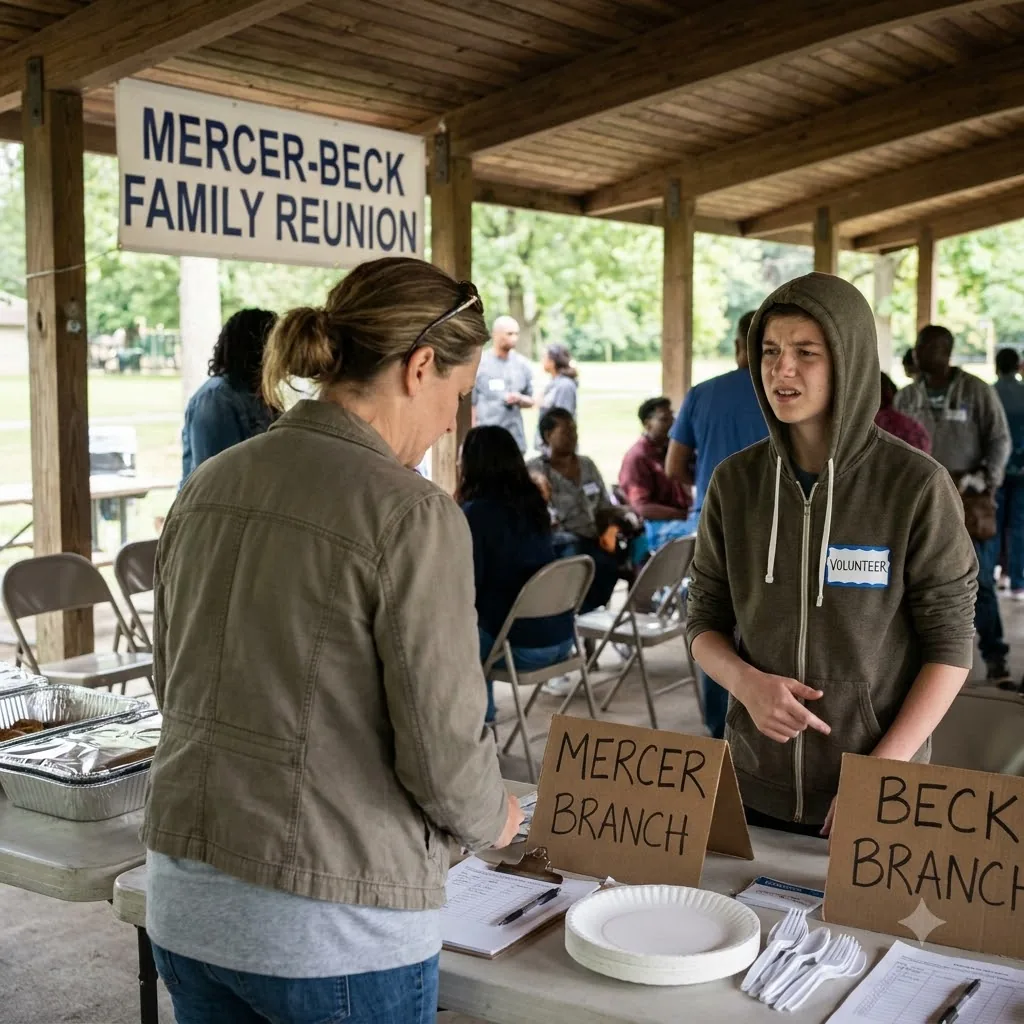
The first person who tried to keep Dana Mercer out of our family reunion was not Lori Beck with her host lanyard and clipboard. It was a boy at the welcome table by the pavilion entrance, standing between a stack of printed name tags and the drink coolers, repeating a polished line at Dana while she stood there holding a casserole carrier and a white envelope like any other relative arriving for lunch. Before Dana could answer, Aunt Renee used the same exact wording to blame her in front of everybody close enough to hear.
I say it that way because the order matters.
By the time Dana reached the folding table, people were still setting down foil trays, somebody was arguing about where the Mercer branch sign should go, and two little girls were weaving through chair legs with paper plates. Lori was ten feet away behind the main check-in setup with the host lanyard on, clipping something onto the board with the master tag sheets. She did not step forward first. Evan Beck did.
He had one of the extra volunteer tags hanging crooked on his shirt and a black marker in his hand. He moved fast enough to stop Dana before she could set the casserole down on the table corner.
He said, very clearly, “Hi, before you come in, you need to take the guest correction tag because that branch placement isn’t active for you today.”
The sentence sounded practiced the second it landed. Not because he was loud. Because every word came out in one smooth strip, the way a kid recites something adults have told him not to mess up.
Dana stopped. She did not push past him. She shifted the casserole carrier to her other hand and said, “What correction tag?”
Evan looked down at the printed tags in his other hand before answering.
“The guest correction tag,” he said again. “You’re supposed to wear the corrected one before you join the pavilion seating.”
That was when Aunt Renee, from beside the desserts, raised her voice and said, “Dana, if they told you to take the correction tag, just take it. Don’t start trouble at check-in.”
Those words turned heads faster than the first line had. A few people near the drink coolers went quiet. One uncle halfway through unfolding a chair stopped and looked over. Dana kept her eyes on Evan, not on Renee.
“What does corrected mean here?” she asked him.
He opened his mouth, closed it, and then held out one of the tags toward her. From where I was standing near the tea urns, I could see only that it had thick black printing across the top and a handwritten line beneath it.
Aunt Renee stepped closer and said, “It means exactly what he said. This is a family reunion, not a free-for-all.”
Dana turned her head just enough to look at her. “You just used his words.”
Renee answered too quickly. “Because they fit.”
That was the first public harm, and it worked for a minute. The line made Dana sound like she was trying to enter under the wrong label, and Renee saying it again gave it weight. That is how those scenes spread: one person delivers the phrase, and another adult repeats it before anyone asks what it means.
Dana set the envelope on the folding table but kept hold of the casserole carrier. “Evan,” she said, still controlled, “who told you to say correction?”
He looked past her shoulder toward the check-in area. It was quick, but it was long enough for other people to notice the direction. Lori still had the clipboard in front of her. She was sorting tags by sheet and not looking up.
“It’s the welcome line,” Evan said.
“For who?” Dana asked.
“For arrivals,” he said.
Miles Carter came in from the side carrying a sleeve of bottled water. He set it down under the branch signs and glanced at the tag in Evan’s hand. “We don’t have a welcome line,” he said. “We have names and table directions.”
Nobody snapped at him because he said it like a fact, not a challenge.
Dana finally took the offered tag, but only between two fingers. She did not put it on. She looked at it, then at the half-peeled stub still attached at the bottom. “Guest correction,” she read out. Then she looked back at Evan. “What exactly is being corrected?”
Evan repeated the phrase again, almost word for word, except this time he said, “Your branch placement isn’t active.”
Miles frowned. “Active?”
That was the word that did not belong there.
It hung in the air because nothing at that pavilion was active or inactive. We had handwritten branch signs taped to coolers. We had folding chairs, baked beans, and name tags sorted by family line. Nobody talked that way at reunions, and certainly not a kid handing out stickers.
Dana held the tag stub in one hand and the full tag in the other. “Evan,” she said, very evenly, “what does active mean on a family name tag?”
He looked at the tag again before answering, and when he did, Aunt Renee stopped talking.
That was the moment the whole thing shifted from rude to strange, because if the line had been his, he would not have needed to read the tag to explain one word on it.
The first person who tried to keep Dana Mercer out of our family reunion was not Lori Beck with her host lanyard and clipboard. It was a boy at the welcome table by the pavilion entrance, standing between a stack of printed name tags and the drink coolers, repeating a polished line at Dana while she stood there holding a casserole carrier and a white envelope like any other relative arriving for lunch. Before Dana could answer, Aunt Renee used the same exact wording to blame her in front of everybody close enough to hear.
I say it that way because the order matters.
By the time Dana reached the folding table, people were still setting down foil trays, somebody was arguing about where the Mercer branch sign should go, and two little girls were weaving through chair legs with paper plates. Lori was ten feet away behind the main check-in setup with the host lanyard on, clipping something onto the board with the master tag sheets. She did not step forward first. Evan Beck did.
He had one of the extra volunteer tags hanging crooked on his shirt and a black marker in his hand. He moved fast enough to stop Dana before she could set the casserole down on the table corner.
He said, very clearly, “Hi, before you come in, you need to take the guest correction tag because that branch placement isn’t active for you today.”
The sentence sounded practiced the second it landed. Not because he was loud. Because every word came out in one smooth strip, the way a kid recites something adults have told him not to mess up.
Dana stopped. She did not push past him. She shifted the casserole carrier to her other hand and said, “What correction tag?”
Evan looked down at the printed tags in his other hand before answering.
“The guest correction tag,” he said again. “You’re supposed to wear the corrected one before you join the pavilion seating.”
That was when Aunt Renee, from beside the desserts, raised her voice and said, “Dana, if they told you to take the correction tag, just take it. Don’t start trouble at check-in.”
Those words turned heads faster than the first line had. A few people near the drink coolers went quiet. One uncle halfway through unfolding a chair stopped and looked over. Dana kept her eyes on Evan, not on Renee.
“What does corrected mean here?” she asked him.
He opened his mouth, closed it, and then held out one of the tags toward her. From where I was standing near the tea urns, I could see only that it had thick black printing across the top and a handwritten line beneath it.
Aunt Renee stepped closer and said, “It means exactly what he said. This is a family reunion, not a free-for-all.”
Dana turned her head just enough to look at her. “You just used his words.”
Renee answered too quickly. “Because they fit.”
That was the first public harm, and it worked for a minute. The line made Dana sound like she was trying to enter under the wrong label, and Renee saying it again gave it weight. That is how those scenes spread: one person delivers the phrase, and another adult repeats it before anyone asks what it means.
Dana set the envelope on the folding table but kept hold of the casserole carrier. “Evan,” she said, still controlled, “who told you to say correction?”
He looked past her shoulder toward the check-in area. It was quick, but it was long enough for other people to notice the direction. Lori still had the clipboard in front of her. She was sorting tags by sheet and not looking up.
“It’s the welcome line,” Evan said.
“For who?” Dana asked.
“For arrivals,” he said.
Miles Carter came in from the side carrying a sleeve of bottled water. He set it down under the branch signs and glanced at the tag in Evan’s hand. “We don’t have a welcome line,” he said. “We have names and table directions.”
Nobody snapped at him because he said it like a fact, not a challenge.
Dana finally took the offered tag, but only between two fingers. She did not put it on. She looked at it, then at the half-peeled stub still attached at the bottom. “Guest correction,” she read out. Then she looked back at Evan. “What exactly is being corrected?”
Evan repeated the phrase again, almost word for word, except this time he said, “Your branch placement isn’t active.”
Miles frowned. “Active?”
That was the word that did not belong there.
It hung in the air because nothing at that pavilion was active or inactive. We had handwritten branch signs taped to coolers. We had folding chairs, baked beans, and name tags sorted by family line. Nobody talked that way at reunions, and certainly not a kid handing out stickers.
Dana held the tag stub in one hand and the full tag in the other. “Evan,” she said, very evenly, “what does active mean on a family name tag?”
He looked at the tag again before answering, and when he did, Aunt Renee stopped talking.
That was the moment the whole thing shifted from rude to strange, because if the line had been his, he would not have needed to read the tag to explain one word on it.