Story code: ST-001176
Part 1: The Glitch at Terminal 4
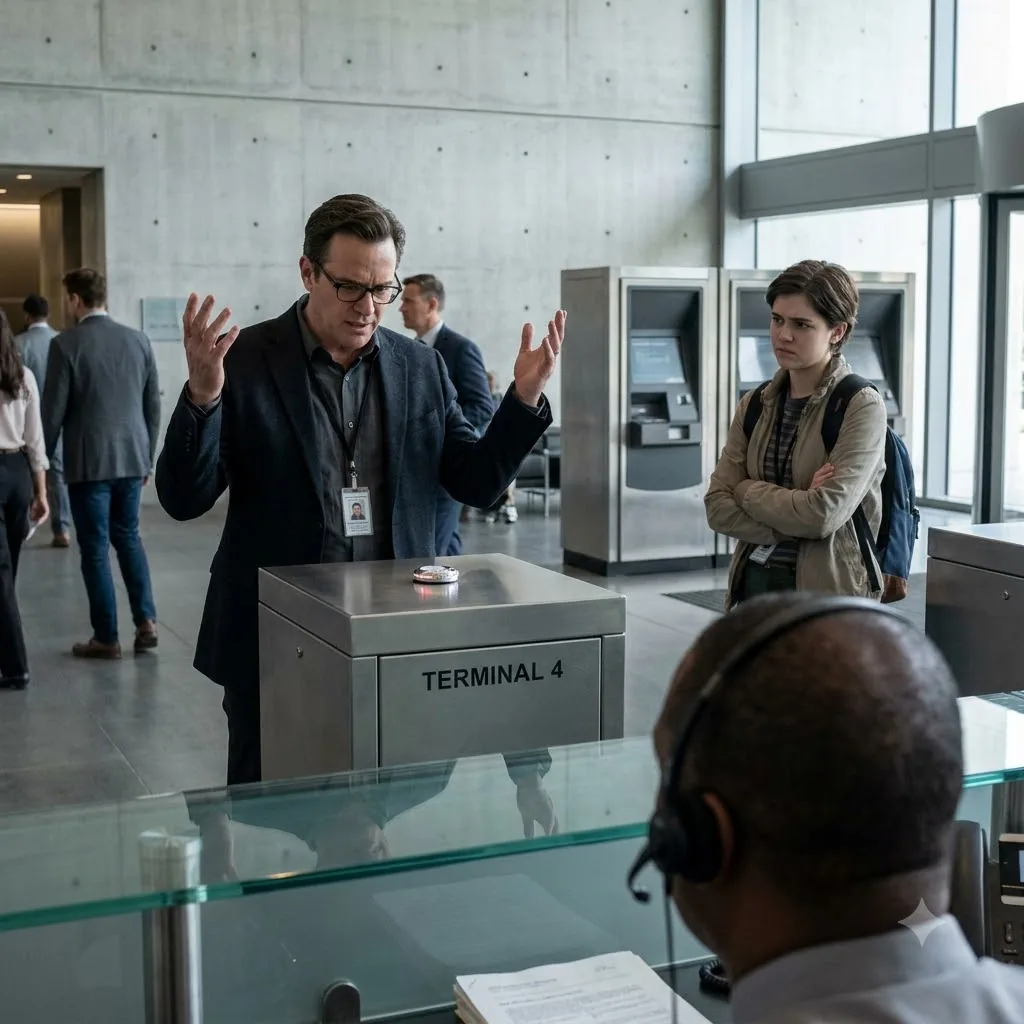
From my security desk in the Vance Quantum Research Lobby, I watched Julian Vance drop the physical quantum access token onto Terminal Station 4, throw his hands up, and claim he had locked himself out yet again, dumping the entire morning’s server configuration onto his cousin, Lead Researcher Elena Vance. It was the third time this week Julian had feigned total tech-illiteracy to force Elena to execute his security setup, and because of their family connection, management held Elena fully responsible for his mounting list of incomplete tasks. I watched from behind my triple-monitor display as Elena left her own station, her shoulders tense under her lab coat, to clean up his mess.
“I just don’t get these rolling cryptographic keys, Elena,” Julian said, his voice carrying clearly across the quiet, polished concrete floor of the lobby. He gestured helplessly at the blinking terminal screen. “Every time I insert the token, the interface goes red. I think the hardware is defective. Can you just handle the bypass code for me? I don’t want to corrupt the master queue.”
Elena didn’t argue. She leaned over Terminal Station 4, her fingers flying across the split keyboard, initializing the security protocol to clear the simulated error. Julian stepped back, leaning against the reception counter, twirling his security lanyard around his index finger. His face was entirely relaxed. He didn’t look at the screen to learn what she was doing. He looked at the glass double doors of the lobby, whistling a quiet, tuneless melody.
This had become the standard routine at Vance Quantum. Julian had been hired six months ago as a junior systems assistant, a favor to their uncle, who sat on the advisory board. Since his first day, simple operational tasks-log backups, token refreshes, local node configurations-mysteriously failed whenever they were assigned to him. And because the firm’s policy held lead researchers responsible for all server anomalies under their subordinates’ logins, Elena always stepped in to fix them, protecting both Julian’s job and her own department’s uptime record.
But twenty minutes later, after Elena had returned to the secure inner labs, the lobby cleared out. Julian remained at Terminal Station 4, supposedly waiting for a test log to print. I adjusted the camera feed, zooming in on his hands.
Julian didn’t look confused now. He didn’t look helpless. His posture straightened. Without looking at the keys, his fingers danced across the console with extreme speed. He entered a complex diagnostic bypass, cleared a stale queue that normally required a senior administrator’s clearance, and extracted his quantum access token in one smooth, practiced motion. His movements were precise, confident, and fast. The moment the lobby elevator doors chimed, his shoulders slumped back down, his expression returned to a blank, bovine squint, and he slid the token lazily into his pocket.
I saved the screen recording to my local drive. Julian Vance wasn’t incompetent. He was highly skilled, and he was using his apparent helplessness to force his cousin to do his job. But with the high-security audit approaching, I wondered how long he could keep up the act.
From my security desk in the Vance Quantum Research Lobby, I watched Julian Vance drop the physical quantum access token onto Terminal Station 4, throw his hands up, and claim he had locked himself out yet again, dumping the entire morning’s server configuration onto his cousin, Lead Researcher Elena Vance. It was the third time this week Julian had feigned total tech-illiteracy to force Elena to execute his security setup, and because of their family connection, management held Elena fully responsible for his mounting list of incomplete tasks. I watched from behind my triple-monitor display as Elena left her own station, her shoulders tense under her lab coat, to clean up his mess.
“I just don’t get these rolling cryptographic keys, Elena,” Julian said, his voice carrying clearly across the quiet, polished concrete floor of the lobby. He gestured helplessly at the blinking terminal screen. “Every time I insert the token, the interface goes red. I think the hardware is defective. Can you just handle the bypass code for me? I don’t want to corrupt the master queue.”
Elena didn’t argue. She leaned over Terminal Station 4, her fingers flying across the split keyboard, initializing the security protocol to clear the simulated error. Julian stepped back, leaning against the reception counter, twirling his security lanyard around his index finger. His face was entirely relaxed. He didn’t look at the screen to learn what she was doing. He looked at the glass double doors of the lobby, whistling a quiet, tuneless melody.
This had become the standard routine at Vance Quantum. Julian had been hired six months ago as a junior systems assistant, a favor to their uncle, who sat on the advisory board. Since his first day, simple operational tasks-log backups, token refreshes, local node configurations-mysteriously failed whenever they were assigned to him. And because the firm’s policy held lead researchers responsible for all server anomalies under their subordinates’ logins, Elena always stepped in to fix them, protecting both Julian’s job and her own department’s uptime record.
But twenty minutes later, after Elena had returned to the secure inner labs, the lobby cleared out. Julian remained at Terminal Station 4, supposedly waiting for a test log to print. I adjusted the camera feed, zooming in on his hands.
Julian didn’t look confused now. He didn’t look helpless. His posture straightened. Without looking at the keys, his fingers danced across the console with extreme speed. He entered a complex diagnostic bypass, cleared a stale queue that normally required a senior administrator’s clearance, and extracted his quantum access token in one smooth, practiced motion. His movements were precise, confident, and fast. The moment the lobby elevator doors chimed, his shoulders slumped back down, his expression returned to a blank, bovine squint, and he slid the token lazily into his pocket.
I saved the screen recording to my local drive. Julian Vance wasn’t incompetent. He was highly skilled, and he was using his apparent helplessness to force his cousin to do his job. But with the high-security audit approaching, I wondered how long he could keep up the act.