Story code: ST-000873
Part 1: He Said He Never Said It
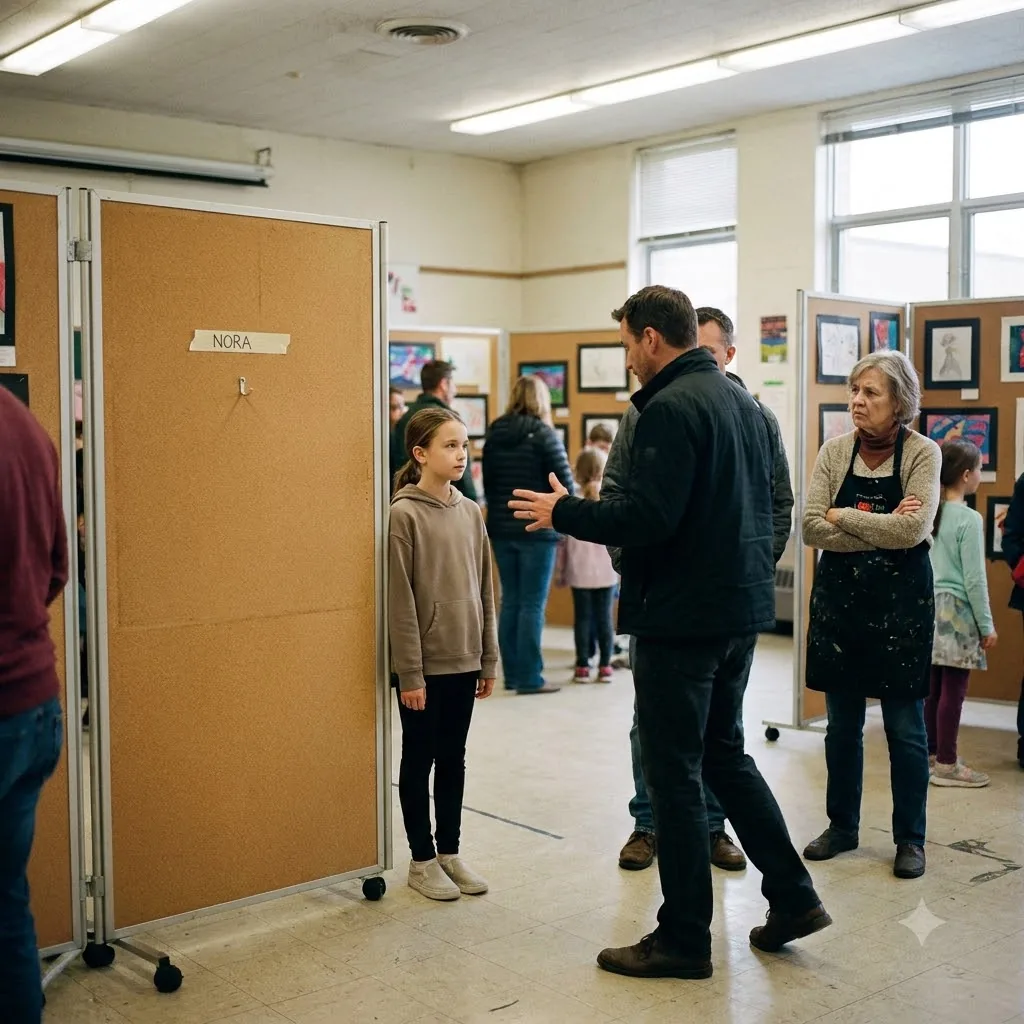
Mark Bennett said, in a room full of parents and kids already making space for Nora’s painting, “I never promised any such thing,” and his daughter went still beside an empty section of display wall with her name taped under it. The rolled canvas was right there in his hand, strapped neatly, while Ms. Alvarez stood by a table with hanging clips and painter’s tape already laid out for that exact piece. In three flat sentences, he made Nora sound confused in front of everybody at Roosevelt Middle School’s art show, and the worst part was that the room had clearly been arranged around the promise he was denying.
Dana Pike was carrying programs from the check-in table to the refreshments side when the talking near the display wall stopped the whole row of parents. A few children kept moving, pointing at portraits and clay projects, but the sound around Nora’s section thinned out. Dana looked over and saw the gap on the wall first. Other student work ran in a neat line across the folding panels, then one open space, then more work after it. Under that open space, a printed label read: NORA BENNETT, mixed media on canvas.
Nora stood close to the wall instead of stepping toward the adults. There was dried blue paint at one cuff of her sweater. She kept glancing from the label to the roll in her father’s hand.
Ms. Alvarez spoke in the careful voice teachers use when they are trying to keep something from becoming a scene. “Mr. Bennett, this is the spot we left for Nora’s work. We just need to get it up before the sixth-grade families come through this side.”
Mark kept one hand on the carrying strap looped around the canvas. “And I’m telling you, I never said I was hanging anything. She assumed that.”
Nora answered before Ms. Alvarez could. “You said you’d bring it in rolled because it wouldn’t fit flat in the car.”
He turned his head toward her without moving his feet. “No, Nora. I said I would bring you here. That’s not the same thing.”
The correction landed hard because he said it calmly, like he was fixing a simple mistake. Dana watched two nearby parents look from Nora to the roll and back again. A little of the room’s attention shifted off the art and onto the family.
Nora opened her mouth, stopped, then said, “That’s my canvas.”
“No one’s arguing it’s your canvas,” Mark said. “I’m saying I never promised to put it up. Those are different things.”
It was the kind of wording that made a child sound sloppy and an adult sound precise. Dana saw Nora’s fingers press against the side seam of her sweater. Eli Bennett, holding a juice cup with both hands near the snack table, drifted closer by a few steps.
Ms. Alvarez looked at the wall label, then at the hanging clips she had set out. “I was told the piece would arrive ready to go tonight.”
Mark gave a short nod that did not agree with her so much as move past her. “It arrived. There it is. If anyone built a whole plan around more than that, that wasn’t from me.”
A parent near Dana shifted a stack of brochures from one hand to the other. Nobody laughed. Nobody jumped in with the easy rescue line adults sometimes use when family tension shows up in public.
Nora’s voice stayed low. “You told me not to carry it because you were keeping it clean for the show.”
Mark answered right away. “I said not to drag it around the parking lot. Again, not the same thing.”
Dana noticed the way he kept narrowing every sentence after Nora spoke, trimming each one until it sounded technical. The more exact he got, the smaller Nora’s side of the story seemed to look in the room. She was not crying. She was not shouting. That almost made it worse. She just stood next to the one blank space with her own name under it while her father spoke as if the whole misunderstanding had started in her head.
Ms. Alvarez repeated the practical part, almost as if she could pull the conversation back onto rails by naming objects. “The clips are here. The label is up. The space is measured to the piece. We are just waiting on the canvas.”
Mark lifted the roll slightly by the strap. “You’re not waiting on the canvas. The canvas is here.”
For a second nobody answered. Dana looked at the roll then. A white label band was taped around it near one end. From where she stood, she could see dark marker on the paper strip. She could not read every word, but she could make out NORA and an arrow pointing upward, the kind used to show top edge.
If he had never promised the room the next step, Dana could not figure out why the canvas had been rolled, strapped, labeled for orientation, and brought to the exact gap waiting for it. And when Ms. Alvarez stepped closer and asked, very plainly, “Then why is it prepared like it’s about to be hung?” Mark did not answer right away.
Mark Bennett said, in a room full of parents and kids already making space for Nora’s painting, “I never promised any such thing,” and his daughter went still beside an empty section of display wall with her name taped under it. The rolled canvas was right there in his hand, strapped neatly, while Ms. Alvarez stood by a table with hanging clips and painter’s tape already laid out for that exact piece. In three flat sentences, he made Nora sound confused in front of everybody at Roosevelt Middle School’s art show, and the worst part was that the room had clearly been arranged around the promise he was denying.
Dana Pike was carrying programs from the check-in table to the refreshments side when the talking near the display wall stopped the whole row of parents. A few children kept moving, pointing at portraits and clay projects, but the sound around Nora’s section thinned out. Dana looked over and saw the gap on the wall first. Other student work ran in a neat line across the folding panels, then one open space, then more work after it. Under that open space, a printed label read: NORA BENNETT, mixed media on canvas.
Nora stood close to the wall instead of stepping toward the adults. There was dried blue paint at one cuff of her sweater. She kept glancing from the label to the roll in her father’s hand.
Ms. Alvarez spoke in the careful voice teachers use when they are trying to keep something from becoming a scene. “Mr. Bennett, this is the spot we left for Nora’s work. We just need to get it up before the sixth-grade families come through this side.”
Mark kept one hand on the carrying strap looped around the canvas. “And I’m telling you, I never said I was hanging anything. She assumed that.”
Nora answered before Ms. Alvarez could. “You said you’d bring it in rolled because it wouldn’t fit flat in the car.”
He turned his head toward her without moving his feet. “No, Nora. I said I would bring you here. That’s not the same thing.”
The correction landed hard because he said it calmly, like he was fixing a simple mistake. Dana watched two nearby parents look from Nora to the roll and back again. A little of the room’s attention shifted off the art and onto the family.
Nora opened her mouth, stopped, then said, “That’s my canvas.”
“No one’s arguing it’s your canvas,” Mark said. “I’m saying I never promised to put it up. Those are different things.”
It was the kind of wording that made a child sound sloppy and an adult sound precise. Dana saw Nora’s fingers press against the side seam of her sweater. Eli Bennett, holding a juice cup with both hands near the snack table, drifted closer by a few steps.
Ms. Alvarez looked at the wall label, then at the hanging clips she had set out. “I was told the piece would arrive ready to go tonight.”
Mark gave a short nod that did not agree with her so much as move past her. “It arrived. There it is. If anyone built a whole plan around more than that, that wasn’t from me.”
A parent near Dana shifted a stack of brochures from one hand to the other. Nobody laughed. Nobody jumped in with the easy rescue line adults sometimes use when family tension shows up in public.
Nora’s voice stayed low. “You told me not to carry it because you were keeping it clean for the show.”
Mark answered right away. “I said not to drag it around the parking lot. Again, not the same thing.”
Dana noticed the way he kept narrowing every sentence after Nora spoke, trimming each one until it sounded technical. The more exact he got, the smaller Nora’s side of the story seemed to look in the room. She was not crying. She was not shouting. That almost made it worse. She just stood next to the one blank space with her own name under it while her father spoke as if the whole misunderstanding had started in her head.
Ms. Alvarez repeated the practical part, almost as if she could pull the conversation back onto rails by naming objects. “The clips are here. The label is up. The space is measured to the piece. We are just waiting on the canvas.”
Mark lifted the roll slightly by the strap. “You’re not waiting on the canvas. The canvas is here.”
For a second nobody answered. Dana looked at the roll then. A white label band was taped around it near one end. From where she stood, she could see dark marker on the paper strip. She could not read every word, but she could make out NORA and an arrow pointing upward, the kind used to show top edge.
If he had never promised the room the next step, Dana could not figure out why the canvas had been rolled, strapped, labeled for orientation, and brought to the exact gap waiting for it. And when Ms. Alvarez stepped closer and asked, very plainly, “Then why is it prepared like it’s about to be hung?” Mark did not answer right away.