Story code: ST-000049
Part 1: The Schedule on the Wall
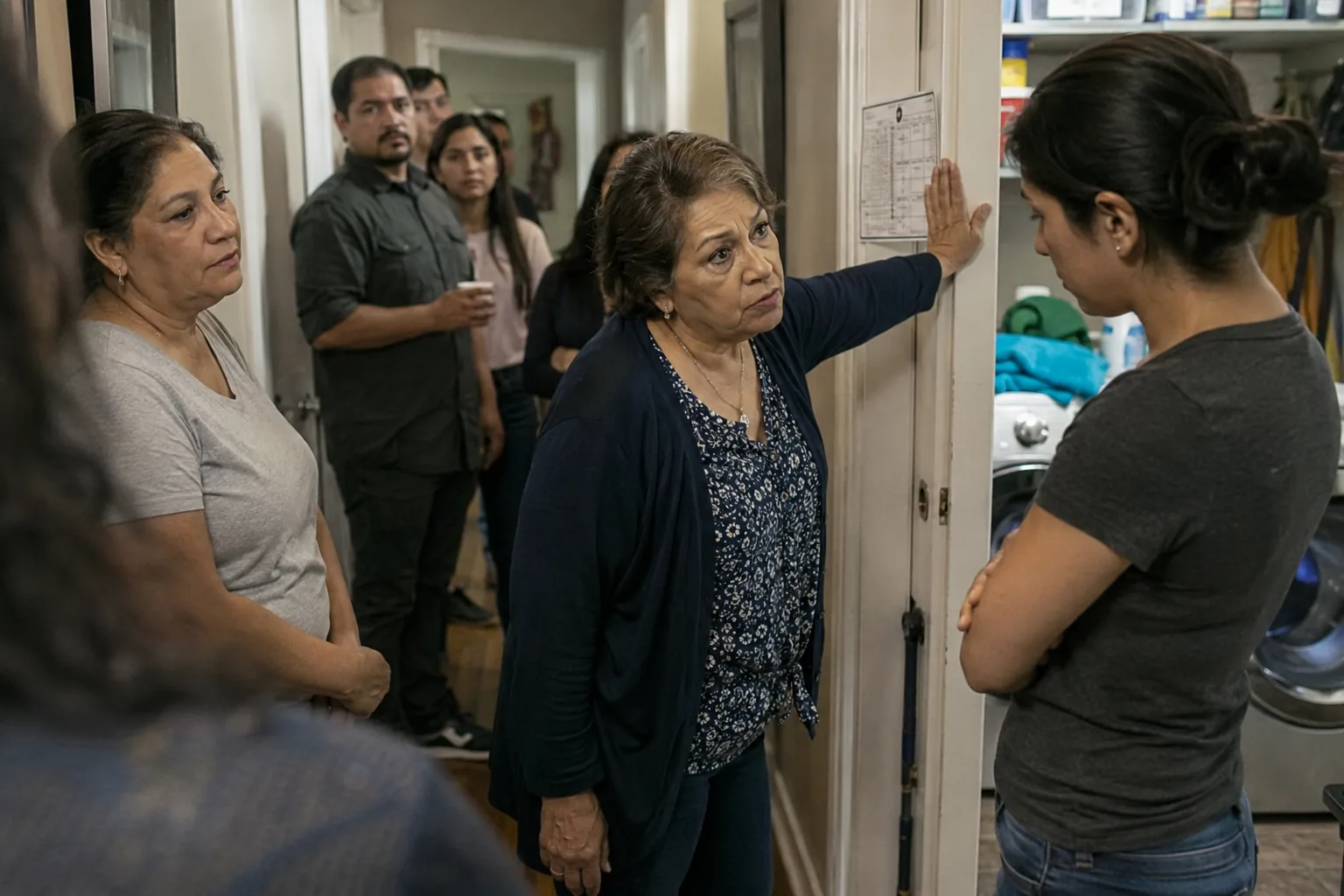
Evelyn Morales blocked the laundry-room doorway with one hand on the posted schedule and told Tessa Morales, in front of everybody in the shared hallway, that she did not count in this family. I was standing right there with a basket on my hip, watching the detergent pods roll in a little clear container at Noah’s feet while Rosa held folded towels like she was waiting for the floor to open up. The weird part was that Evelyn used the schedule itself like a border line, tapping the paper and saying Tessa had no place on it, as if a weekly laundry chart could decide who belonged in the house.
The hallway was crowded in the way these gatherings always get crowded. Somebody had set out chips on a side table near the stair landing. A cousin came through with a stroller, stopped when he heard Evelyn’s voice, then kept moving without looking at anyone. Two neighbors from the upstairs unit had slowed down by the mailboxes, pretending they were checking packages. The washer door in the alcove sat open, and every few seconds the machine gave off that soft metal knock from the spin cycle ending. It was ordinary household noise, but nobody in that hall was acting ordinary.
Tessa was holding a laundry basket with one towel folded over the top. She had been standing near the wall where the schedule was taped in plastic sleeves, the same place where people usually glance, point, and move on. Evelyn kept her shoulder squared to that wall like she had posted herself there on purpose. Her voice stayed firm and flat. She told Tessa the slots were spoken for, that the family had to keep order, that some people knew their place and some people did not. Then she said it again, louder, with relatives on both sides of the hall hearing every word: Tessa did not count.
No one stepped in right away. Rosa shifted the towels from one arm to the other. Noah looked down at his phone and then back up at the schedule. A man near the stair rail gave one short breath through his nose and turned his head away. Evelyn noticed all of it. She asked Rosa, not Tessa, whether the laundry list had been changed. She asked Noah whether he had seen anyone touch the paper. She did not take her eyes off Tessa while she did it, like she needed somebody else in the hallway to say the same thing out loud before her claim would stick.
Tessa didn’t raise her voice. She set the basket down once, then picked it up again when a little kid tried to squeeze past her in the hall. Evelyn pointed at that move and said, right there, that was exactly what she meant. She said Tessa always acted as if she belonged without asking. Then she tapped the posted sheet again, right under a line of handwritten names and times, and said the house ran on order, not on feelings.
I saw Rosa glance toward the laundry-room doorway. For one second her hand went to the pocket of her jeans, then stopped. Noah saw it too. He leaned his shoulder off the wall and watched Rosa instead of Evelyn. Evelyn followed both of our eyes and said, “If somebody here knows how this is supposed to go, speak up.” She said it like a test.
That was when Rosa finally crossed to the hall opening and set the towels down on top of a plastic bin. She didn’t speak yet. She just reached into the bin, moved two detergent boxes aside, and brought out a small old tin with a faded label on the lid. It looked like something that had sat in the laundry area for years. She held it halfway up, not quite offering it, not quite hiding it either.
Evelyn saw the tin and stopped tapping the schedule.
She asked Rosa where that came from, in a voice that got sharper at the end. Rosa still didn’t answer. She only turned the tin in her hand until I could see a handwritten name on the side, the ink rubbed down but still there. Tessa had not moved from the wall. Evelyn had not moved from the posted paper. Noah had gone very still with his phone down at his thigh.
And right then I could see the thing Evelyn did not want seen: the old tin was tied to the laundry wall, the exact wall she was using to say Tessa didn’t count, but nobody said whose name was on it yet.
Evelyn Morales blocked the laundry-room doorway with one hand on the posted schedule and told Tessa Morales, in front of everybody in the shared hallway, that she did not count in this family. I was standing right there with a basket on my hip, watching the detergent pods roll in a little clear container at Noah’s feet while Rosa held folded towels like she was waiting for the floor to open up. The weird part was that Evelyn used the schedule itself like a border line, tapping the paper and saying Tessa had no place on it, as if a weekly laundry chart could decide who belonged in the house.
The hallway was crowded in the way these gatherings always get crowded. Somebody had set out chips on a side table near the stair landing. A cousin came through with a stroller, stopped when he heard Evelyn’s voice, then kept moving without looking at anyone. Two neighbors from the upstairs unit had slowed down by the mailboxes, pretending they were checking packages. The washer door in the alcove sat open, and every few seconds the machine gave off that soft metal knock from the spin cycle ending. It was ordinary household noise, but nobody in that hall was acting ordinary.
Tessa was holding a laundry basket with one towel folded over the top. She had been standing near the wall where the schedule was taped in plastic sleeves, the same place where people usually glance, point, and move on. Evelyn kept her shoulder squared to that wall like she had posted herself there on purpose. Her voice stayed firm and flat. She told Tessa the slots were spoken for, that the family had to keep order, that some people knew their place and some people did not. Then she said it again, louder, with relatives on both sides of the hall hearing every word: Tessa did not count.
No one stepped in right away. Rosa shifted the towels from one arm to the other. Noah looked down at his phone and then back up at the schedule. A man near the stair rail gave one short breath through his nose and turned his head away. Evelyn noticed all of it. She asked Rosa, not Tessa, whether the laundry list had been changed. She asked Noah whether he had seen anyone touch the paper. She did not take her eyes off Tessa while she did it, like she needed somebody else in the hallway to say the same thing out loud before her claim would stick.
Tessa didn’t raise her voice. She set the basket down once, then picked it up again when a little kid tried to squeeze past her in the hall. Evelyn pointed at that move and said, right there, that was exactly what she meant. She said Tessa always acted as if she belonged without asking. Then she tapped the posted sheet again, right under a line of handwritten names and times, and said the house ran on order, not on feelings.
I saw Rosa glance toward the laundry-room doorway. For one second her hand went to the pocket of her jeans, then stopped. Noah saw it too. He leaned his shoulder off the wall and watched Rosa instead of Evelyn. Evelyn followed both of our eyes and said, “If somebody here knows how this is supposed to go, speak up.” She said it like a test.
That was when Rosa finally crossed to the hall opening and set the towels down on top of a plastic bin. She didn’t speak yet. She just reached into the bin, moved two detergent boxes aside, and brought out a small old tin with a faded label on the lid. It looked like something that had sat in the laundry area for years. She held it halfway up, not quite offering it, not quite hiding it either.
Evelyn saw the tin and stopped tapping the schedule.
She asked Rosa where that came from, in a voice that got sharper at the end. Rosa still didn’t answer. She only turned the tin in her hand until I could see a handwritten name on the side, the ink rubbed down but still there. Tessa had not moved from the wall. Evelyn had not moved from the posted paper. Noah had gone very still with his phone down at his thigh.
And right then I could see the thing Evelyn did not want seen: the old tin was tied to the laundry wall, the exact wall she was using to say Tessa didn’t count, but nobody said whose name was on it yet.