Story code: ST-000017
Part 1: She Said My Dad Wasn’t Allowed at the Family Table
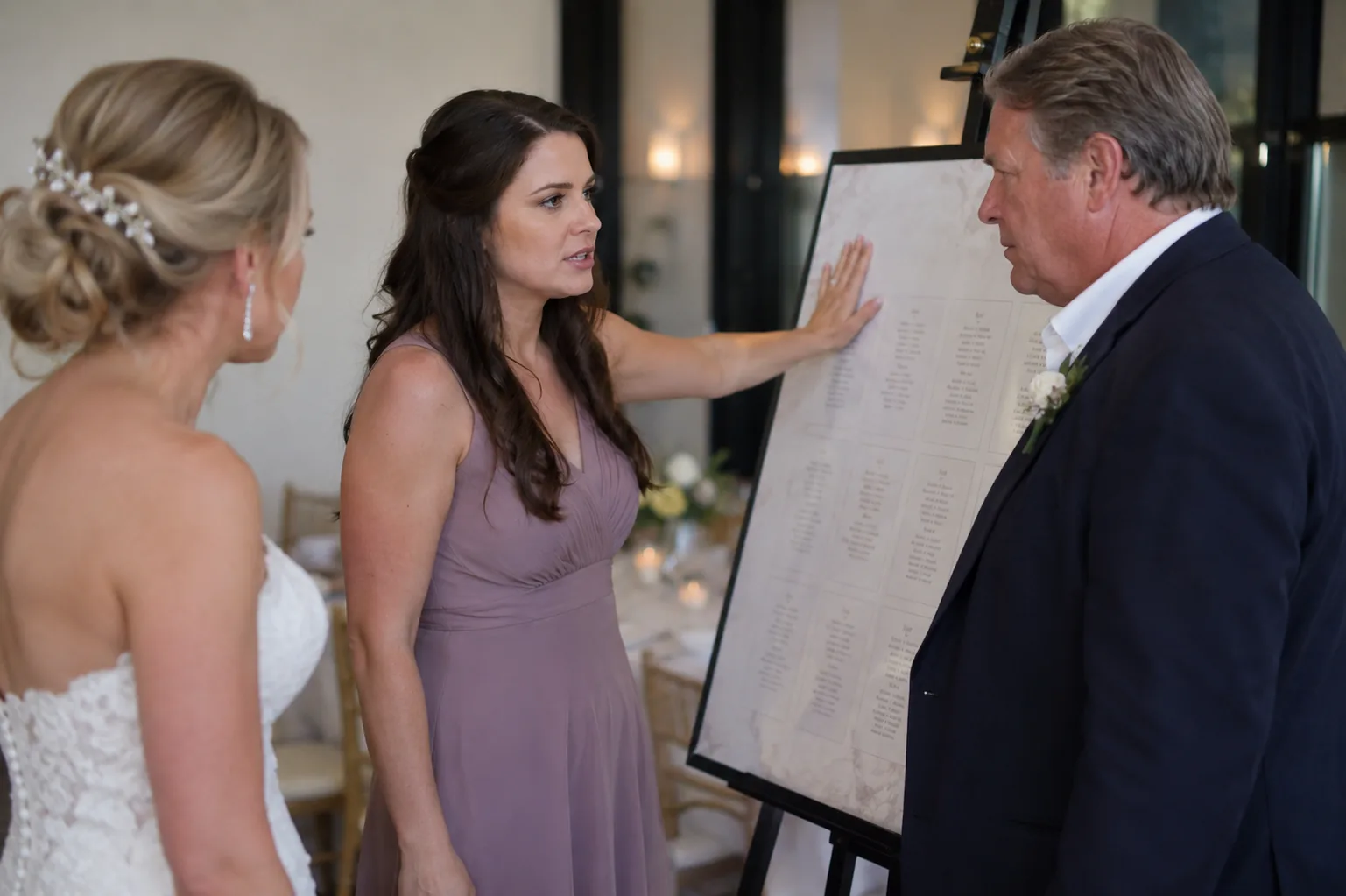
My maid of honor stepped in front of the rehearsal dinner seating chart, put one hand on the easel, and told my dad he was not allowed at the family table because of “venue policy.” We were in the main rehearsal room with people still folding programs and shifting chairs for the aisle run-through, and for a full beat everybody acted like this invisible rule had always existed. The worst part was that she said it loud enough that my father stopped where he was, in front of both families, and looked like he was trying to figure out whether he had just broken a rule no one had told him.
I am Emily, and I wish I could say this started as a misunderstanding. It did not look like a misunderstanding. Tara had the seating chart board angled toward her like she was running a check-in desk. The chart listed the rehearsal dinner tables by name, not by exact seat, and there was a smaller handwritten list clipped beside it with family groupings. My dad, Mark, had come over because my mom had been told family placements were being confirmed before everyone left for dinner.
He asked the normal question. He pointed to the family table and said, “That one is ours, right?”
Tara answered before I could. “No. Fathers of the bride don’t sit there unless the venue approves the split. It’s policy with the head table flow.”
There was no head table at the rehearsal dinner. We had a sweetheart table for the wedding, and the rehearsal dinner was supposed to be immediate family plus wedding party spread across two long tables. That was one of the reasons her wording landed so hard. It sounded procedural enough that people stopped challenging the actual shape of the room.
My dad did not raise his voice. He stayed near the easel and said, “What split?”
Tara tapped the chart with one fingernail like the answer was already written there. “Parents can’t be mixed into that table once the venue sets the service path. It creates a problem for toasts and access.”
My mom, Rachel, came closer and looked from the chart to the clipped list. “There are six chairs at that table,” she said. “You told me this afternoon that table was us, Noah’s parents, and Aunt Lisa.”
Tara did not look at her. She kept looking at the chart. “That was before final venue compliance.”
I remember that phrase because it was so oddly official for a Friday rehearsal in a private event room where the biggest active crisis had been whether the flower girl would walk with her basket or hand it off at the front row.
Noah had been across the aisle with his groomsmen, but when voices changed he came over. He did what he usually does when he walks into a dispute late: he looked at the object first, then the people. “What’s the issue?”
My dad answered before I could. “Apparently I can’t sit at the family table because of venue policy.”
Noah looked at Tara. “What venue policy?”
And this is where the room stalled in that awful public way. Tara had the marker in her hand. She was standing by the chart. People from both sides had drifted close enough to hear, but not close enough to help. A cousin stepped back with a stack of place cards. One of Noah’s uncles pretended to study the drink station. It was one of those scenes where the person nearest the board automatically becomes temporary authority, and everybody else starts waiting for someone more official to contradict them.
Tara said, “The seating restriction Linda gave us. Parents can’t be placed in that line because of how service enters.”
Linda was the venue coordinator, and she was somewhere in the room handling setup questions. I had not heard her say anything about parents, family tables, or some special restriction on where my father could sit.
I said, “Show me where that’s written.”
Tara turned the clipped sheet slightly, fast enough that I could not read it from where I stood. “It’s part of the setup notes. We already adjusted for it.”
My dad asked the practical question that made the whole thing uglier. “So where exactly am I supposed to sit?”
Tara pointed to a table farther down, one of the tables that had college friends and two cousins at it. “There. We had to rebalance.”
That was the first clean moment of harm. Not vague. Not theoretical. My father, at my rehearsal dinner, was being reassigned away from immediate family by my maid of honor with a made-up sounding rule and a marker in her hand.
I said, as evenly as I could, “No one discussed moving my dad away from family.”
Tara answered, “Emily, I am trying to keep us compliant and on schedule.”
That word compliant did a lot of work for her. You could see it on people’s faces. It made the question sound already settled. My mom leaned in and checked the chart again. Noah asked, “What exactly is the rule?”
Tara repeated it, but not the same way. First it was fathers of the bride. Then it was parents. Then it was anyone who could disrupt service near the speech line. The chart itself did not show any such note from where I stood. The room had two service doors, one on each side, and neither lined up with the table she was blocking.
Still, no one moved my dad’s name back.
He stayed there, one hand on the back of a chair, not leaving and not arguing, while Tara kept the marker ready like she expected to make the change permanent.
Then my mom pointed to another table and asked the question that changed the scene: if this was really venue policy, why was Noah’s mother still listed in the exact same line Tara had just said my dad was not allowed to use?
My maid of honor stepped in front of the rehearsal dinner seating chart, put one hand on the easel, and told my dad he was not allowed at the family table because of “venue policy.” We were in the main rehearsal room with people still folding programs and shifting chairs for the aisle run-through, and for a full beat everybody acted like this invisible rule had always existed. The worst part was that she said it loud enough that my father stopped where he was, in front of both families, and looked like he was trying to figure out whether he had just broken a rule no one had told him.
I am Emily, and I wish I could say this started as a misunderstanding. It did not look like a misunderstanding. Tara had the seating chart board angled toward her like she was running a check-in desk. The chart listed the rehearsal dinner tables by name, not by exact seat, and there was a smaller handwritten list clipped beside it with family groupings. My dad, Mark, had come over because my mom had been told family placements were being confirmed before everyone left for dinner.
He asked the normal question. He pointed to the family table and said, “That one is ours, right?”
Tara answered before I could. “No. Fathers of the bride don’t sit there unless the venue approves the split. It’s policy with the head table flow.”
There was no head table at the rehearsal dinner. We had a sweetheart table for the wedding, and the rehearsal dinner was supposed to be immediate family plus wedding party spread across two long tables. That was one of the reasons her wording landed so hard. It sounded procedural enough that people stopped challenging the actual shape of the room.
My dad did not raise his voice. He stayed near the easel and said, “What split?”
Tara tapped the chart with one fingernail like the answer was already written there. “Parents can’t be mixed into that table once the venue sets the service path. It creates a problem for toasts and access.”
My mom, Rachel, came closer and looked from the chart to the clipped list. “There are six chairs at that table,” she said. “You told me this afternoon that table was us, Noah’s parents, and Aunt Lisa.”
Tara did not look at her. She kept looking at the chart. “That was before final venue compliance.”
I remember that phrase because it was so oddly official for a Friday rehearsal in a private event room where the biggest active crisis had been whether the flower girl would walk with her basket or hand it off at the front row.
Noah had been across the aisle with his groomsmen, but when voices changed he came over. He did what he usually does when he walks into a dispute late: he looked at the object first, then the people. “What’s the issue?”
My dad answered before I could. “Apparently I can’t sit at the family table because of venue policy.”
Noah looked at Tara. “What venue policy?”
And this is where the room stalled in that awful public way. Tara had the marker in her hand. She was standing by the chart. People from both sides had drifted close enough to hear, but not close enough to help. A cousin stepped back with a stack of place cards. One of Noah’s uncles pretended to study the drink station. It was one of those scenes where the person nearest the board automatically becomes temporary authority, and everybody else starts waiting for someone more official to contradict them.
Tara said, “The seating restriction Linda gave us. Parents can’t be placed in that line because of how service enters.”
Linda was the venue coordinator, and she was somewhere in the room handling setup questions. I had not heard her say anything about parents, family tables, or some special restriction on where my father could sit.
I said, “Show me where that’s written.”
Tara turned the clipped sheet slightly, fast enough that I could not read it from where I stood. “It’s part of the setup notes. We already adjusted for it.”
My dad asked the practical question that made the whole thing uglier. “So where exactly am I supposed to sit?”
Tara pointed to a table farther down, one of the tables that had college friends and two cousins at it. “There. We had to rebalance.”
That was the first clean moment of harm. Not vague. Not theoretical. My father, at my rehearsal dinner, was being reassigned away from immediate family by my maid of honor with a made-up sounding rule and a marker in her hand.
I said, as evenly as I could, “No one discussed moving my dad away from family.”
Tara answered, “Emily, I am trying to keep us compliant and on schedule.”
That word compliant did a lot of work for her. You could see it on people’s faces. It made the question sound already settled. My mom leaned in and checked the chart again. Noah asked, “What exactly is the rule?”
Tara repeated it, but not the same way. First it was fathers of the bride. Then it was parents. Then it was anyone who could disrupt service near the speech line. The chart itself did not show any such note from where I stood. The room had two service doors, one on each side, and neither lined up with the table she was blocking.
Still, no one moved my dad’s name back.
He stayed there, one hand on the back of a chair, not leaving and not arguing, while Tara kept the marker ready like she expected to make the change permanent.
Then my mom pointed to another table and asked the question that changed the scene: if this was really venue policy, why was Noah’s mother still listed in the exact same line Tara had just said my dad was not allowed to use?