Story code: ST-001340
Part 1: The Price of Generosity
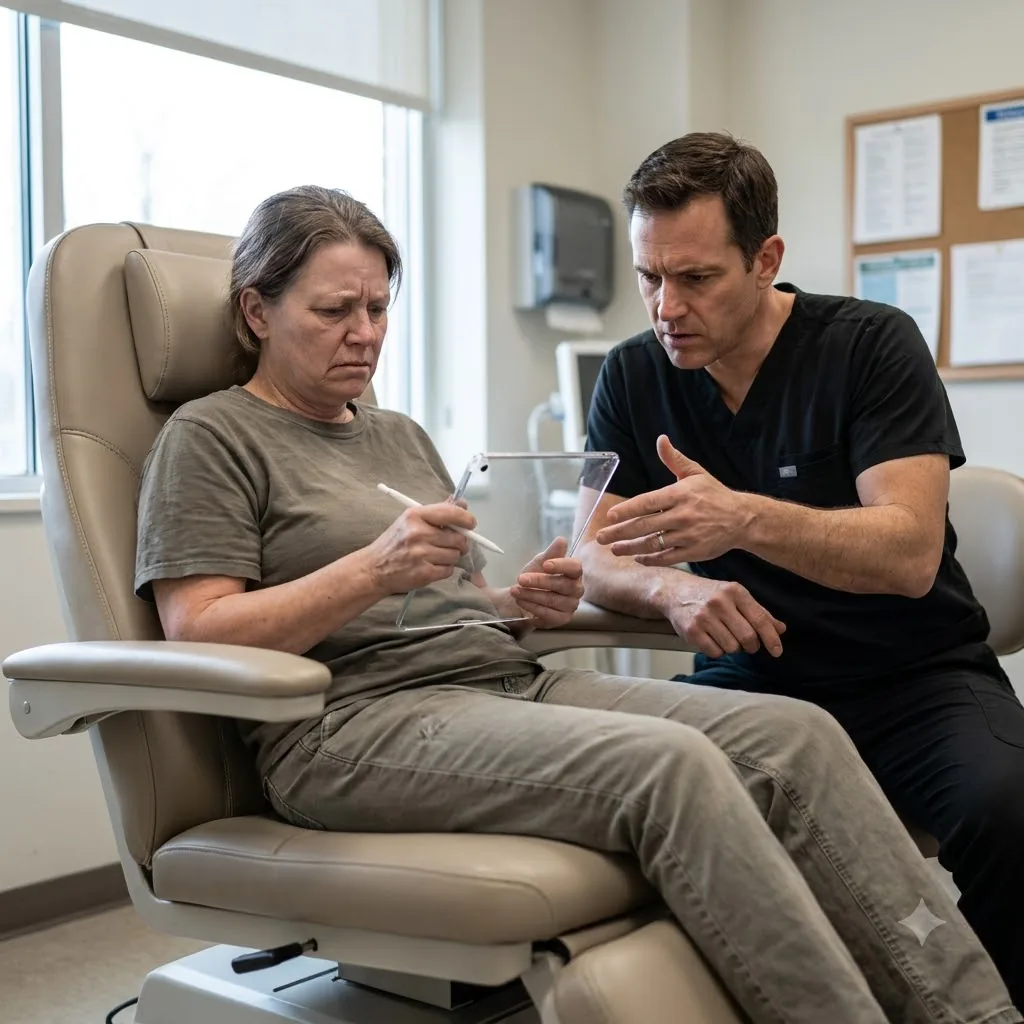
I was sitting in the ergonomic recliner of Neuro-mod Room 4 at Synapse Pathways Clinic when my memory technician, Marcus Kane, slid the glass-backed implant consent tablet into my hands and demanded I sign off on a highly risky protocol upgrade. He stood over me, his sterile blue clinic coat catching the fluorescent light, as he reminded me for the third time that he had personally waived the thousand-dollar fee for my system calibration last month. By framing his unasked-for calibration patch as a personal favor, he was turning a routine check-up into a debt I never chose to owe, using his apparent generosity to force my hand.
The ambient hum of the diagnostic pods outside the glass partition wall did nothing to soothe the sudden tension in the room. I held the tablet, its glass surface cool against my palms. On the screen, the active calibration graphs of my neural implant pulsed in erratic orange waves.
“I did you a massive solid, Julian,” Marcus said, his voice carrying a practiced clinical warmth that felt increasingly forced. He tapped the edge of the tablet with a manicured finger. “Standard recalibrations cost a fortune out of pocket, and I cleared the charge under my own tech license. Now I just need you to tap your biometric approval on this safety bypass. It’s a quick protocol change to keep your system aligned. Just a formality.”
I looked down at the legal consent clauses. The text was dense, but one phrase stood out: User assumes all risk for cognitive partition misalignment resulting from non-standard overrides. This wasn’t a standard update. It was a waiver that would absolve the clinic-and Marcus-of any liability if my memory partition suffered a critical crash.
“Why does this require a safety bypass if it’s just a routine check-up?” I asked, keeping my voice controlled.
Marcus shifted his weight, his friendly smile faltering for a fraction of a second. “Because the custom calibration I gave you last month runs on a slightly modified baseline. To keep it active, we have to bypass the clinic’s default diagnostic checks. If you don’t sign, the system will flag the discrepancy during the next automated audit, and the standard clinic software will overwrite the custom adjustments I made for you.”
He was telling me that my cognitive stability was entirely dependent on his off-book intervention. I felt the invisible trap closing around me. If I refused to sign, I would lose the calibration that was currently keeping my mind clear. If I signed, I was giving him permission to modify my neural pathways without any safety oversight.
Determined to understand what I was agreeing to, I swiped away from the main consent screen and tapped the system logs icon in the top corner of the tablet. My eyes scanned the green and red lines of code, looking for the technical justification for this bypass.
That was when I saw it. Under the history log for my calibration last month, there was a system crash entry flagged in bright crimson. It wasn’t an entry showing a standard optimization. It was a critical execution error, timestamped ten minutes before Marcus had applied the “free upgrade.” The error code was followed by his tech ID, indicating he had misconfigured my implant during the initial setup.
The truth stared back at me from the glass screen. The unbilled upgrade wasn’t an act of generosity. It was a hasty patch designed to cover up his own critical system error before the clinic’s main server could log the failure. If the clinic had detected his mistake, he would have faced immediate termination. I stared at the tablet, realizing the debt chain had just reversed: he hadn’t saved my mind; he had saved his own career, and now he was trying to force me to sign a dangerous waiver to make his cover-up permanent.
I was sitting in the ergonomic recliner of Neuro-mod Room 4 at Synapse Pathways Clinic when my memory technician, Marcus Kane, slid the glass-backed implant consent tablet into my hands and demanded I sign off on a highly risky protocol upgrade. He stood over me, his sterile blue clinic coat catching the fluorescent light, as he reminded me for the third time that he had personally waived the thousand-dollar fee for my system calibration last month. By framing his unasked-for calibration patch as a personal favor, he was turning a routine check-up into a debt I never chose to owe, using his apparent generosity to force my hand.
The ambient hum of the diagnostic pods outside the glass partition wall did nothing to soothe the sudden tension in the room. I held the tablet, its glass surface cool against my palms. On the screen, the active calibration graphs of my neural implant pulsed in erratic orange waves.
“I did you a massive solid, Julian,” Marcus said, his voice carrying a practiced clinical warmth that felt increasingly forced. He tapped the edge of the tablet with a manicured finger. “Standard recalibrations cost a fortune out of pocket, and I cleared the charge under my own tech license. Now I just need you to tap your biometric approval on this safety bypass. It’s a quick protocol change to keep your system aligned. Just a formality.”
I looked down at the legal consent clauses. The text was dense, but one phrase stood out: User assumes all risk for cognitive partition misalignment resulting from non-standard overrides. This wasn’t a standard update. It was a waiver that would absolve the clinic-and Marcus-of any liability if my memory partition suffered a critical crash.
“Why does this require a safety bypass if it’s just a routine check-up?” I asked, keeping my voice controlled.
Marcus shifted his weight, his friendly smile faltering for a fraction of a second. “Because the custom calibration I gave you last month runs on a slightly modified baseline. To keep it active, we have to bypass the clinic’s default diagnostic checks. If you don’t sign, the system will flag the discrepancy during the next automated audit, and the standard clinic software will overwrite the custom adjustments I made for you.”
He was telling me that my cognitive stability was entirely dependent on his off-book intervention. I felt the invisible trap closing around me. If I refused to sign, I would lose the calibration that was currently keeping my mind clear. If I signed, I was giving him permission to modify my neural pathways without any safety oversight.
Determined to understand what I was agreeing to, I swiped away from the main consent screen and tapped the system logs icon in the top corner of the tablet. My eyes scanned the green and red lines of code, looking for the technical justification for this bypass.
That was when I saw it. Under the history log for my calibration last month, there was a system crash entry flagged in bright crimson. It wasn’t an entry showing a standard optimization. It was a critical execution error, timestamped ten minutes before Marcus had applied the “free upgrade.” The error code was followed by his tech ID, indicating he had misconfigured my implant during the initial setup.
The truth stared back at me from the glass screen. The unbilled upgrade wasn’t an act of generosity. It was a hasty patch designed to cover up his own critical system error before the clinic’s main server could log the failure. If the clinic had detected his mistake, he would have faced immediate termination. I stared at the tablet, realizing the debt chain had just reversed: he hadn’t saved my mind; he had saved his own career, and now he was trying to force me to sign a dangerous waiver to make his cover-up permanent.