Story code: ST-000631
Part 1: She Canceled My Ride at the Pickup Lane
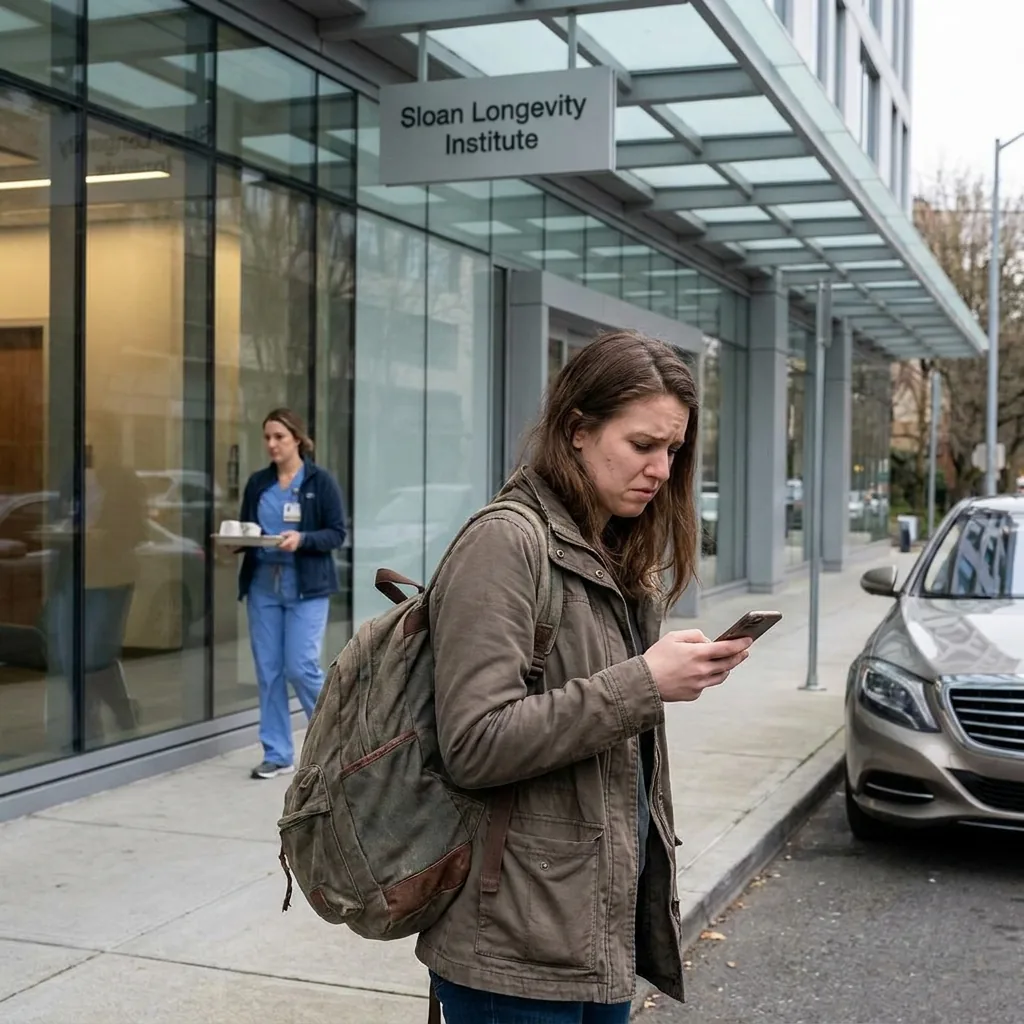
My mother canceled my ride to Sloan Longevity Institute twelve minutes before my treatment pickup window, then froze the card linked to my care while I was standing in the curbside pickup lane watching a nurse carry a temperature-controlled pouch past the glass. She texted, Move back home today and stop this apartment nonsense, and I will fix it. If I had not seen her own clinic wristband clipped to her bag last week, I might have believed she was the only one with leverage.
I was already checked in when the first alert hit my phone. Your driver has canceled. I stared at the screen, then at the lane outside the reception windows where black SUVs rolled up and valets waved people forward like this was a hotel instead of a place where everyone pretended the words treatment and aging were ordinary.
At the medication pickup desk, Nina Park was sealing a treatment vial into a padded insert inside a silver clinic pouch. She moved with the same careful rhythm I had watched for months: verify name, verify authorization, log time, seal pouch, transfer by hand. Behind her, a tech crossed the hallway with a tray of labeled syringes. Phones rang. Someone in loafers argued softly about a delayed infusion. Everything looked normal except my hands would not stay still.
I opened my banking app to order another car. Card declined.
I tried again.
Declined.
Then my mother’s text came through like she had been waiting for me to notice.
You are done pretending you can manage this alone.
Come home this afternoon.
I will reactivate the card and send Martin back for you.
If not, you can miss one dose and think about your priorities.
I read it twice because the last line looked too clean, too planned. Martin was her driver. The card was the one she had insisted I use for anything related to the program because, in her words, it kept the records tidy. I had told myself that was annoying but practical. Standing there with my pickup authorization in one hand and a dead payment card in the other, practical stopped being the word.
Nina looked up when I stepped to the desk. “Ms. Sloan?”
“My ride was canceled,” I said. I kept my voice level because people were five feet away, and I was not going to give my mother a waiting-room scene she could later call instability. “If I arrange another car, how late can I be on pickup?”
Nina tapped her screen. “Your release window is forty minutes. After that, we have to return the vial to controlled storage and reprocess.”
“Can someone else pick it up?”
“Only an approved person already on file, with ID, within the release window.” She glanced at my wristband and then back at me. “Or you, if you remain the receiving party and transport instructions are followed.”
That last part mattered, though I could not yet say why.
I called my mother from the hallway outside the treatment rooms. She answered on the first ring.
“I sent you terms,” she said.
“You froze the card.”
“I paused it. There is a difference.”
“You canceled my ride while I was already here.”
“You have made this difficult for months. I am simplifying it. Pack your things. Martin can meet you at your apartment entry after the clinic.”
“If I say no?”
There was a short silence, the kind she used when she wanted the next sentence to land harder. “Then you will have to figure out what independence actually costs.”
I looked through the glass into the reception area. A man in a cashmere quarter-zip signed a screen and accepted a pouch from another coordinator. A woman near the water station was checking a pill organizer like she was preparing for a flight. It was all ordinary, polished, and quiet, which made my mother’s message uglier.
“I am not moving home,” I said.
“Then do not ask me to keep funding your rebellion.” Her voice stayed low and even. “You need consistency. Under my roof, you would have it.”
I hung up before she could keep dressing a threat in practical language.
I called the bank. Automated menu. Fraud department hold. I checked rideshare apps, then my contacts. Surge pricing. Long wait times. My card still failed. I had enough cash in a kitchen envelope at home to buy groceries for the week, not enough to solve a private-clinic emergency from a curbside lane.
When I went back to the desk, Nina had the silver pouch beside her, ready but not released. “I may need ten more minutes,” I said.
She nodded once. “I can note that you are present and arranging transport. But once the window closes, I have to follow the chain-of-custody rules exactly.”
“What if the person paying changes?”
“Billing can change. Authorization for release is separate.”
I stopped moving for a second.
“Separate how?”
Nina lowered her voice without changing her expression. “The vial is assigned to the approved patient and linked to the transport protocol on file. Payment does not substitute for that. If there is a change, it has to be processed before release, and not every same-day change can be accommodated.”
My mother’s entire threat had been built on money, the driver, the apartment key she still liked to mention, all the things she could cancel from a distance. But the pouch on Nina’s desk was attached to my authorization, my timing, my presence.
I looked back at my phone. Three missed texts from my mother had appeared while I was talking.
Have you decided.
Martin leaves in fifteen.
Do not make me rearrange my own pickup because you want to prove a point.
I read that last message twice, standing there with my dead card in my hand and the clinic pouch ten feet away, because until that second I had not known she had something scheduled today that could be disrupted by me too.
My mother canceled my ride to Sloan Longevity Institute twelve minutes before my treatment pickup window, then froze the card linked to my care while I was standing in the curbside pickup lane watching a nurse carry a temperature-controlled pouch past the glass. She texted, Move back home today and stop this apartment nonsense, and I will fix it. If I had not seen her own clinic wristband clipped to her bag last week, I might have believed she was the only one with leverage.
I was already checked in when the first alert hit my phone. Your driver has canceled. I stared at the screen, then at the lane outside the reception windows where black SUVs rolled up and valets waved people forward like this was a hotel instead of a place where everyone pretended the words treatment and aging were ordinary.
At the medication pickup desk, Nina Park was sealing a treatment vial into a padded insert inside a silver clinic pouch. She moved with the same careful rhythm I had watched for months: verify name, verify authorization, log time, seal pouch, transfer by hand. Behind her, a tech crossed the hallway with a tray of labeled syringes. Phones rang. Someone in loafers argued softly about a delayed infusion. Everything looked normal except my hands would not stay still.
I opened my banking app to order another car. Card declined.
I tried again.
Declined.
Then my mother’s text came through like she had been waiting for me to notice.
You are done pretending you can manage this alone.
Come home this afternoon.
I will reactivate the card and send Martin back for you.
If not, you can miss one dose and think about your priorities.
I read it twice because the last line looked too clean, too planned. Martin was her driver. The card was the one she had insisted I use for anything related to the program because, in her words, it kept the records tidy. I had told myself that was annoying but practical. Standing there with my pickup authorization in one hand and a dead payment card in the other, practical stopped being the word.
Nina looked up when I stepped to the desk. “Ms. Sloan?”
“My ride was canceled,” I said. I kept my voice level because people were five feet away, and I was not going to give my mother a waiting-room scene she could later call instability. “If I arrange another car, how late can I be on pickup?”
Nina tapped her screen. “Your release window is forty minutes. After that, we have to return the vial to controlled storage and reprocess.”
“Can someone else pick it up?”
“Only an approved person already on file, with ID, within the release window.” She glanced at my wristband and then back at me. “Or you, if you remain the receiving party and transport instructions are followed.”
That last part mattered, though I could not yet say why.
I called my mother from the hallway outside the treatment rooms. She answered on the first ring.
“I sent you terms,” she said.
“You froze the card.”
“I paused it. There is a difference.”
“You canceled my ride while I was already here.”
“You have made this difficult for months. I am simplifying it. Pack your things. Martin can meet you at your apartment entry after the clinic.”
“If I say no?”
There was a short silence, the kind she used when she wanted the next sentence to land harder. “Then you will have to figure out what independence actually costs.”
I looked through the glass into the reception area. A man in a cashmere quarter-zip signed a screen and accepted a pouch from another coordinator. A woman near the water station was checking a pill organizer like she was preparing for a flight. It was all ordinary, polished, and quiet, which made my mother’s message uglier.
“I am not moving home,” I said.
“Then do not ask me to keep funding your rebellion.” Her voice stayed low and even. “You need consistency. Under my roof, you would have it.”
I hung up before she could keep dressing a threat in practical language.
I called the bank. Automated menu. Fraud department hold. I checked rideshare apps, then my contacts. Surge pricing. Long wait times. My card still failed. I had enough cash in a kitchen envelope at home to buy groceries for the week, not enough to solve a private-clinic emergency from a curbside lane.
When I went back to the desk, Nina had the silver pouch beside her, ready but not released. “I may need ten more minutes,” I said.
She nodded once. “I can note that you are present and arranging transport. But once the window closes, I have to follow the chain-of-custody rules exactly.”
“What if the person paying changes?”
“Billing can change. Authorization for release is separate.”
I stopped moving for a second.
“Separate how?”
Nina lowered her voice without changing her expression. “The vial is assigned to the approved patient and linked to the transport protocol on file. Payment does not substitute for that. If there is a change, it has to be processed before release, and not every same-day change can be accommodated.”
My mother’s entire threat had been built on money, the driver, the apartment key she still liked to mention, all the things she could cancel from a distance. But the pouch on Nina’s desk was attached to my authorization, my timing, my presence.
I looked back at my phone. Three missed texts from my mother had appeared while I was talking.
Have you decided.
Martin leaves in fifteen.
Do not make me rearrange my own pickup because you want to prove a point.
I read that last message twice, standing there with my dead card in my hand and the clinic pouch ten feet away, because until that second I had not known she had something scheduled today that could be disrupted by me too.