Story code: ST-001098
Part 3: The Archival Record
Victoria did not touch the leather binder. Her fingers remained poised above the table, casting a long shadow across the polished wood under the chandelier. She leaned forward slightly, her eyes scanning the official stamp at the top of the archival page before she looked back up at Meera. A small, tight smile returned to her face, though the muscles around her jaw remained tense.
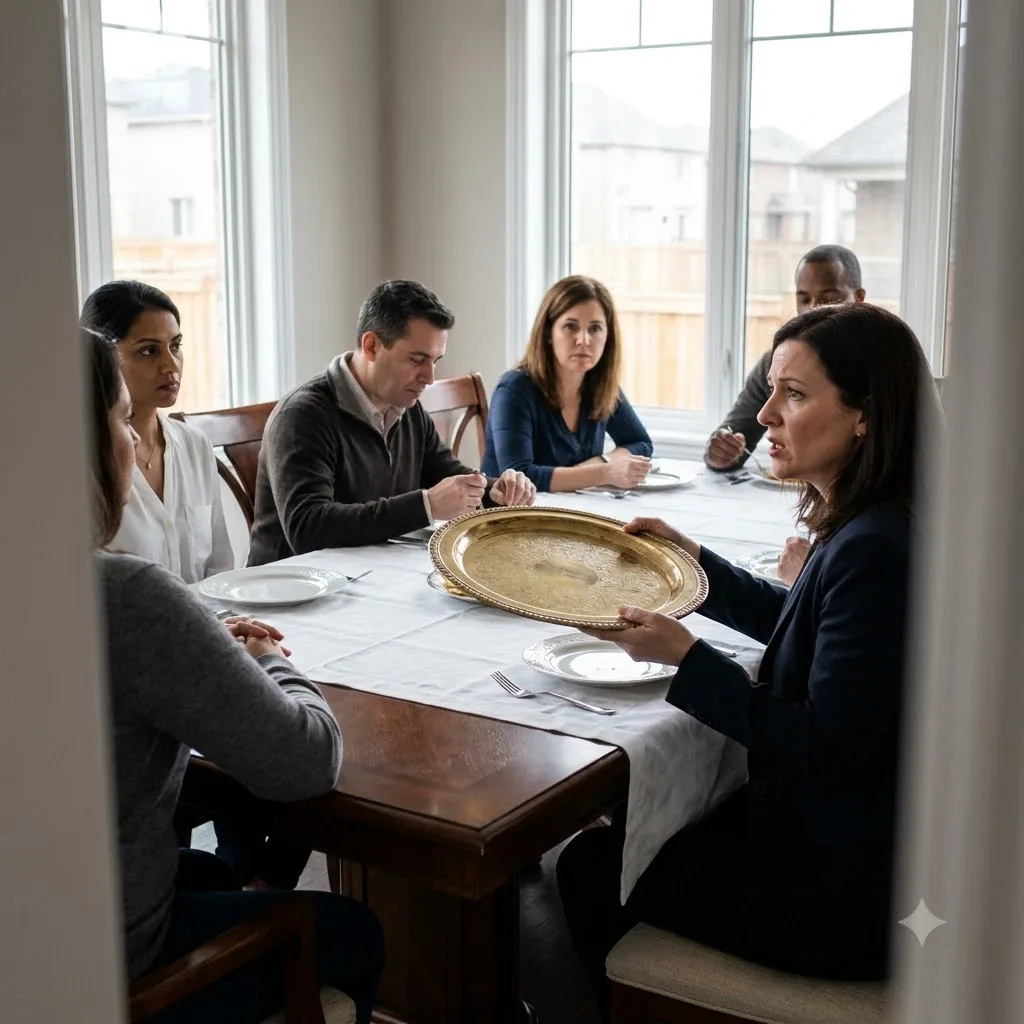
“A museum registry is a public catalog, Meera,” Victoria said, her voice dropping to a cool, measured tone. “It lists dimensions, materials, and basic acquisition dates. It does not record the esoteric family rituals that were passed down orally through the generations. The vithana-chakra boundary rule is an oral tradition, preserved by those of us who actually lived in the province, not by city bureaucrats cataloging metalwork in a basement.”
I stepped forward to clear the empty salad plates from the center of the table, keeping my movements silent and unobtrusive. The guests sat in absolute stillness. Julian’s aunt had lowered her fork, resting it against the edge of her plate without making a sound. Julian remained fixed in his seat, his gaze locked on the geometric patterns of the brass platter.
Meera did not close the binder. Instead, she turned the page, the heavy plastic sleeve rustling in the quiet room. “This isn’t just a basic acquisition catalog, Victoria. This is the peer-reviewed cultural registry compiled by the regional museum board in eighty-four. And if you look at the bottom of the translation page, you will see the signature of the chief academic consultant who verified the family’s collection.”
Victoria’s gaze flicked down to the bottom of the document. Her hand, which had been resting near her wine glass, pulled back. Her knuckles pressed against the edge of the table.
“The lead consultant on this registry,” Meera said, pointing to the elegant, faded script at the bottom of the certificate, “was Dr. Harish Dev, your own father. He spent three years documenting every single heirloom in the provincial estate before they were cataloged. He was the one who translated these exact geometric engravings.”
Victoria did not reply. Her head tilted back, her eyes narrowing as she stared at the signature.
“According to your father’s notes,” Meera continued, her voice steady and clear, “the outer geometric rings on this platter are not called the vithana-chakra. He explicitly classified them as standard regional grain motifs, symbolizing harvest and hospitality. In fact, he wrote a specific addendum right here on page four regarding the physical placement of the platter during formal dinners.”
Meera slid the binder a few inches closer to Victoria, pointing to a highlighted section of the text. The silence in the dining room grew heavy, punctuated only by the low, steady hum of the refrigerator from the nearby kitchen. Victoria’s hand remained frozen on the table, her fingernails pressing into the wood.